


Burnout syndrome among medical residents: A systematic review and meta-analysis
- PMID: 30418984
- PMCID: PMC6231624
- DOI: 10.1371/journal.pone.0206840
Burnout syndrome among medical residents: A systematic review and meta-analysis
Abstract
Background: Burnout is a psychological syndrome that is very common among medical residents. It consists of emotional exhaustion (EE), depersonalization (DP) and reduced personal accomplishment (PA).
Objective: To estimate burnout among different medical residency specialties.
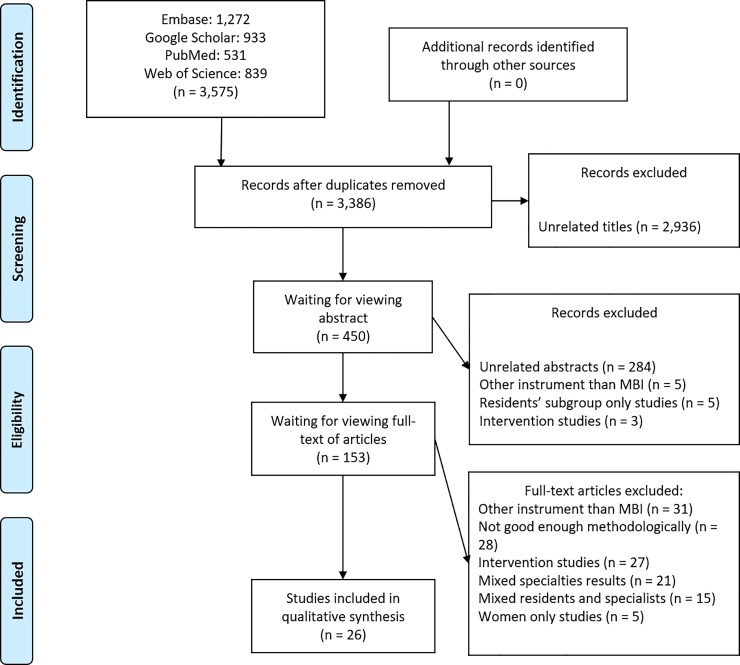
Methods: A systematic review with meta-analysis was performed following the Preferred Reporting Items for Systematic Reviews and Meta-Analyses (PRISMA) guidelines. A search of bibliographic databases and grey literature was conducted, from inception to March 2018. The following databases were accessed: Embase, PubMed, Web of Science, Google Scholar and Scopus, and 3,575 studies were found. Methodological quality was evaluated by Agency for Healthcare Research and Quality Methodology Checklist for Cross-Sectional/Prevalence Study. In the final analysis, 26 papers were included. Their references were checked for additional studies, but none were included.
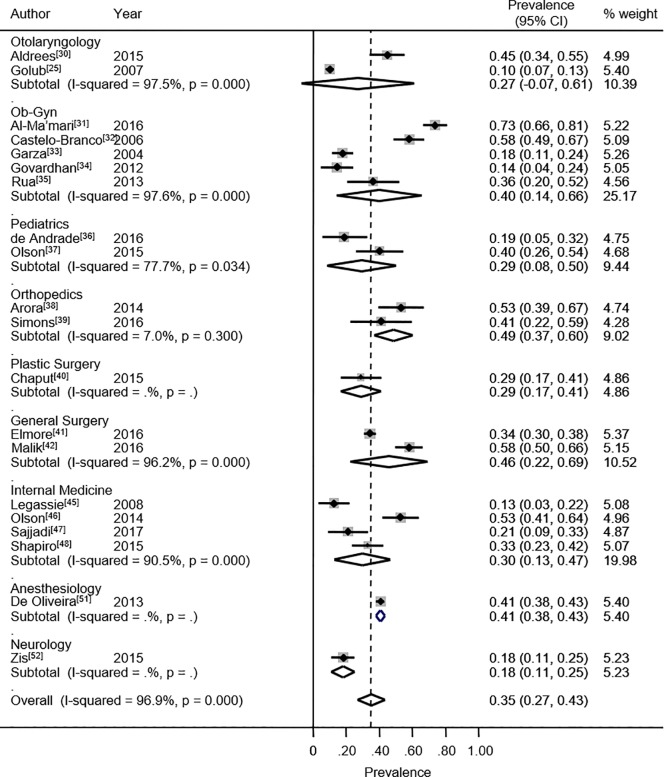
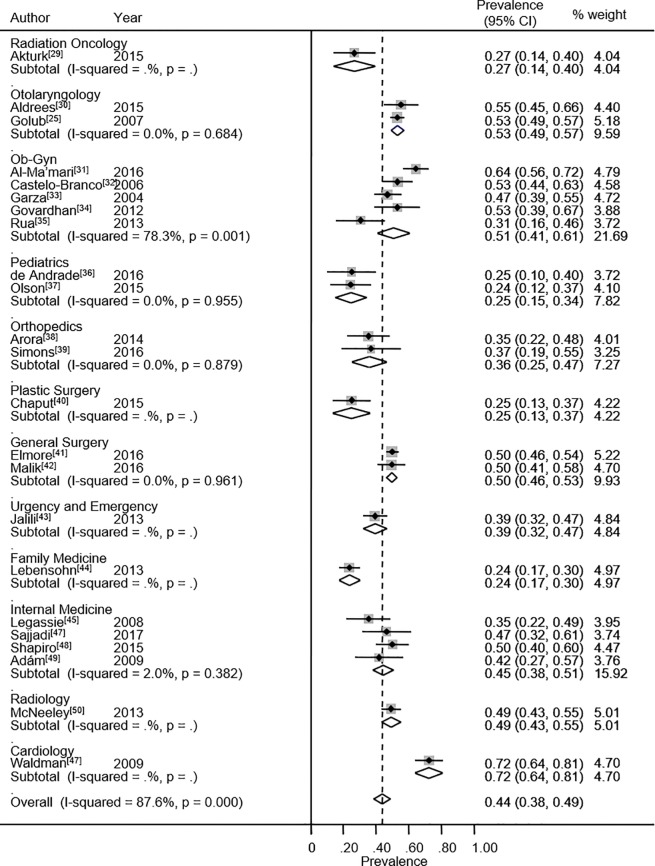
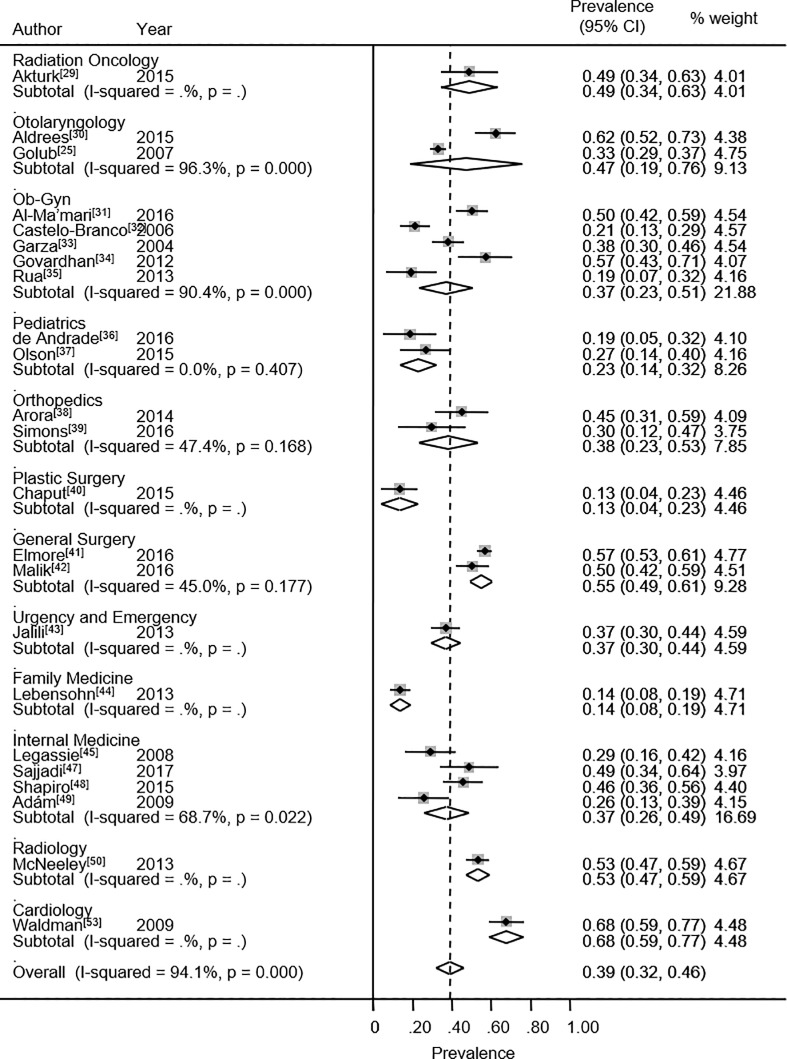
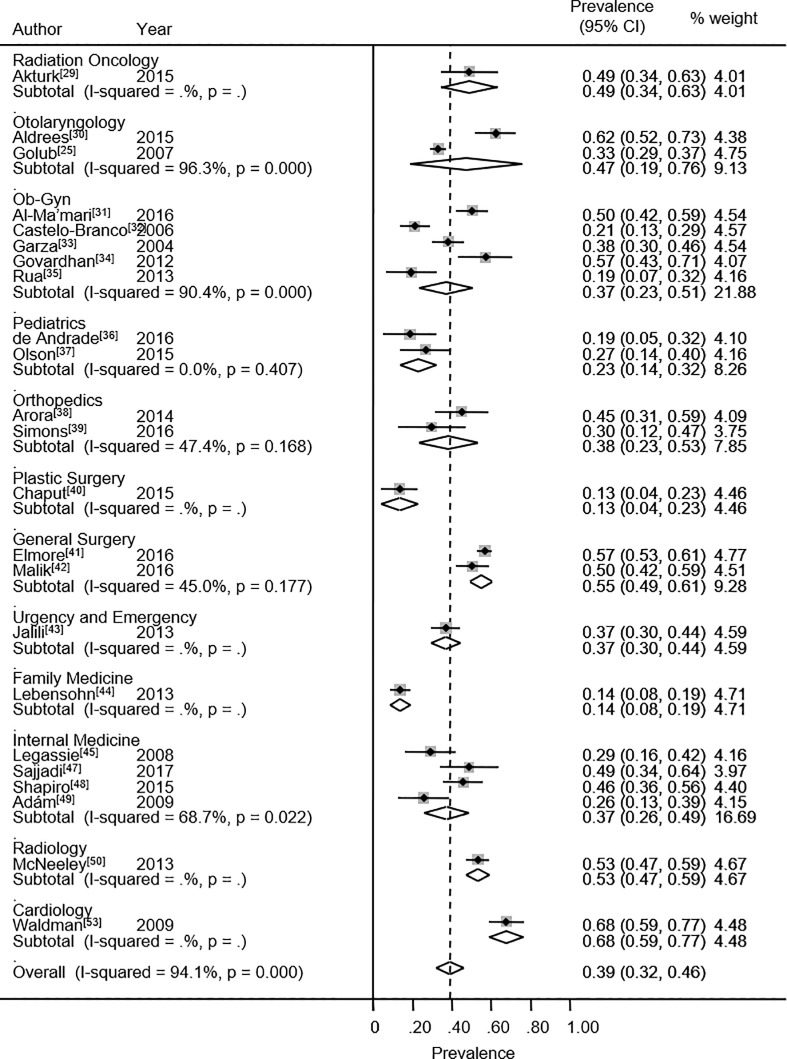
Results: 4,664 medical residents were included. High DP, EE and low PA proportions were compared. Specialties were distributed into three groups of different levels of burnout prevalence: general surgery, anesthesiology, obstetrics/gynecology and orthopedics (40.8%); internal medicine, plastic surgery and pediatrics (30.0%); and otolaryngology and neurology (15.4%). Overall burnout prevalence found for all specialties was 35.7%.
Conclusion: The prevalence of burnout syndrome was significantly higher among surgical/urgency residencies than in clinical specialties.
Prospero registration: CRD42018090270.
Conflict of interest statement
The authors have declared that no competing interests exist.
Figures
References
-
- Freudenberger HJ. Staff Burn-Out. J Soc Issues. 1974;90(1):159–65. 10.1111/j.1540-4560.1974.tb00706.x - DOI
Publication types
MeSH terms
LinkOut - more resources
Full Text Sources
Medical
