


Malaria in children under-five: A comparison of risk factors in lakeshore and highland areas, Zomba district, Malawi
- PMID: 30419002
- PMCID: PMC6231663
- DOI: 10.1371/journal.pone.0207207
Malaria in children under-five: A comparison of risk factors in lakeshore and highland areas, Zomba district, Malawi
Abstract
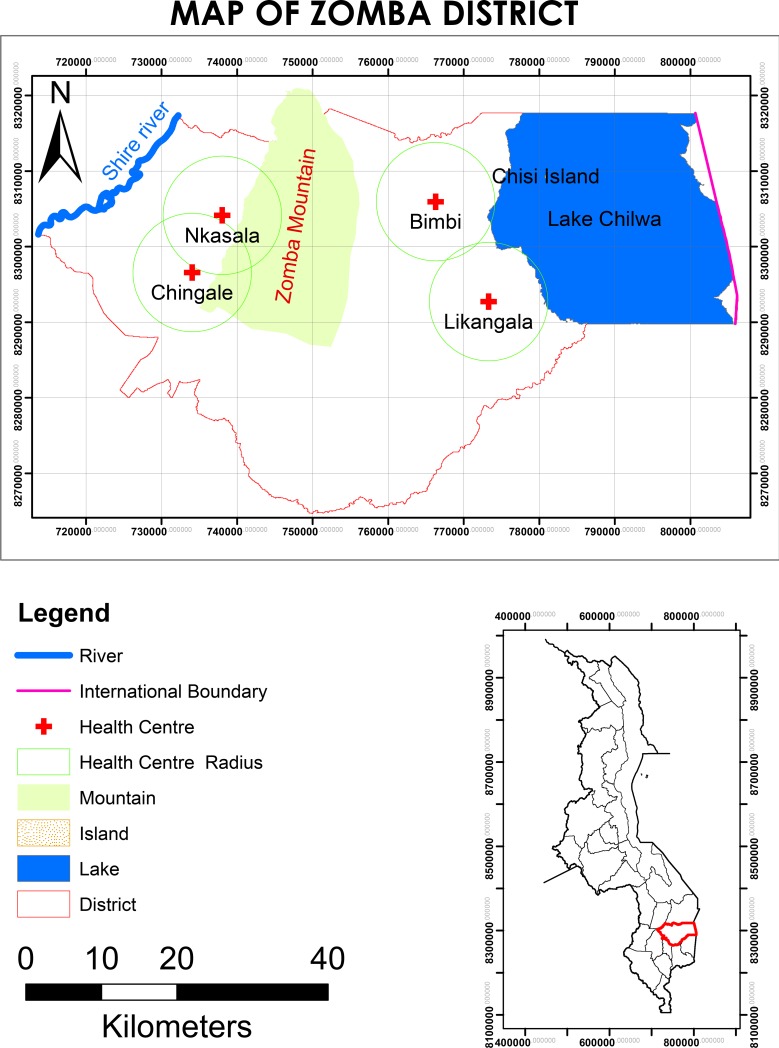
Background: In Malawi, children under the age of five living in different geographical areas may experience different malaria risk factors. We compare the risk factors of malaria experienced by children under the age of five from Zomba district, who reside in lakeshore and highland areas.
Methods: We conducted a case control study of 765 caregivers, cases being children under-five who were diagnosed with malaria, and obtained matched controls from local health facilities and communities. We used a multivariate logistic regression to identify individual and household risk factors.
Results: In lakeshore areas, risk factors were households located one kilometer or less away from stagnant water (AOR: 2.246 95% CI: 1.269 to 3.975 P-value: 0.005); or if the household had obtained a mosquito bed net more than one year ago (AOR: 1.946 95% CI: 1.073 to 3.529 P-value: 0.028). In highland areas, risk factors were households which used a borehole/unprotected well (AOR: 1.962 95% CI: 1.001 to 3.844 P-value 0.050), communal standpipe (AOR: 3.293 95% CI: 1.301 to 8.332 P-value 0.012), and un-protected dug well in their yards (AOR: 16.195 95% CI: 2.585 to 101.464 P-value 0.003) as their drinking water sources. In highland areas, caregivers not attending health talks on malaria prevention messages was a risk factor (AOR: 2.518 95% CI: 1.439 to 4.406 P-value: 0.001).
Conclusion: Children under the age of five living in highland areas experience different malaria risk factors compared to children living in lakeshore areas. Settling away from stagnant/open water source in lakeshore and encouraging caregivers to attend health talks on malaria prevention in highlands can help reduce malaria transmission. Nevertheless, using a mosquito bed net that is more than one year old is a common risk factor in both locations. Using new mosquito bed nets can significantly reduce the risk of contracting malaria in children under the age of five.
Conflict of interest statement
The authors have declared that no competing interests exist.
Figures
References
-
- Okiro E, Noor A, Malinga J, Mitto B, Mundia C, Mathanga D, et al. An epidemiological profile of malaria and its control in Malawi. A report prepared for the Ministry of Health, the Roll Back Malaria partnership and the Department for International Development, UK 2014.
-
- World Health Organization. Malawi Malaria Indicator Survey 2017. Available at: (https://dhsprogram.com/what-we-do/survey/survey-display-512.cfm.accessed 19/06, 2018
-
- World Health Organization. WHO Country Cooperation Strategy at a glance: Malawi. 2017.Available: http://apps.who.int/iris/bitstream/handle/10665/136935/ccsbrief_mwi_en.p.... Accessed 25/06, 2018
-
- President's Malaria Intiative. Evaluation of the Impact of Malaria Control Interventions on All-Cause Mortality in Children under Five Years of Age in Malawi. 2016(16/03).
Publication types
MeSH terms
LinkOut - more resources
Full Text Sources
Medical
