Neutrophil-Mediated Proteolysis of Thrombospondin-1 Promotes Platelet Adhesion and String Formation
- PMID: 30419595
- PMCID: PMC6298231
- DOI: 10.1055/s-0038-1675229
Neutrophil-Mediated Proteolysis of Thrombospondin-1 Promotes Platelet Adhesion and String Formation
Abstract
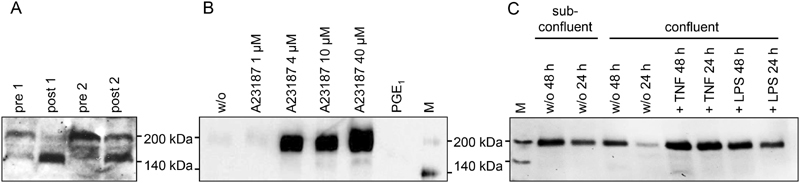
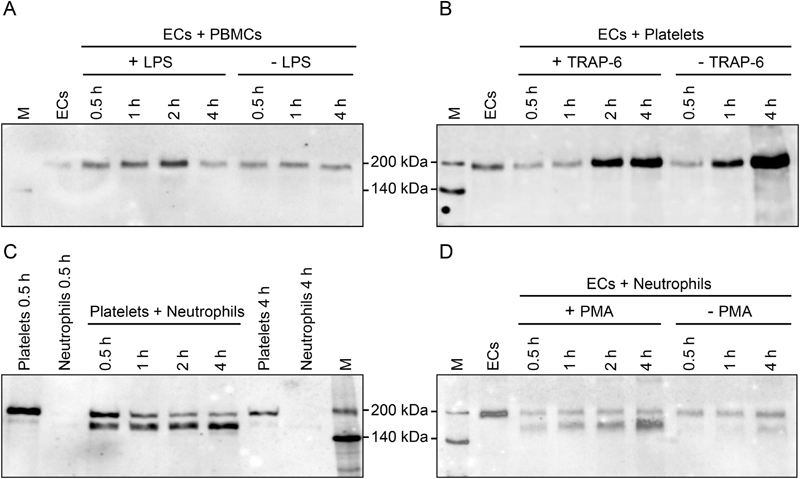
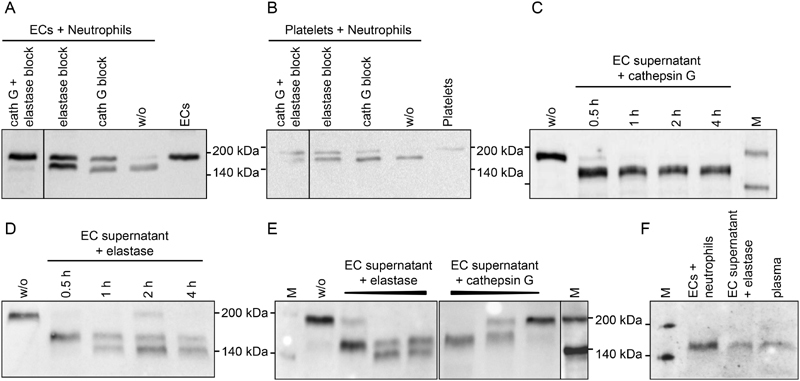
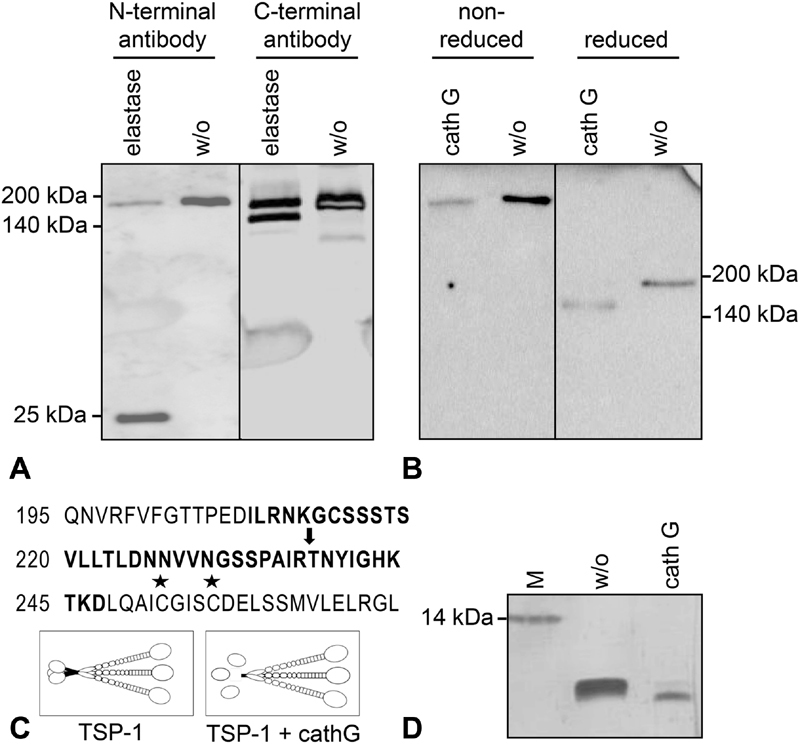
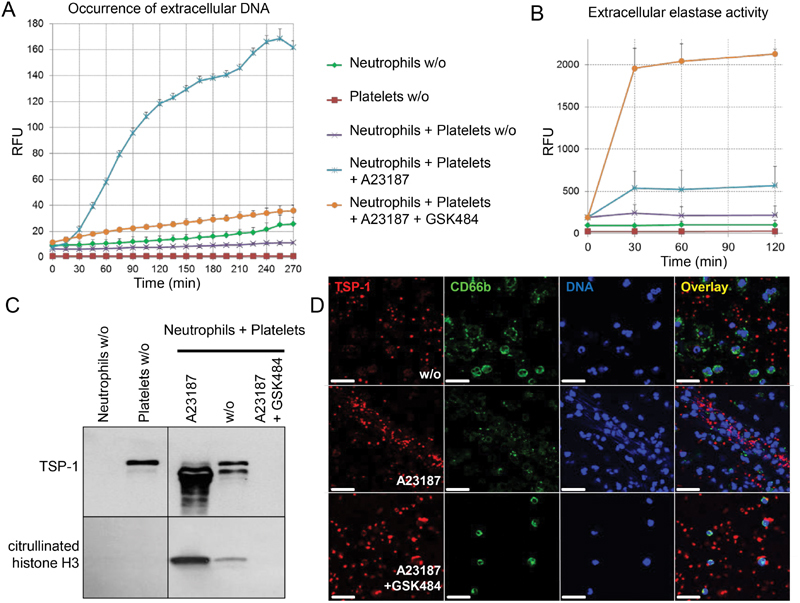
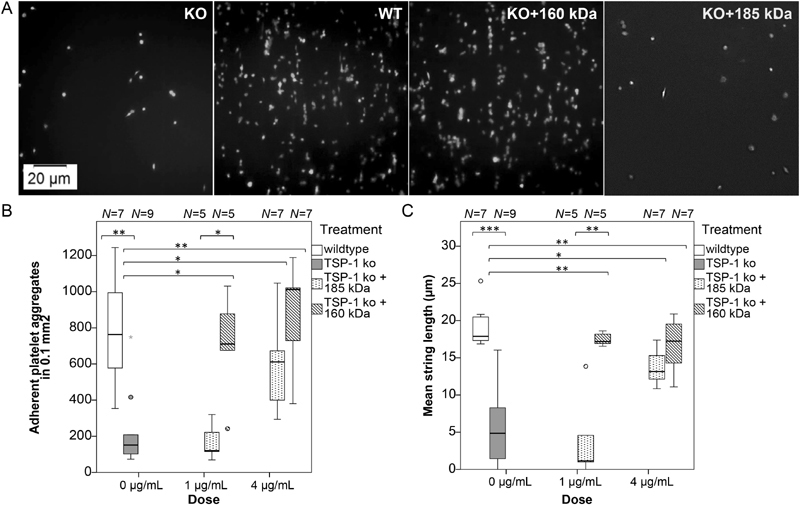
Thrombospondin-1 (TSP-1) is primarily expressed by platelets and endothelial cells (ECs) and rapidly released upon their activation. It functions in haemostasis as a bridging molecule in platelet aggregation, by promoting platelet adhesion to collagen and by protecting von Willebrand factor strings from degradation. In blood of patients undergoing surgery and in co-cultures of neutrophils with platelets or ECs, we observed proteolysis of the 185 kDa full-length TSP-1 to a 160-kDa isoform. We hypothesized that TSP-1 processing may alter its haemostatic properties. Selective enzyme inhibitors in co-cultures revealed that neutrophil proteases elastase and cathepsin G mediate TSP-1 processing. The cut site of cathepsin G was mapped to TSP-1 amino acids R237/T238 by Edman sequencing. Formation of neutrophil extracellular traps protected TSP-1 from complete degradation and promoted controlled processing to the 160-kDa isoform. Haemostatic properties were tested by platelet aggregation, adhesion, coagulation and string formation under flow. Platelets from TSP-1 deficient mice did not differ from wild-type in platelet aggregation but showed severe impairment of platelet adhesion to collagen and string formation under flow. Reconstitution experiments revealed that the 160-kDa TSP-1 isoform was markedly more potent than the 185-kDa full-length molecule in restoring function. Thus, TSP-1 processing by neutrophil proteases yields a 160-kDa isoform which shows enhanced potency to promote platelet adhesion and string formation. This finding reveals a novel mechanism of neutrophil-mediated thrombus formation and provides first evidence for the impact of TSP-1 proteolysis on its haemostatic properties.
Georg Thieme Verlag KG Stuttgart · New York.
Conflict of interest statement
None.
Figures
References
-
- Gao A G, Lindberg F P, Finn M B, Blystone S D, Brown E J, Frazier W A. Integrin-associated protein is a receptor for the C-terminal domain of thrombospondin. J Biol Chem. 1996;271(01):21–24. - PubMed
-
- Baenziger N L, Brodie G N, Majerus P W. Isolation and properties of a thrombin-sensitive protein of human platelets. J Biol Chem. 1972;247(09):2723–2731. - PubMed