


The effect of occipital nerve field stimulation on the descending pain pathway in patients with fibromyalgia: a water PET and EEG imaging study
- PMID: 30419855
- PMCID: PMC6233518
- DOI: 10.1186/s12883-018-1190-5
The effect of occipital nerve field stimulation on the descending pain pathway in patients with fibromyalgia: a water PET and EEG imaging study
Abstract
Background: Fibromyalgia is a chronic disorder characterized by widespread musculoskeletal pain accompanied by fatigue, sleep, memory, and mood problems. Recently, occipital nerve field stimulation (ONS) has been proposed as an effective potential treatment for fibromyalgia-related pain. The aim of this study is to unravel the neural mechanism behind occipital nerve stimulation's ability to suppress pain in fibromyalgia patients.
Materials and methods: Seven patients implanted with subcutaneous electrodes in the C2 dermatoma were enrolled for a Positron Emission Tomography (PET) H215O activation study. These seven patients were selected from a cohort of 40 patients who were part of a double blind, placebo-controlled study followed by an open label follow up at six months. The H215O PET scans were taken during both the "ON" (active stimulation) and "OFF" (stimulating device turned off) conditions. Electroencephalogram (EEG) data were also recorded for the implanted fibromyalgia patients during both the "ON" and "OFF" conditions.
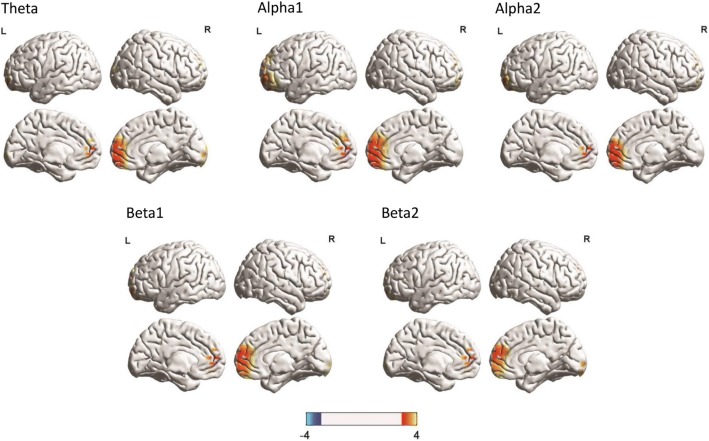
Results: Relative to the "OFF" condition, ONS stimulation resulted in activation in the dorsal lateral prefrontal cortex, comprising the medial pain pathway, the ventral medial prefrontal cortex, and the bilateral anterior cingulate cortex as well as parahippocampal area, the latter two of which comprise the descending pain pathway. Relative deactivation was observed in the left somatosensory cortex, constituting the lateral pain pathway as well as other sensory areas such as the visual and auditory cortex. The EEG results also showed increased activity in the descending pain pathway. The pregenual anterior cingulate cortex extending into the ventral medial prefrontal cortex displayed this increase in the theta, alpha1, alpha2, beta1, and beta2 frequency bands.
Conclusion: PET shows that ONS exerts its effect via activation of the descending pain inhibitory pathway and the lateral pain pathway in fibromyalgia, while EEG shows activation of those cortical areas that could be responsible for descending inhibition system recruitment.
Trial registration: This study is registered with ClinicalTrials.gov , number NCT00917176 (June 10, 2009).
Keywords: Fibromyalgia; Occipital nerve stimulation; Positron emission tomography (PET).
Conflict of interest statement
Competing interest
The authors declare that they have no competing interests.
Ethics approval and consent to participate
All patients gave written informed consent, and the ethical committee of the University Hospital Antwerp, Belgium approved the study.
Consent for publication
Not applicable.
Publisher’s Note
Springer Nature remains neutral with regard to jurisdictional claims in published maps and institutional affiliations.
Figures

References
-
- Wolfe F, et al. Aspects of fibromyalgia in the general population: sex, pain threshold, and fibromyalgia symptoms. J Rheumatol. 1995;22(1):151–156. - PubMed
-
- Berger A, et al. Patterns of healthcare utilization and cost in patients with newly diagnosed fibromyalgia. Am J Manag Care. 2010;16(5 Suppl):S126–S137. - PubMed
Publication types
MeSH terms
Associated data
LinkOut - more resources
Full Text Sources
Medical
Miscellaneous
