


Training in cognitive strategies reduces eating and improves food choice
- PMID: 30420496
- PMCID: PMC6275472
- DOI: 10.1073/pnas.1717092115
Training in cognitive strategies reduces eating and improves food choice
Abstract
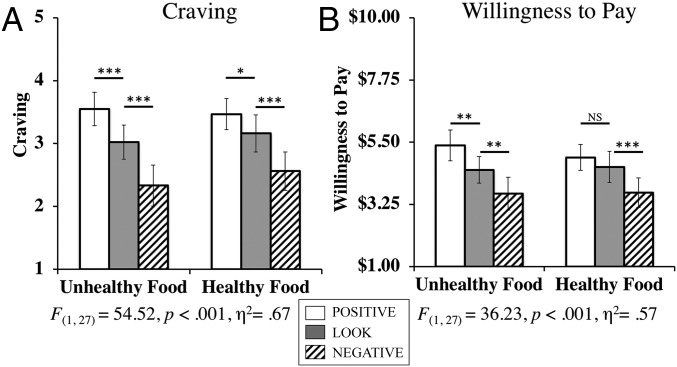
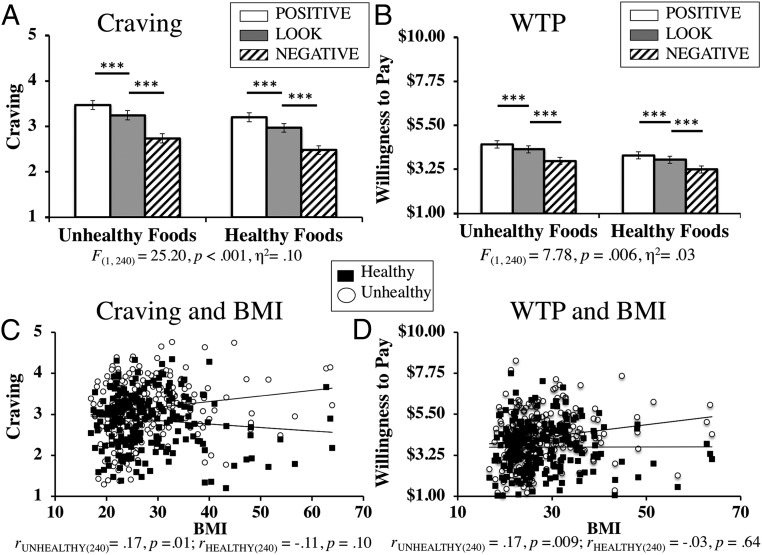
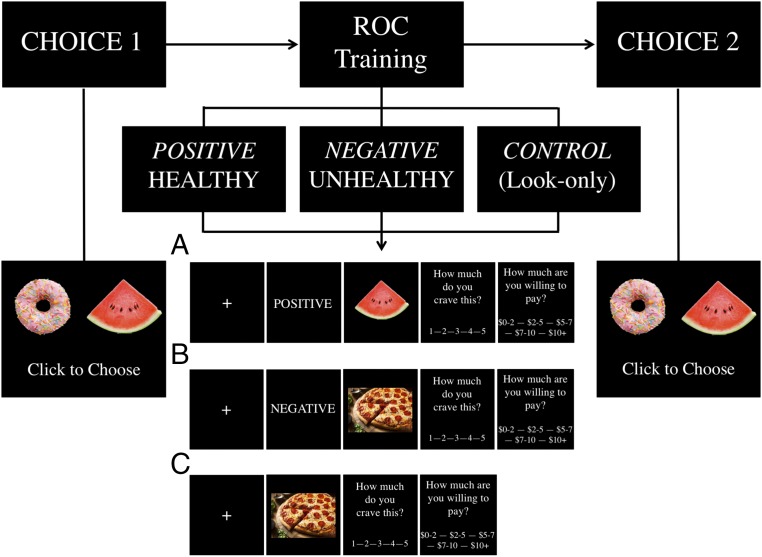
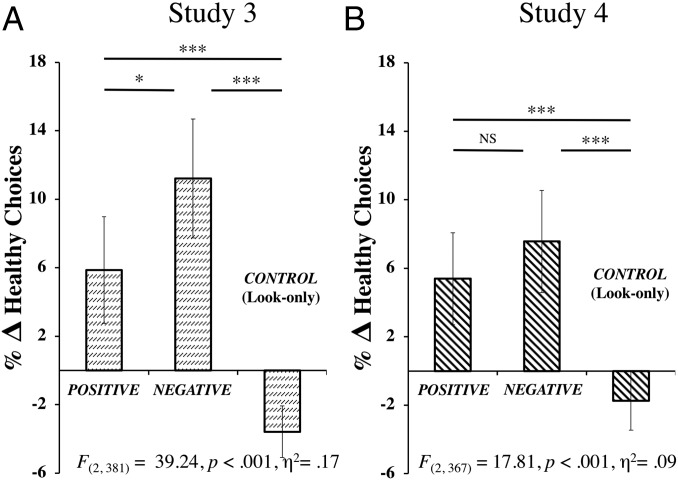
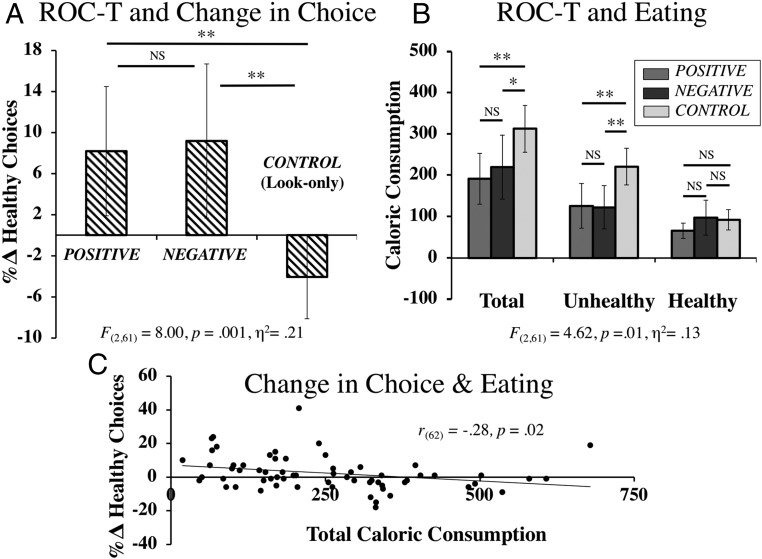
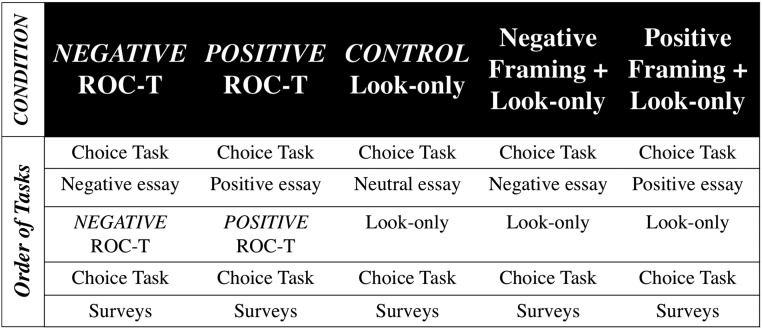
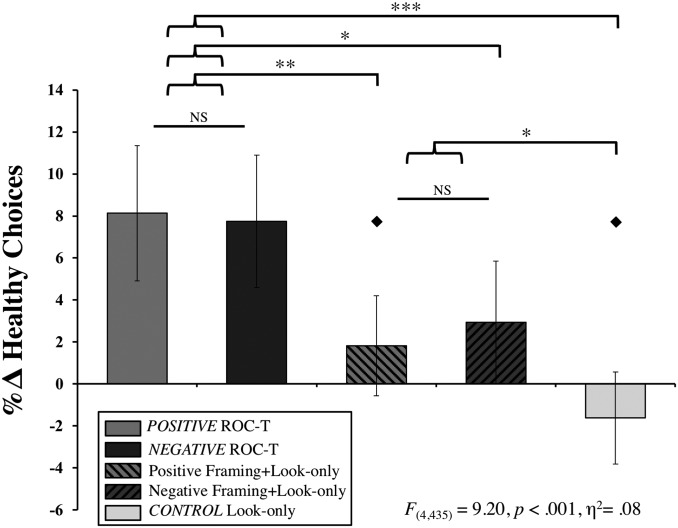
Obesity rates continue to rise alarmingly, with dire health implications. One contributing factor is that individuals frequently forgo healthy foods in favor of inexpensive, high-calorie, unhealthy foods. One important mechanism underlying these choices is food craving: Craving increases with exposure to unhealthy foods (and food cues, such as advertisements) and prospectively predicts eating and weight. Prior work has shown that cognitive regulation strategies that emphasize the negative consequences of unhealthy foods reduce craving. In Studies 1 and 2, we show that cognitive strategies also increase craving for healthy foods by emphasizing their positive benefits, and change food valuation (willingness to pay) for both healthy and unhealthy foods. In Studies 3 and 4, we demonstrate that brief training in cognitive strategies ("Regulation of Craving Training"; ROC-T) increases subsequent healthy (vs. unhealthy) food choices. This was striking because this change in food choices generalized to nontrained items. Importantly, in Study 5, we show that brief training in cognitive strategies also reduces food consumption by 93-121 calories. Consumed calories correlated with changes in food choice. Finally, in Study 6, we show that the training component of ROC-T is necessary, above and beyond any effect of framing. Across all studies (NTOTAL = 1,528), we find that cognitive strategies substantially change craving and food valuation, and that training in cognitive strategies improves food choices by 5.4-11.2% and reduces unhealthy eating, including in obese individuals. Thus, these findings have important theoretical, public health, and clinical implications for obesity prevention and treatment.
Keywords: cognitive strategies; craving; food; obesity; self control.
Conflict of interest statement
The authors declare no conflict of interest.
Figures

Comment in
-
Training your brain can improve food choice.Nat Rev Endocrinol. 2019 Feb;15(2):65. doi: 10.1038/s41574-018-0138-6. Nat Rev Endocrinol. 2019. PMID: 30514886 No abstract available.
References
Publication types
MeSH terms
Grants and funding
LinkOut - more resources
Full Text Sources
Medical
