


Highly Cancer Selective Antiproliferative Activity of Natural Prenylated Flavonoids
- PMID: 30423918
- PMCID: PMC6278664
- DOI: 10.3390/molecules23112922
Highly Cancer Selective Antiproliferative Activity of Natural Prenylated Flavonoids
Abstract
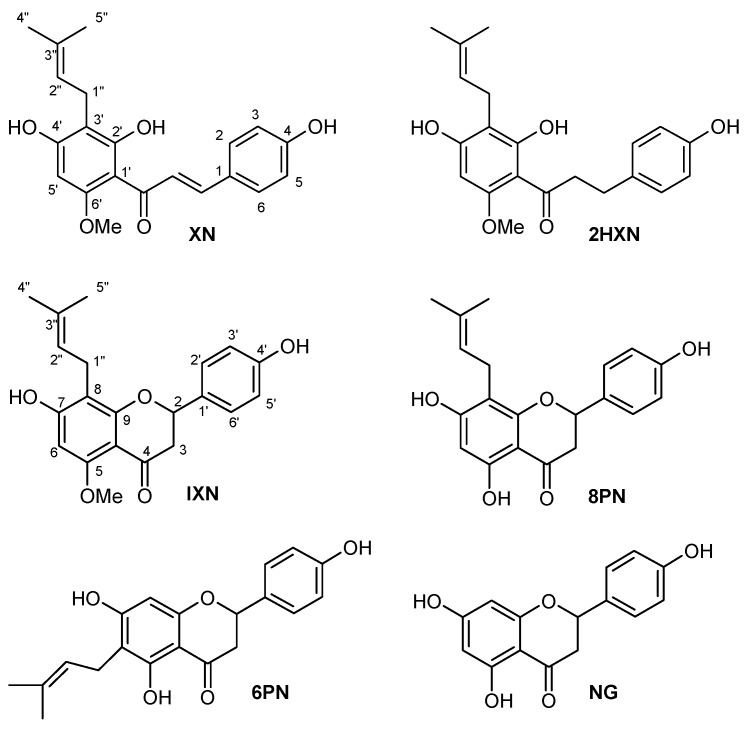
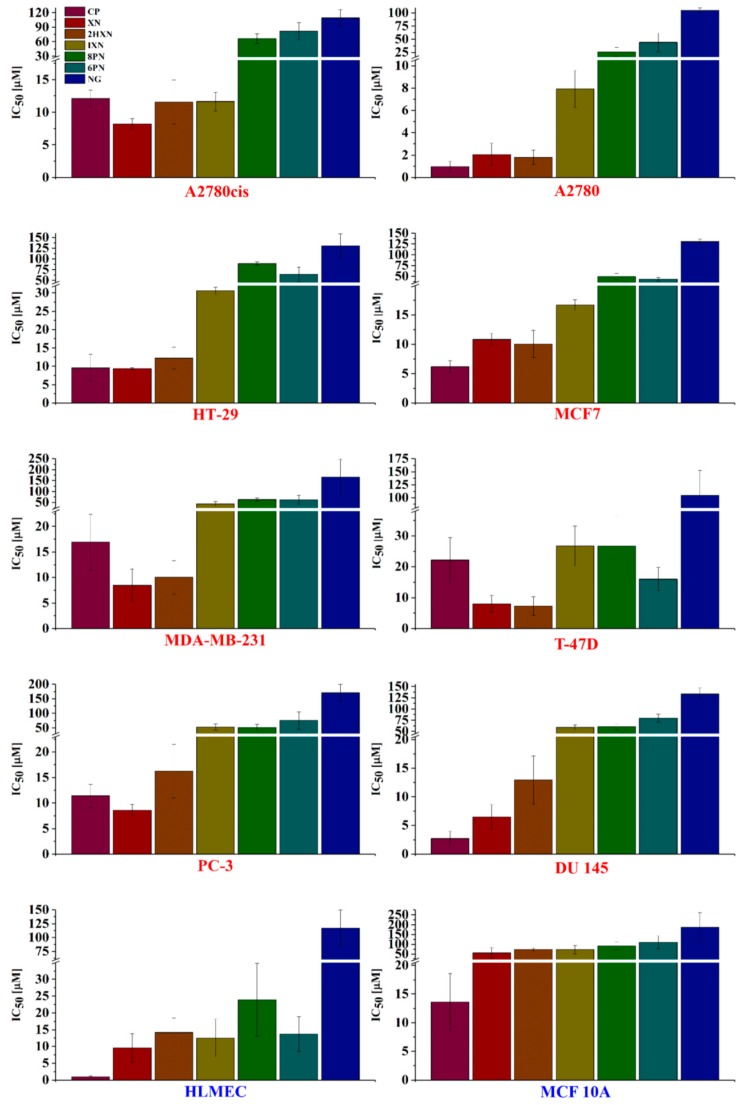
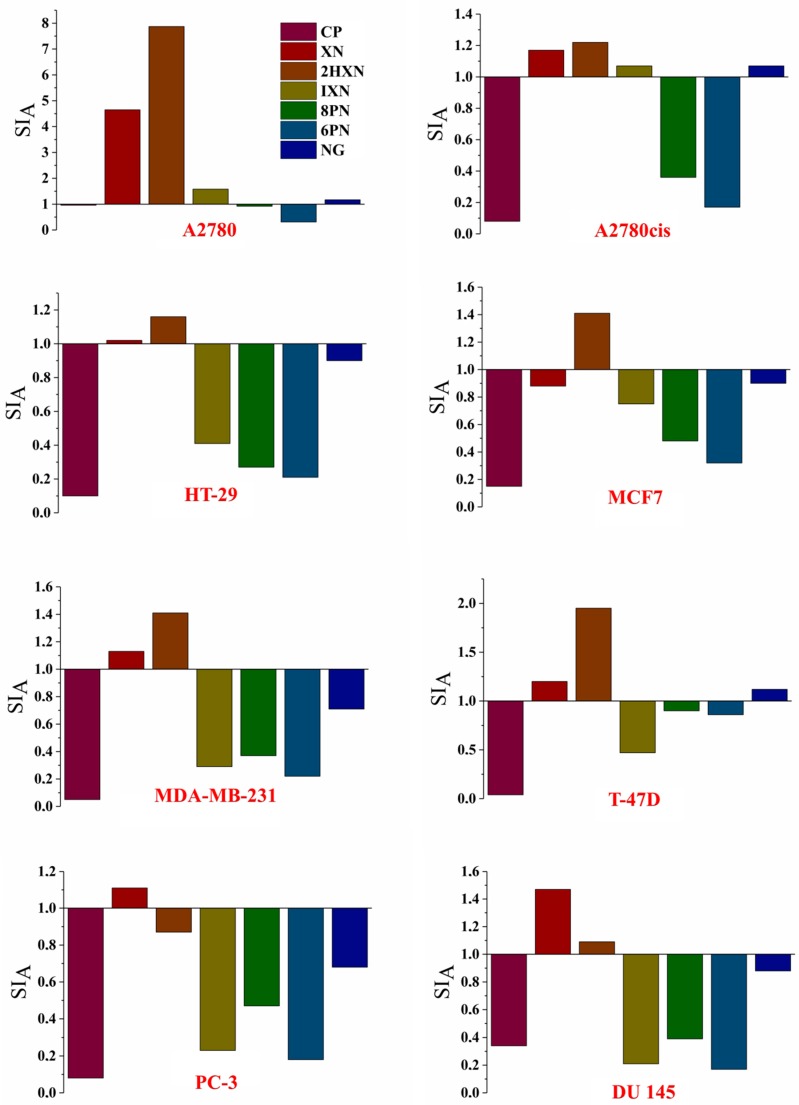
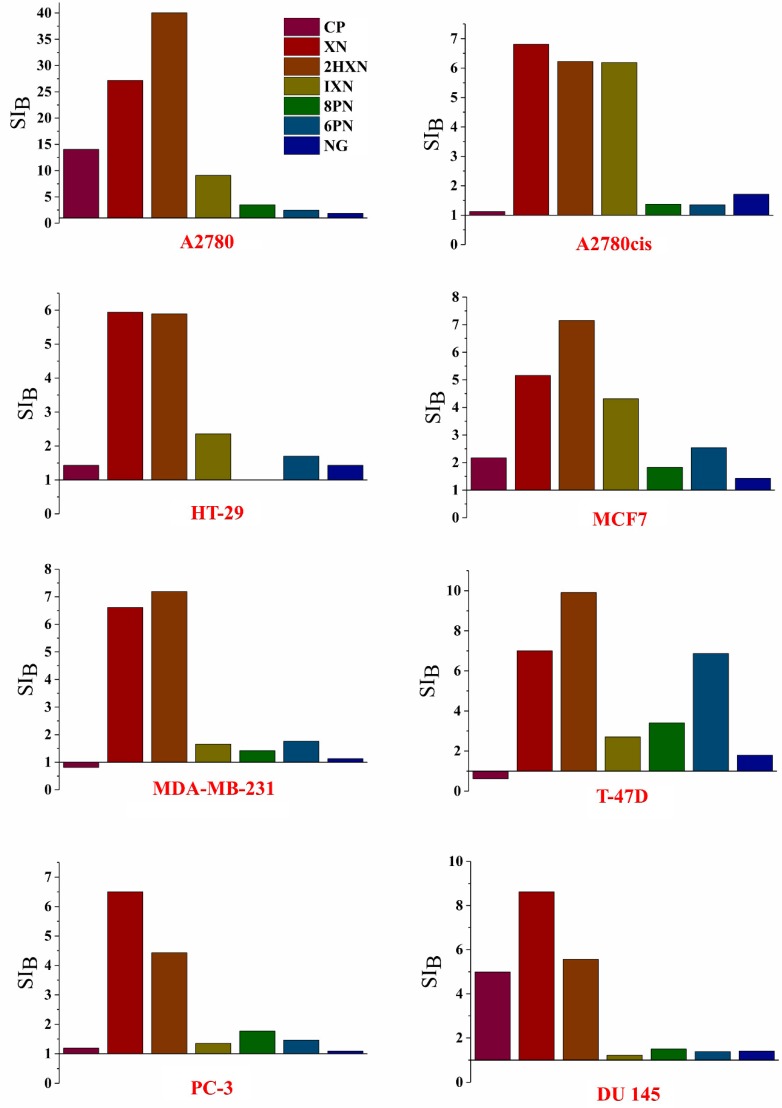
Xanthohumol (XN) and four minor hops prenylflavonoids: α,β-dihydroxanthohumol (2HXN), isoxanthohumol (IXN), 8-prenylnaringenin (8PN), and 6-prenylnaringenin (6PN), were tested for antiproliferative activity towards human cancer and normal cell lines. Nonprenylated naringenin (NG) was used as a model compound. Xanthohumol, α,β-dihydroxanthohumol and 6-prenylnaringenin were the most active compounds. Xanthohumol exhibited higher antiproliferative activity than cisplatin (CP) against five cancer cell lines: ovarian resistant to cisplatin A2780cis, breast MDA-MB-231 and T-47D, prostate PC-3, and colon HT-29. Isoxanthohumol was more potent than cisplatin against breast cancer cell lines MDA-MB-231 and T-47D whereas 6-prenylnaringenin was stronger than cisplatin against breast cancer cell line T-47D. It was found that tested chalcones possessed highly selective antiproliferative activity towards all tested breast cancer lines compared to the normal breast MCF 10A cell line (the calculated selectivity index ranged from 5 to 10). Low antiproliferative activity of naringenin indicates the importance of the prenyl group with respect to antiproliferative activity.
Keywords: antiproliferative activity; hop flavonoids; phytoestrogen; selectivity.
Conflict of interest statement
The authors declare no conflict of interest.
Figures
References
-
- Miranda C., Stevens J., Helmrich A., Henderson M., Rodriguez R., Yang Y.-H., Deinzer M., Barnes D., Buhler D. Antiproliferative and cytotoxic effects of prenylated flavonoids from hops (Humulus lupulus) in human cancer cell lines. Food Chem. Toxicol. 1999;37:271–285. doi: 10.1016/S0278-6915(99)00019-8. - DOI - PubMed
MeSH terms
Substances
Grants and funding
LinkOut - more resources
Full Text Sources
Miscellaneous
