


Characterizing classes of fibromyalgia within the continuum of central sensitization syndrome
- PMID: 30425566
- PMCID: PMC6205129
- DOI: 10.2147/JPR.S147199
Characterizing classes of fibromyalgia within the continuum of central sensitization syndrome
Abstract
Background: While fibromyalgia (FM) is characterized by chronic widespread pain and tenderness, its presentation among patients as a continuum of diseases rather than a single disease contributes to the challenges of diagnosis and treatment. The purpose of this analysis was to distinguish and characterize classes of FM within the continuum using data from chronic pain patients.
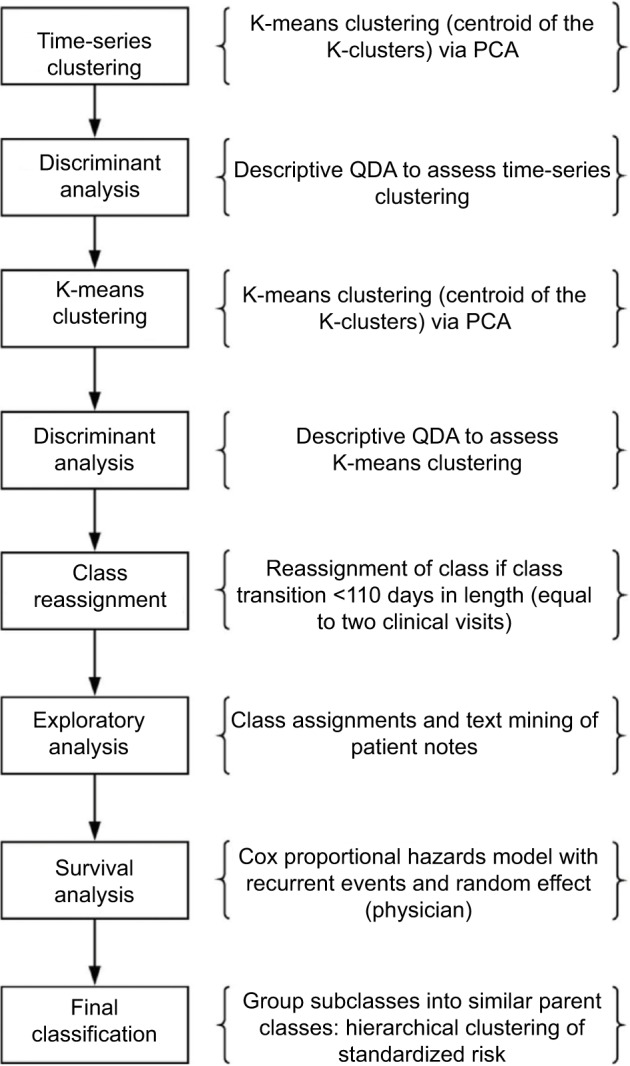
Methods: FM patients were identified from administrative claims data from the ProCare Systems' network of Michigan pain clinics between January 1999 and February 2015. Identification was based on either use of traditional criteria (ie, ICD-9 codes) or a predictive model indicative of patients having FM. Patients were classified based on similarity of comorbidities (symptom severity), region of pain (widespread pain), and type and number of procedures (treatment intensity) using unsupervised learning. Text mining and a review of physician notes were conducted to assist in understanding the FM continuum.
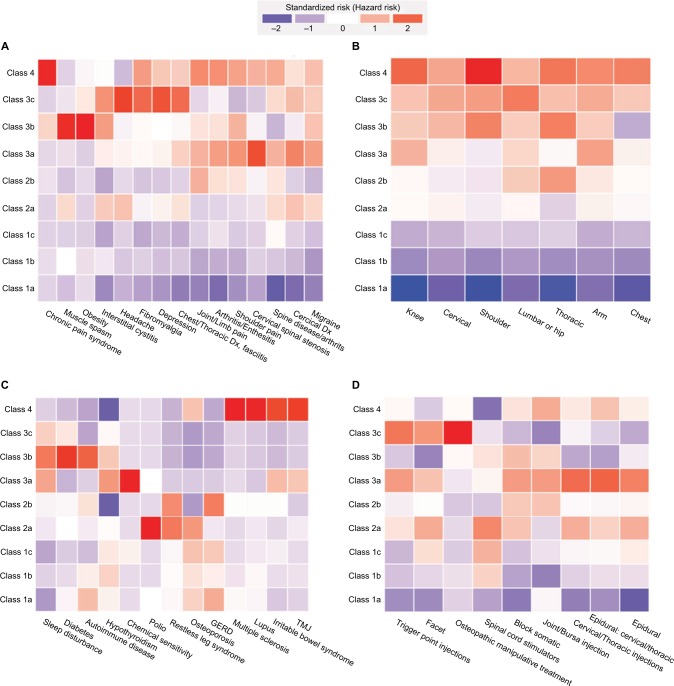
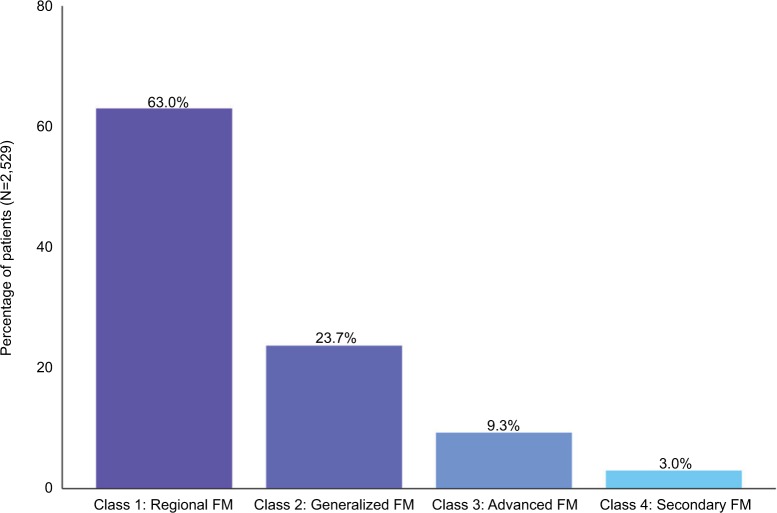
Results: A total of 2,529 FM patients with 79,570 observations or clinical visits were evaluated. Four main classes of FM patients were identified: Class 1) regional FM with classic symptoms; Class 2) generalized FM with increasing widespread pain and some additional symptoms; Class 3) FM with advanced and associated conditions, increasing widespread pain, increased sleep disturbance, and chemical sensitivity; and Class 4) FM secondary to other conditions.
Conclusion: FM is a disease continuum characterized by progressive and identifiable classifications. Four classes of FM can be differentiated by pain and symptom severity, specific comorbidities, and use of clinical procedures.
Keywords: clinical procedures; comorbidities; disease progression; fibromyalgia; machine learning; predictive modeling; severity.
Figures
References
-
- Halpern R, Shah SN, Cappelleri JC, Masters ET, Clair A. Evaluating guideline-recommended pain medication use among patients with newly diagnosed fibromyalgia. Pain Pract. 2015;16(8):1027–1039. - PubMed
-
- Bennett RM. Clinical manifestations and diagnosis of fibromyalgia. Rheum Dis Clin North Am. 2009;35(2):215–232. - PubMed
-
- Kravitz HM, Katz RS. Fibrofog and fibromyalgia: a narrative review and implications for clinical practice. Rheumatol Int. 2015;35(7):1115–1125. - PubMed
LinkOut - more resources
Full Text Sources
