Review
. 2018 Oct 23:2018:1425707.
doi: 10.1155/2018/1425707. eCollection 2018.

Efficacy Comparison of Intravitreal Anti-VEGF Therapy for Three Subtypes of Neovascular Age-Related Macular Degeneration: A Systematic Review and Meta-Analysis

Affiliations
Review

Efficacy Comparison of Intravitreal Anti-VEGF Therapy for Three Subtypes of Neovascular Age-Related Macular Degeneration: A Systematic Review and Meta-Analysis

Jianqing Li et al. J Ophthalmol. .

Abstract

Purpose: Intravitreal antivascular endothelial growth factor (anti-VEGF) therapy has been widely used for the treatment of neovascularization (NV) secondary to age-related macular degeneration (AMD). This study aimed to compare the efficacy among different subtypes of neovascular age-related macular degeneration (nAMD).

Methods: PubMed, Embase, and the Cochrane Library were searched for eligible studies. We performed meta-analysis using Review Manager 5.3 and Stata/SE 12.0.

Results: A total of 24 studies met our inclusion criteria and were included in the systematic review. At 3 months, the mean logarithm of the minimum angle of resolution (logMAR) improvements were -0.09, -0.18, and -0.23 for type 1, 2, and 3, respectively, while the mean macular thickness (MT) changes were -104.83, -130.76, and -196.29 μm. At 12 months, the mean changes in Early Treatment of Diabetic Retinopathy Study (ETDRS) letters were 6.38, 8.12, and 9.37, while the MT decrease was 126.51, 126.52, and 139.85 μm, respectively. However, statistically significant difference was only found between type 1 and 3 in vision improvement, both in the short term (p=0.0002) and long term (p=0.01).

Conclusions: The reactivity to VEGF inhibitors varied among different subtypes of nAMD. The efficacy of intravitreal anti-VEGF therapy in type 3 nAMD was statistically better than type 1 when considering vision improvement at 3 and 12 months. Thus, the lesion subtype is a predictor for the treatment outcome which can help guide prognosis.


Figures
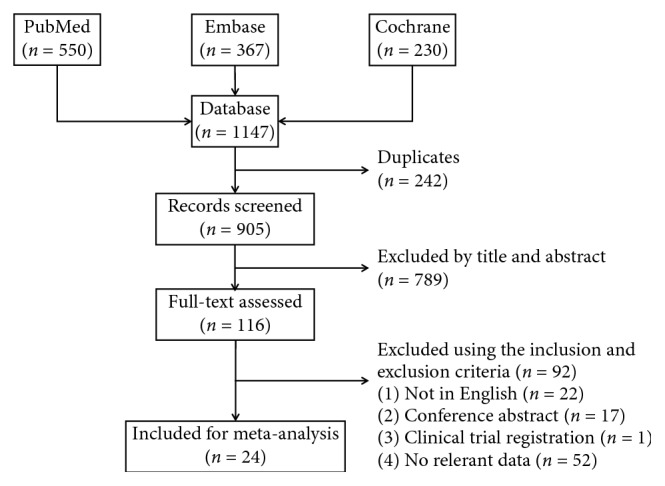
Figure 1
Figure 1
Flow diagram of the inclusion of studies in this meta-analysis.
Figure 2
Figure 2
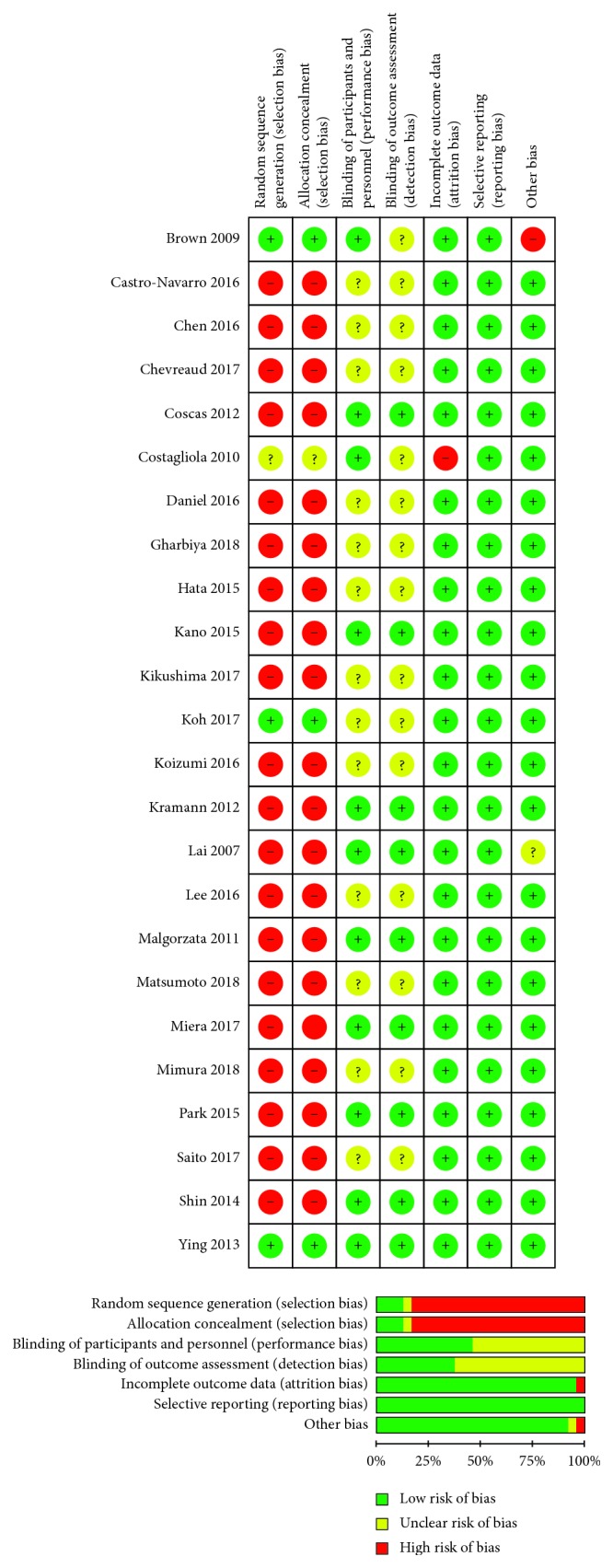
Risk of bias assessment of the included studies.
Figure 3
Figure 3
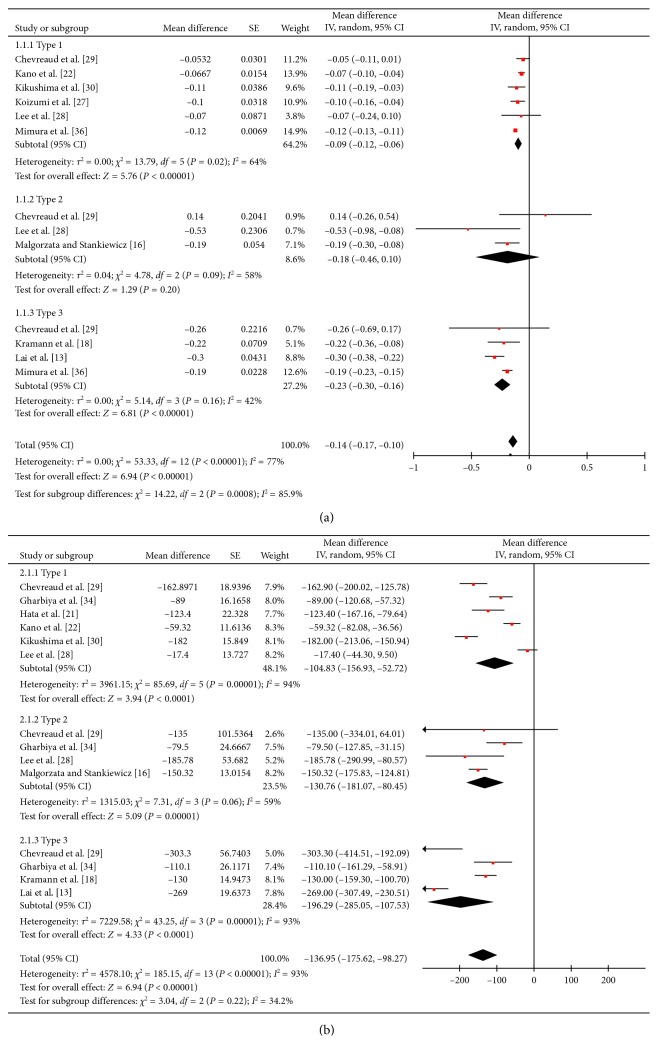
The short-term (3 months) efficacy comparison of antivascular endothelial growth factor (anti-VEGF) therapy for three subtypes of neovascular age-related macular degeneration (nAMD). (a) Vision improvement of the three types of nAMD, measured by logarithm of the minimum angle of resolution (logMAR), were −0.09 (95% confidence interval (CI): −0.12, −0.06), −0.18 (95% CI: −0.46, 0.10), and −0.23 (95% CI: −0.30, −0.16). (b) Macular thickness decreases were −104.83 (95% CI: −156.93, −52.72), −130.76 (95% CI: −181.07, −80.45), and −196.29 (95% CI: −285.05, −107.53) μm, respectively.
Figure 4
Figure 4
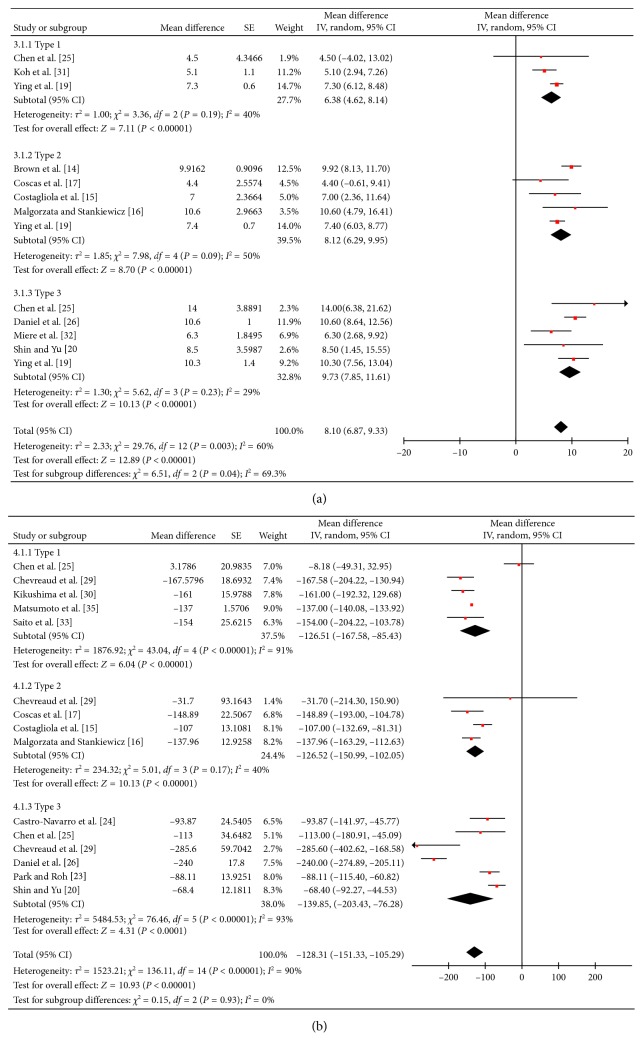
The long-term (12 months) efficacy comparison among three subtypes of neovascular age-related macular degeneration (nAMD) was presented. (a) Vision improvement, evaluated by Early Treatment of Diabetic Retinopathy Study (ETDRS) letters, were 6.38 (95% CI: 4.62, 8.14), 8.12 (95% CI: 6.29, 9.95), and 9.73 (95% CI: 7.85, 11.61) for the three types of nAMD. (b) Macular thickness changes were −126.51 (95% CI: −167.58, −85.43), −126.52 (95% CI: −150.99, −102.05), and −139.85 (95% CI: −203.43, −76.28) μm, respectively.
Figure 5
Figure 5
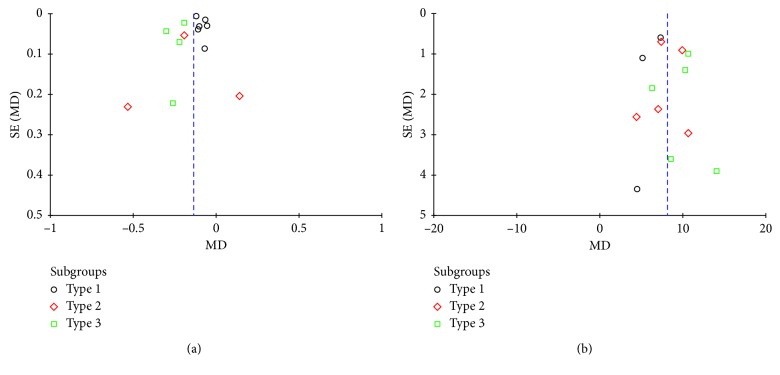
Funnel plots for short-term (a) and long-term (b) vision improvement comparison.
Figure 6
Figure 6
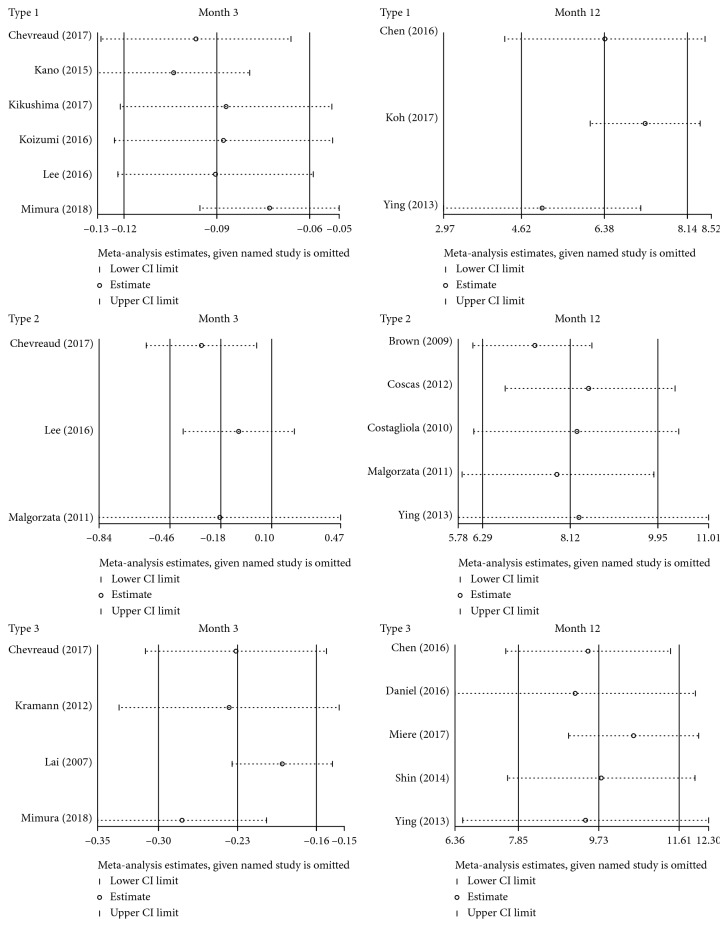
Sensitivity analysis on the outcome of vision improvement at 3 and 12 months.

References

    1. Lim L. S., Mitchell P., Seddon J. M., Holz F. G., Wong T. Y. Age-related macular degeneration. The Lancet. 2012;379(9827):1728–1738. doi: 10.1016/s0140-6736(12)60282-7. - DOI - PubMed
    1. Bhutto I., Lutty G. Understanding age-related macular degeneration (AMD): relationships between the photoreceptor/retinal pigment epithelium/Bruch’s membrane/choriocapillaris complex. Molecular Aspects of Medicine. 2012;33(4):295–317. doi: 10.1016/j.mam.2012.04.005. - DOI - PMC - PubMed
    1. Gass J. D., Agarwal A., Lavina A. M., Tawansy K. A. Focal inner retinal hemorrhages in patients with drusen: an early sign of occult choroidal neovascularization and chorioretinal anastomosis. Retina. 2003;23(6):741–751. doi: 10.1097/00006982-200312000-00001. - DOI - PubMed
    1. American Academy of Ophthalmology Retina/Vitreous Panel. Preferred Practice Pattern®Guidelines. Age-Related Macular Degeneration. San Francisco, CA, USA: American Academy of Ophthalmology; 2015. http://www.aao.org/ppp.
    1. Macular Photocoagulation Study Group. Laser photocoagulation of subfoveal neovascular lesions in age-related macular degeneration. Results of a randomized clinical trial. Archives of Ophthalmology. 1991;109(9):1220–1231. doi: 10.1001/archopht.1991.01080090044025. - DOI - PubMed

LinkOut - more resources