


The ecology of multilevel intervention research
- PMID: 30428073
- PMCID: PMC6454445
- DOI: 10.1093/tbm/iby102
The ecology of multilevel intervention research
Abstract
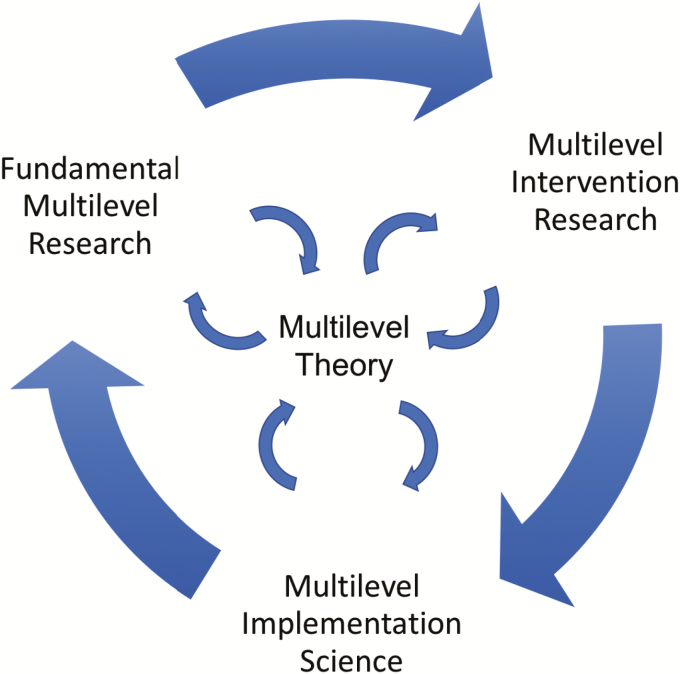
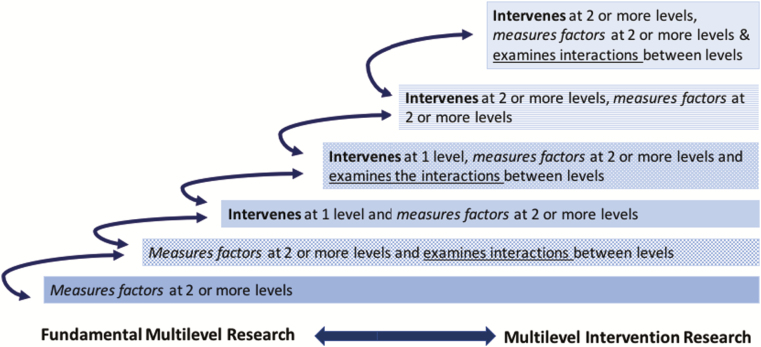
Behavior change research to promote health and prevent disease increasingly relies on a complex set of interacting characteristics across levels of influence such as biological, psychological, behavioral, interpersonal, and environmental. How to best develop health-related interventions that incorporate the individual, the macro-environment, and their interactions remains a challenge. This article considers a set of key dimensions that constitute what we refer to as the ecology of research across a broad context of multilevel research (MLR), spanning fundamental multilevel research (FMLR), multilevel intervention research (MLIR), and multilevel implementation science (MIS). With the goal of promoting improvements in MLIR, we describe the inherent interdependencies among aspects of research and consider how the growth and development of evidence and resources influence the cross-talk among researchers from different perspectives (e.g., disciplines and domains). We propose a framework that highlights opportunities to reduce barriers and address gaps in areas critical to generating an evidence base through MLR, MLIR, and MIS. Overall, we aim to support strategic decisions that can accelerate our understanding of ML health outcomes and interactions among factors within and across levels, with the goal of strengthening the effectiveness of ML interventions across health-related outcomes.
Figures
References
-
- Sallis JF, Bauman A, Pratt M. Environmental and policy interventions to promote physical activity. Am J Prev Med. 1998;15(4):379–397. - PubMed
-
- HealthyPeople.gov. 2018. Available at https://www.healthypeople.gov/.
MeSH terms
LinkOut - more resources
Full Text Sources
