


Vaccine hesitancy among mobile pastoralists in Chad: a qualitative study
- PMID: 30428876
- PMCID: PMC6236988
- DOI: 10.1186/s12939-018-0873-2
Vaccine hesitancy among mobile pastoralists in Chad: a qualitative study
Abstract
Background: Demand side barriers to vaccination among rural and hard-to-reach populations in Chad are not yet well understood. Although innovative approaches such as linking human and animal vaccination increase vaccination uptake among mobile pastoralist communities, vaccination coverage in these communities is still lower than for rural settled populations. We hypothesize that mobile pastoralists' communities in Chad face specific demand side barriers to access vaccination services. Understanding the factors that caregivers in these communities consider, explicitly or implicitly, in order to decide whether or not to vaccinate a child, in addition to understanding the provider's perspectives, are essential elements to tailor vaccination programmes towards increasing vaccination acceptance and uptake.
Methods: We conducted a qualitative study in a rural health district in southern Chad in April 2016 with 12 key informant in-depth interviews and four focus group discussions (FGDs) including 35 male and female participants. Participants in the study included caregivers, traditional chiefs, local and religious leaders from mobile pastoralist communities, and health officials and staff. We conducted a content analysis using a pre-defined set of categories for vaccine hesitancy covering issues on harmful effects of vaccination, mistrust with vaccination programmes/services, issues with the health system and other issues.
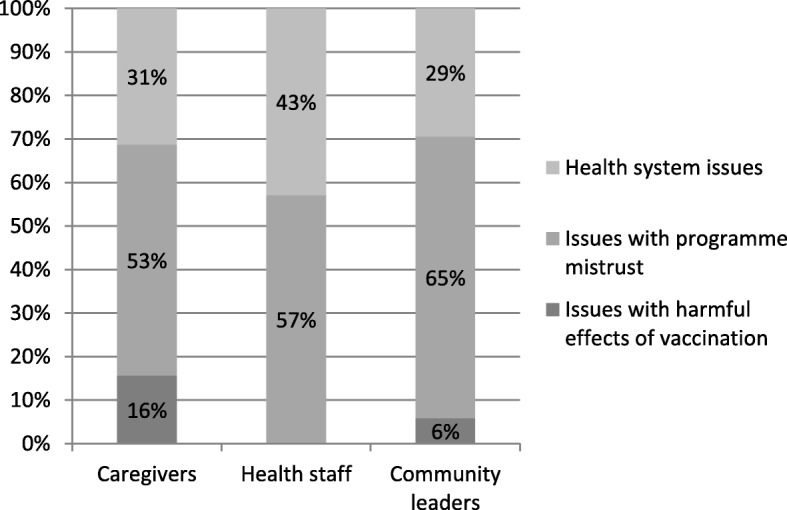
Results: The groups of demand side barriers reported most frequently in focus group discussions were mistrust on the expanded programme on immunization (EPI) and polio vaccination outreach services (53%, n = 94), followed by health system issues (34%, n = 94), and concerns related to potential harm of vaccines (13%, n = 94). Concerns identified by caregivers, health professionals and community leaders followed a similar pattern with issues on programme mistrust being most frequently reported and issues with harm least frequently reported. None of the health professionals reported concerns about vaccinations being potentially harmful.
Conclusion: Mobile pastoralist communities face specific demand side barriers to vaccination. Understanding these barriers is essential to reduce vaccine hesitancy and increase vaccination uptake. Local health systems must plan for the periodic presence of pastoralist communities in their zones of responsibility and create more mutual trust.
Keywords: Barriers; Chad; Immunization; Mobile pastoralists; Vaccination.
Conflict of interest statement
Ethics approval and consent to participate
The study participants were given detailed information about the purpose of the study and extent of their involvement. Informed consent was obtained from all study participants before starting the interviews and FGDs. It was stated that participation is voluntary, without compensation and that individuals could withdraw from the study at any time, without negative consequences for them, their family or their community.
Consent for publication
Not applicable.
Competing interests
The authors declare that they have no competing interests.
Publisher’s Note
Springer Nature remains neutral with regard to jurisdictional claims in published maps and institutional affiliations.
Figures
References
-
- Chaturvedi S, Dasgupta R, Adhish V, Ganguly KK, Rai S, Sushant L, Arora NK. Deconstructing social resistance to pulse polio campaign in two North Indian districts. 2009. - PubMed
Publication types
MeSH terms
Substances
Grants and funding
LinkOut - more resources
Full Text Sources
Medical
Miscellaneous
