


Improved reference genome of Aedes aegypti informs arbovirus vector control
- PMID: 30429615
- PMCID: PMC6421076
- DOI: 10.1038/s41586-018-0692-z
Improved reference genome of Aedes aegypti informs arbovirus vector control
Abstract
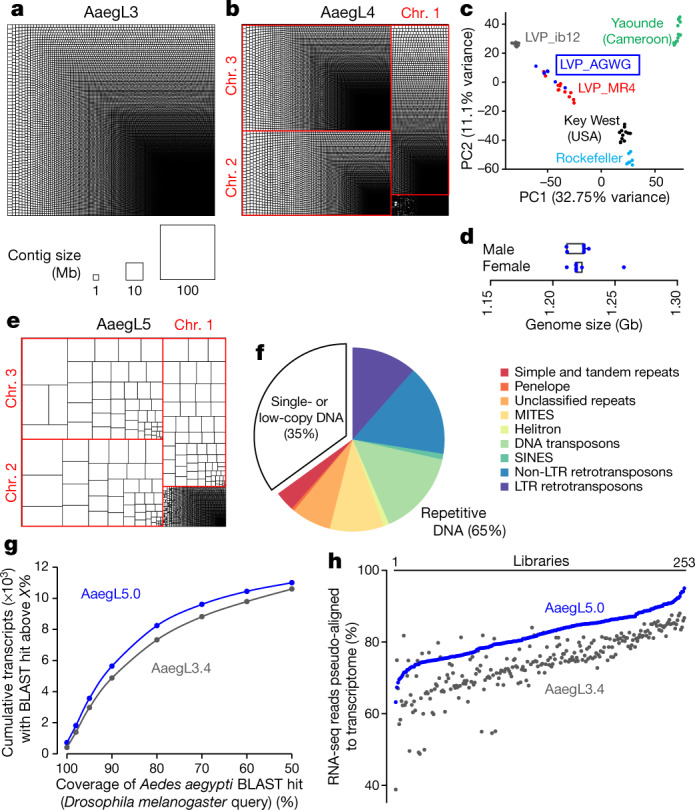
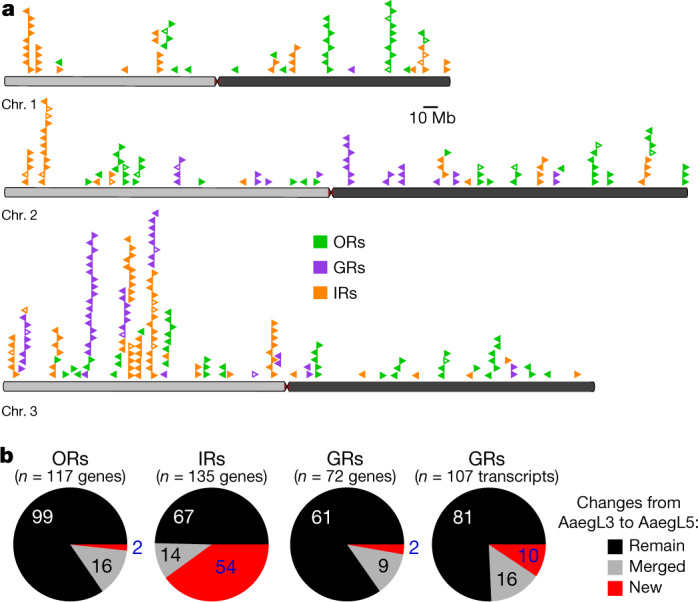
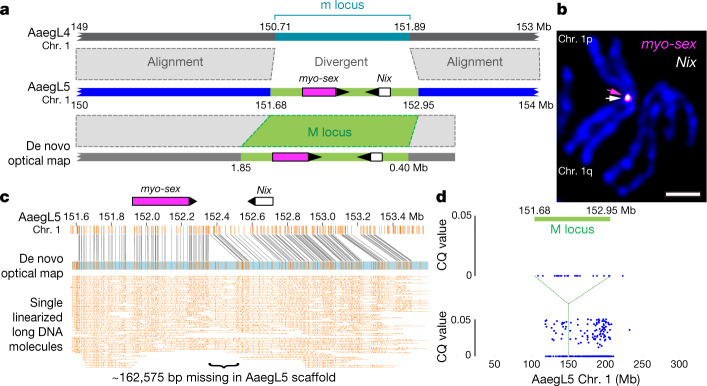
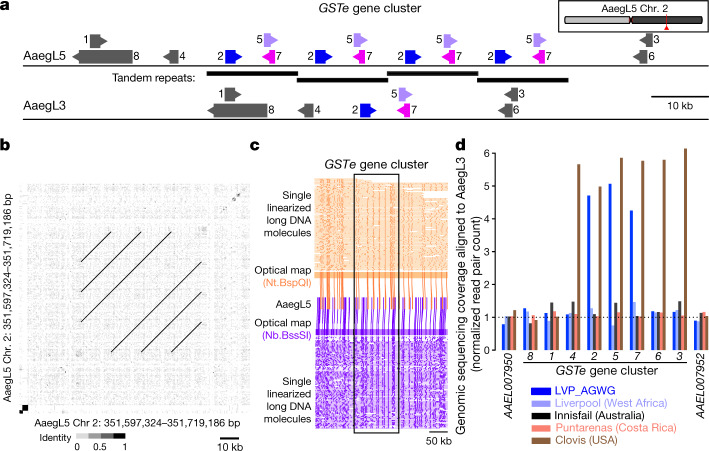
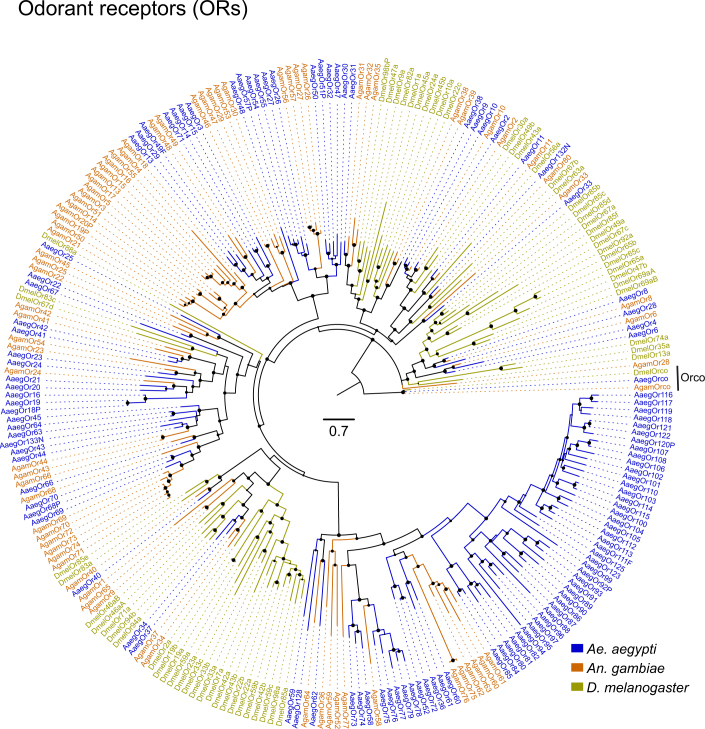
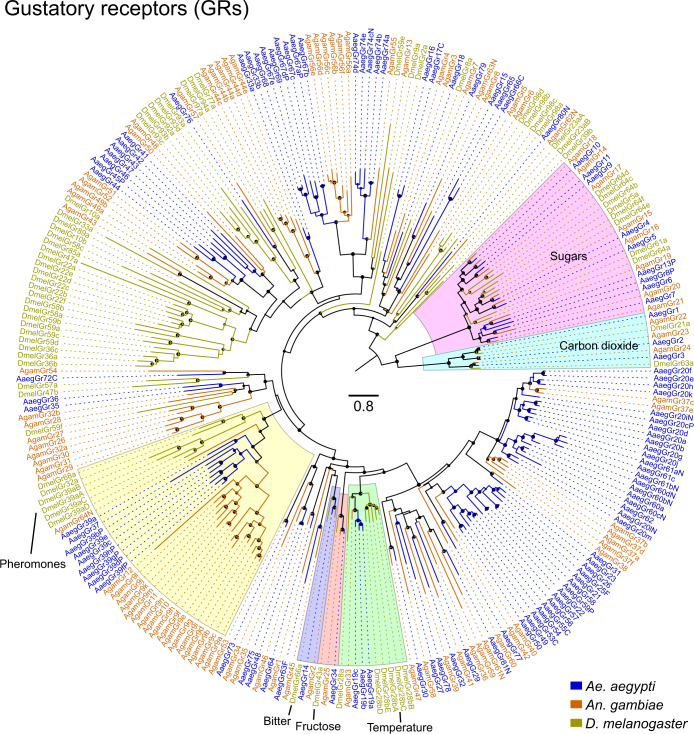
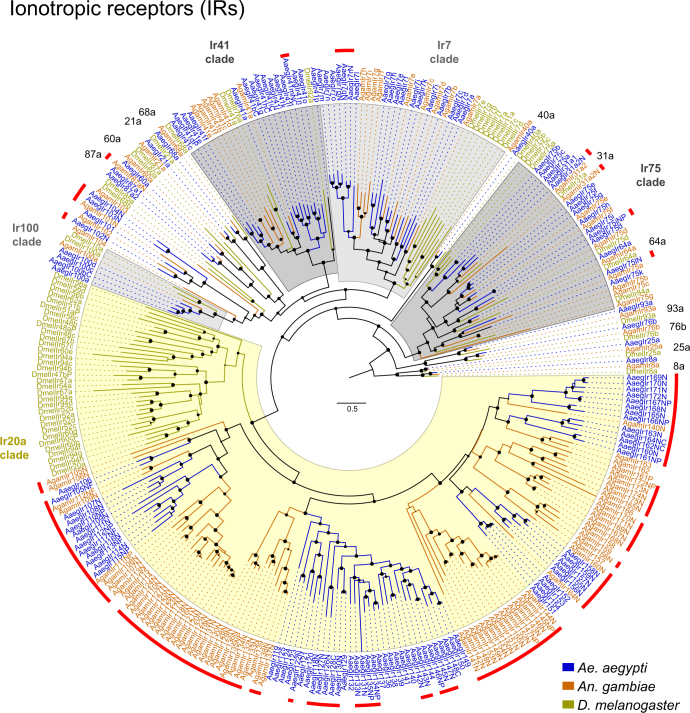
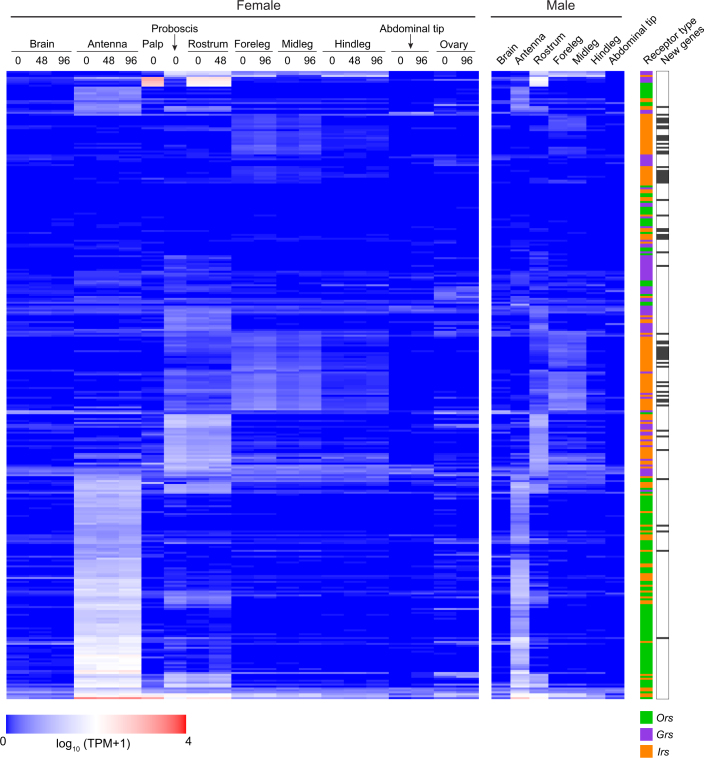
Female Aedes aegypti mosquitoes infect more than 400 million people each year with dangerous viral pathogens including dengue, yellow fever, Zika and chikungunya. Progress in understanding the biology of mosquitoes and developing the tools to fight them has been slowed by the lack of a high-quality genome assembly. Here we combine diverse technologies to produce the markedly improved, fully re-annotated AaegL5 genome assembly, and demonstrate how it accelerates mosquito science. We anchored physical and cytogenetic maps, doubled the number of known chemosensory ionotropic receptors that guide mosquitoes to human hosts and egg-laying sites, provided further insight into the size and composition of the sex-determining M locus, and revealed copy-number variation among glutathione S-transferase genes that are important for insecticide resistance. Using high-resolution quantitative trait locus and population genomic analyses, we mapped new candidates for dengue vector competence and insecticide resistance. AaegL5 will catalyse new biological insights and intervention strategies to fight this deadly disease vector.
Conflict of interest statement
P.P., M.L.S., J.M., S.B.K., R.H. and J.K. are employees of Pacific Biosciences, a company developing single-molecule sequencing technologies. J.L., S.C., H.C. and A.R.H. are employees of Bionano Genomics and own company stock options. O.D., S.S.B., A.D.O., A.P.A. and E.L.A. are inventors on a US provisional patent application 62/347,605, filed 8 June 2016, by the Baylor College of Medicine and the Broad Institute.
Figures
Comment in
-
Improved mosquito genome points to population-control strategies.Nature. 2018 Nov;563(7732):482-483. doi: 10.1038/d41586-018-07266-4. Nature. 2018. PMID: 30459371 No abstract available.
References
Publication types
MeSH terms
Substances
Grants and funding
- U01 HL130010/HL/NHLBI NIH HHS/United States
- MC_PC_16052/MRC_/Medical Research Council/United Kingdom
- D43 TW001130/TW/FIC NIH HHS/United States
- UM1 HG009375/HG/NHGRI NIH HHS/United States
- R01 DC014247/DC/NIDCD NIH HHS/United States
- R01 AI101112/AI/NIAID NIH HHS/United States
- R01 AI123338/AI/NIAID NIH HHS/United States
- U01 AI088647/AI/NIAID NIH HHS/United States
- MC_PC_16078/MRC_/Medical Research Council/United Kingdom
- T32 GM007739/GM/NIGMS NIH HHS/United States
- U19 AI110818/AI/NIAID NIH HHS/United States
- BB/F021933/1/BB_/Biotechnology and Biological Sciences Research Council/United Kingdom
- UL1 TR000043/TR/NCATS NIH HHS/United States
- F30 DC017658/DC/NIDCD NIH HHS/United States
- R01 AI121211/AI/NIAID NIH HHS/United States
- R35 GM118336/GM/NIGMS NIH HHS/United States
- K22 AI113060/AI/NIAID NIH HHS/United States
- DP2 OD008540/OD/NIH HHS/United States
- R00 DC012069/DC/NIDCD NIH HHS/United States
- R21 AI121853/AI/NIAID NIH HHS/United States
- R21 AI123937/AI/NIAID NIH HHS/United States
LinkOut - more resources
Full Text Sources
Other Literature Sources
Molecular Biology Databases
