


Comparison of Light-Emitting Diode-Curing Unit and Halogen-Based Light-Curing Unit for the Polymerization of Orthodontic Resins: An In vitro Study
- PMID: 30430067
- PMCID: PMC6187877
- DOI: 10.4103/jispcd.JISPCD_302_17
Comparison of Light-Emitting Diode-Curing Unit and Halogen-Based Light-Curing Unit for the Polymerization of Orthodontic Resins: An In vitro Study
Abstract
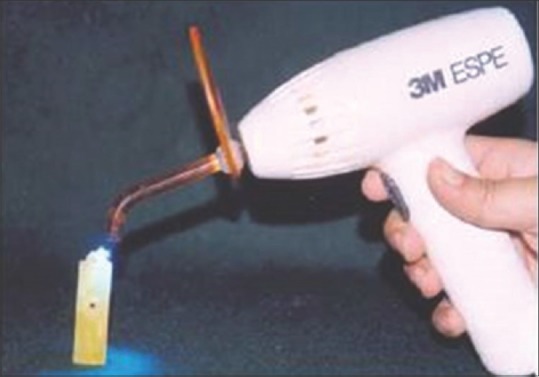
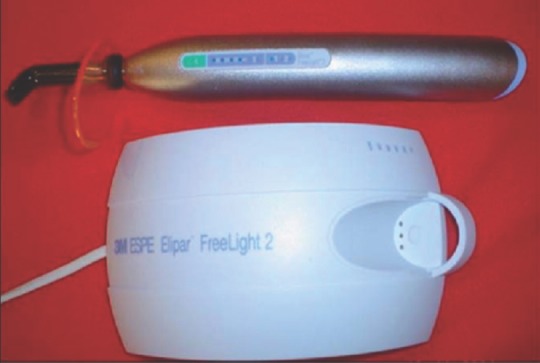
Aims and objectives: Conventionally, composites are cured using halogen-based light-curing units (LCUs). However, recently, light-emitting diode (LED) LCUs have been introduced commercially, claiming many advantages, yet producing comparable bond strength even when cured with single LED LCUs. This present study was undertaken to compare the shear bond strength of orthodontic brackets bonded to teeth with conventional halogen LCU (3M ESPE Elipar 2500) and LED LCU (3M ESPE Elipar FreeLight 2) and to determine the site of bond failure.
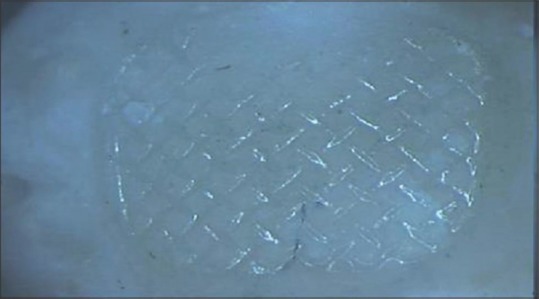
Materials and methods: Fifty extracted human bicuspid teeth were randomly divided into two groups of 25 each. All the teeth were etched and primed. Then, orthodontic brackets were bonded onto the teeth with the light-cured adhesive (Transbond XT, 3M Unitek), and the adhesive was cured with halogen LCU and LED LCU for Group I and Group II, respectively. The brackets were then subjected to shear stress using a Hounsfield universal testing machine at a crosshead speed of 1 mm/min. The force was recorded in Kgf and converted to MPa. The residual adhesive was scored based on the modified adhesive remnant index (ARI) using an optical stereomicroscope. The data were analyzed using the Student's t-test and the Mann-Whitney test at a significance level of 0.05.
Results: The results have shown that there is no significant difference between the shear bond strengths and the ARI scores of both the groups.
Conclusion: From this study, it can be concluded that (1) LED LCUs containing even only a single LED can cure the composite as well as a halogen-based LCU; (2) there is no statistically significant difference in the shear bond strengths of the two groups; and (3) the ARI scores show no significant difference.
Keywords: Adhesive remnant index scores; halogen-based light-curing unit; light-emitting diode light-curing unit; shear bond strength.
Conflict of interest statement
There are no conflicts of interest.
Figures





References
-
- Buonocore M. A simple method of increasing the adhesion of acrylic filling materials to enamel surface. J Dent Res. 1955;34:849–53. - PubMed
-
- Leonard DL, Charlton DG, Roberts HW, Cohen ME. Polymerization efficiency of LED curing lights. J Esthet Restor Dent. 2002;14:286–95. - PubMed
-
- Alshali RZ, Silikas N, Satterthwaite JD. Degree of conversion of bulk-fill compared to conventional resin-composites at two time intervals. Dent Mater. 2013;29:e213–7. - PubMed
-
- Verma P. Curing efficiency of three light emitting diode units at different curing profiles. Indian J Dent Res. 2016;27:168–73. - PubMed
-
- Bani M, Tirali RE. Effect of new light curing units on microleakage and microhardness of resin sealants. Dent Mater J. 2016;35:517–22. - PubMed
LinkOut - more resources
Full Text Sources
