


A realist process evaluation within the Facilitating Implementation of Research Evidence (FIRE) cluster randomised controlled international trial: an exemplar
- PMID: 30442165
- PMCID: PMC6238283
- DOI: 10.1186/s13012-018-0811-0
A realist process evaluation within the Facilitating Implementation of Research Evidence (FIRE) cluster randomised controlled international trial: an exemplar
Abstract
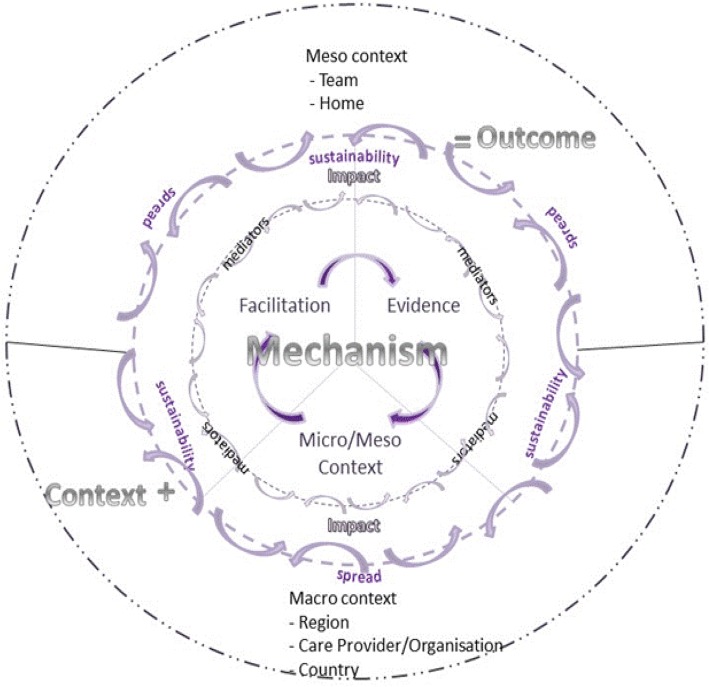
Background: Facilitation is a promising implementation intervention, which requires theory-informed evaluation. This paper presents an exemplar of a multi-country realist process evaluation that was embedded in the first international randomised controlled trial evaluating two types of facilitation for implementing urinary continence care recommendations. We aimed to uncover what worked (and did not work), for whom, how, why and in what circumstances during the process of implementing the facilitation interventions in practice.
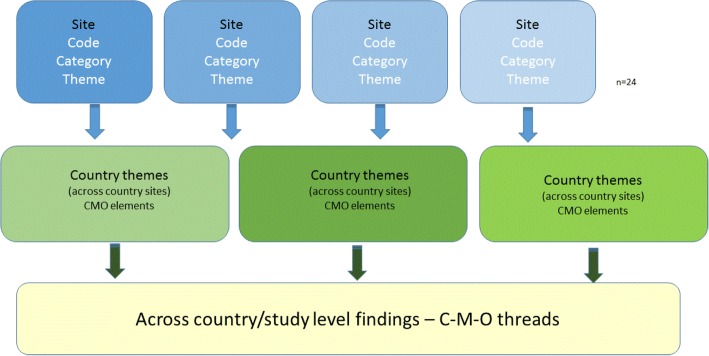
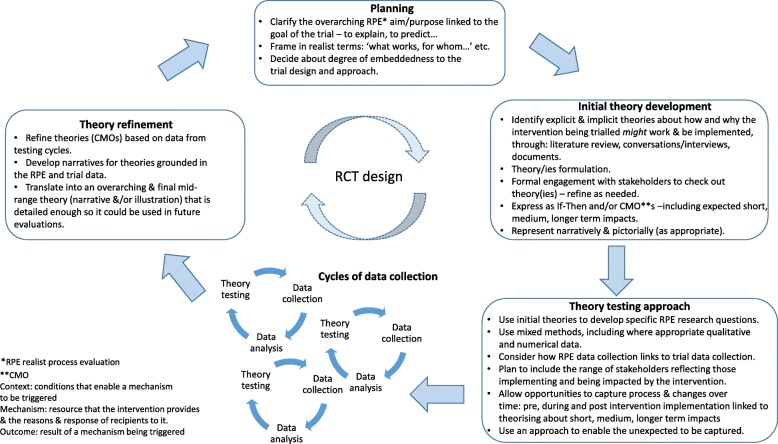
Methods: This realist process evaluation included theory formulation, theory testing and refining. Data were collected in 24 care home sites across four European countries. Data were collected over four time points using multiple qualitative methods: observation (372 h), interviews with staff (n = 357), residents (n = 152), next of kin (n = 109) and other stakeholders (n = 128), supplemented by facilitator activity logs. A combined inductive and deductive data analysis process focused on realist theory refinement and testing.
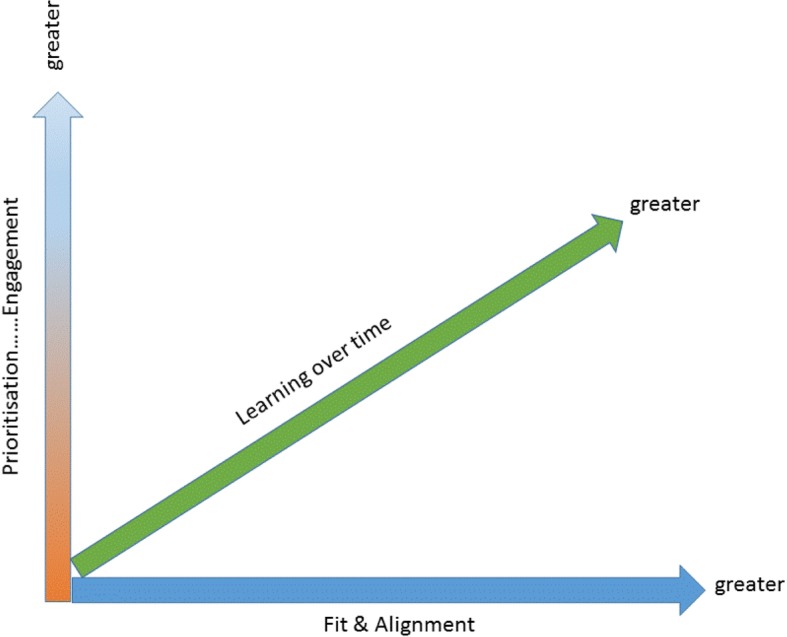
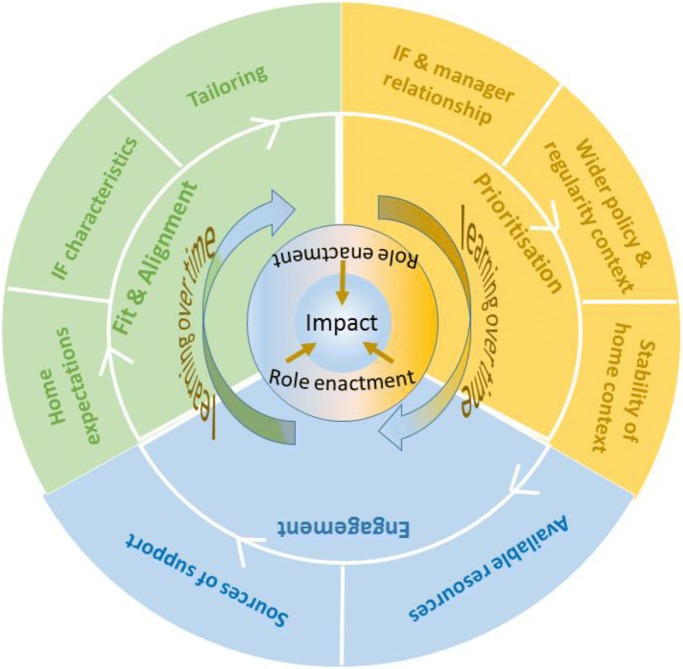
Results: The content and approach of the two facilitation programmes prompted variable opportunities to align and realign support with the needs and expectations of facilitators and homes. This influenced their level of confidence in fulfilling the facilitator role and ability to deliver the intervention as planned. The success of intervention implementation was largely dependent on whether sites prioritised their involvement in both the study and the facilitation programme. In contexts where the study was prioritised (including release of resources) and where managers and staff support was sustained, this prompted collective engagement (as an attitude and action). Internal facilitators' (IF) personal characteristics and abilities, including personal and formal authority, in combination with a supportive environment prompted by managers triggered the potential for learning over time. Learning over time resulted in a sense of confidence and personal growth, and enactment of the facilitation role, which resulted in practice changes.
Conclusion: The scale and multi-country nature of this study provided a novel context to conduct one of the few trial embedded realist-informed process evaluations. In addition to providing an explanatory account of implementation processes, a conceptual platform for future facilitation research is presented. Finally, a realist-informed process evaluation framework is outlined, which could inform future research of this nature.
Trial registration: Current controlled trials ISRCTN11598502 .
Keywords: Context; Facilitation; Implementation; Older people; PARIHS; Realist process evaluation; Urinary incontinence.
Conflict of interest statement
Ethics approval and consent to participate
Ethical Committee approval was obtained in England (10/WSE04/20), Sweden (2009/1806-31/2) and Republic of Ireland (ECM4(u)02/03/10). In The Netherlands, researchers followed advice to get permission from either an ethical committee at site level, or where this did not exist, from a scientific or residents committee at the site (HAZ-11087777-JGS). Research Governance approval was also obtained in England and permission to collect data at the sites obtained in Sweden and Republic of Ireland.
Consent for publication
Consent form allowed the use of anonymised quotations in publications.
Competing interests
JRM is an Editorial Board member of Implementation Science. AK, GH, BMcC, JRM, KS and AT have all been involved in the development of the PARIHS framework. All other authors declared that they have no competing interests.
Publisher’s Note
Springer Nature remains neutral with regard to jurisdictional claims in published maps and institutional affiliations.
Figures
References
Publication types
MeSH terms
Associated data
LinkOut - more resources
Full Text Sources
Medical
Miscellaneous
