


Orthopaedic challenges for mucopolysaccharidoses
- PMID: 30442173
- PMCID: PMC6238259
- DOI: 10.1186/s13052-018-0557-y
Orthopaedic challenges for mucopolysaccharidoses
Abstract
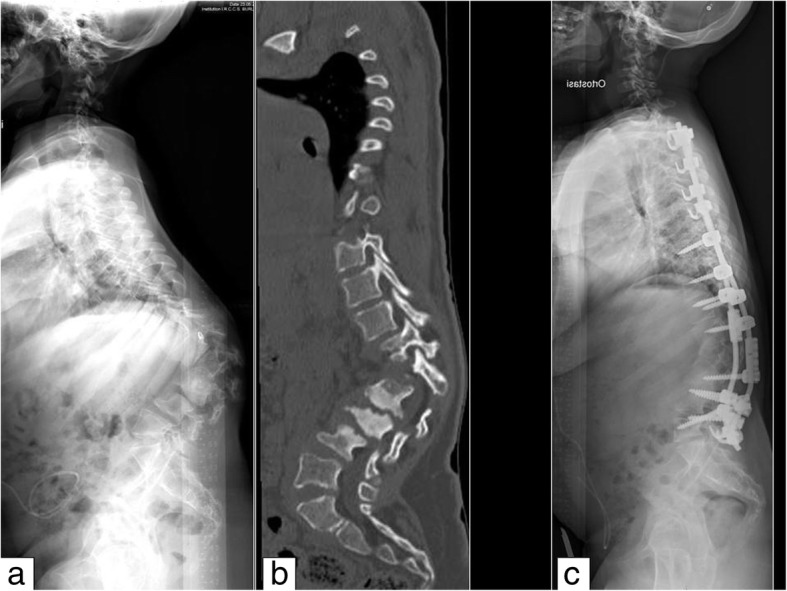
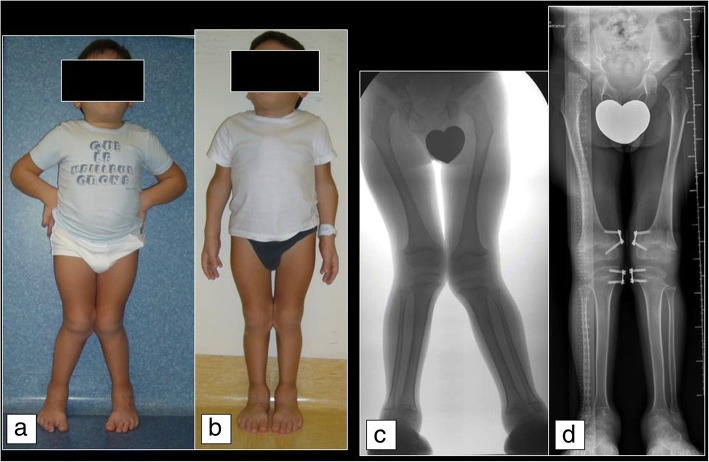
Mucopolysaccharidoses (MPS) are a group of diseases characterized by abnormal accumulation of glycosaminoglycans (GAGs). Although there are differences among the various disease types, the osteoarticular system is always involved. The aim of the present study was to establish a framework for MPS-related orthopaedic manifestations and for their treatment. The authors, affiliated to three different Italian Orthopaedic Centres, report data taken from the literature reviewed in light of their accumulated professional experience. Bone alterations make up what is known as dysostosis multiplex, involving the trunk and limbs and with typical radiological findings. Joints are affected by pathological tissue infiltrations. The cervical spinal cord is involved, with stenosis and cervical and occipitocervical instability. In MPS there is a much higher incidence of scoliosis compared with healthy subjects without any particular distinctive feature. Kyphosis of the spine is more frequent and also more severe because of its possible neurological complications, and it is localized at the thoracolumbar level with a malformed vertebra at the top of the deformity. Evolving forms, and those associated with neurological damage, require anteroposterior spine fusion. The hip is invariably involved, with dysplasia affecting the femoral neck (coxa valga), the femoral epiphysis (loss of sphericity, osteonecrosis), and the femoral acetabulum which is flared. All these features explain the tendency to progressive hip migration. Genu valgum is often found (a deviation of the physiological axis with an obtuse angle opening laterally). This deformity is often localized at the proximal tibial metaphysis; it causes functional limitations and leads to an irregular erosion of the articular cartilage. In young patients who still have the growth plate, it is possible to execute a medial hemiepiphysiodesis, a temporary inhibition of cartilage growth, with progressive axis correction. In this paper, the characterisation of clinical features and the review of treatments are divided into separate sections based on the part of the body involved. The conclusions of each section are presented as a summary. One section discusses the high risk of anaesthesia-related complications requiring the collaboration of specifically trained personnel.
Conflict of interest statement
Ethics approval and consent to participate
Not applicable.
Consent for publication
The patients or their parents/guardians gave written consent to the publication of their pictures.
Competing interests
The authors declare that they have no competing interests.
Publisher’s Note
Springer Nature remains neutral with regard to jurisdictional claims in published maps and institutional affiliations.
Figures
References
Publication types
MeSH terms
LinkOut - more resources
Full Text Sources
Medical
