


Possible strategies to cross the blood-brain barrier
- PMID: 30442184
- PMCID: PMC6238258
- DOI: 10.1186/s13052-018-0563-0
Possible strategies to cross the blood-brain barrier
Abstract
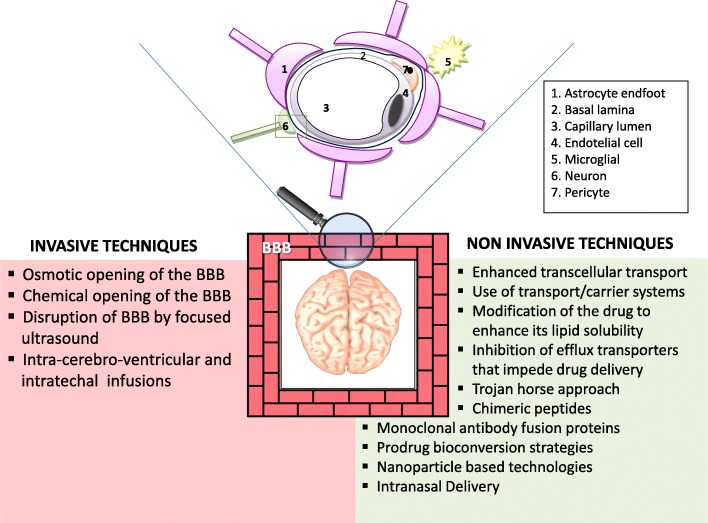
The mucopolysaccharidoses (MPS) are a heterogeneous group of in-born metabolic conditions caused by genetic defects that result in the absence or severe deficiency of one of the lysosomal hydrolases responsible for the degradation of glycosaminoglycans (GAGs). Such enzyme deficiency causes accumulation of GAGs that begins in infancy and progressively worsens, often affecting several organs including the central nervous system (CNS) inducing mental retardation, progressive neurodegeneration, and premature death. Over the last years, enormous progress has been made in the treatment of many MPS types, and available treatments are efficacious for many of them. Nevertheless, treatment of MPS with CNS involvement is limited mostly because of delivery impediments related to the presence of the blood-brain barrier (BBB). This chapter presents an overview of the BBB and of the different strategies that have been developed to overcome the problem of drug transport at the BBB, assuring efficient delivery of therapeutic agents to the brain.
Keywords: Blood–brain barrier; Central nervous system; Drug delivery; Mucopolysaccharidoses.
Conflict of interest statement
Ethics approval and consent to participate
Not applicable.
Consent for publication
Not applicable.
Competing interests
The authors declare that they have no competing interests.
Publisher’s Note
Springer Nature remains neutral with regard to jurisdictional claims in published maps and institutional affiliations.
Figures
References
Publication types
MeSH terms
LinkOut - more resources
Full Text Sources
