


Aerosolized antibiotics for ventilator-associated pneumonia: a pairwise and Bayesian network meta-analysis
- PMID: 30442203
- PMCID: PMC6238320
- DOI: 10.1186/s13054-018-2106-x
Aerosolized antibiotics for ventilator-associated pneumonia: a pairwise and Bayesian network meta-analysis
Abstract
Background: Aerosolized antibiotics have been proposed as a novel and promising treatment option for the treatment of ventilator-associated pneumonia (VAP). However, the optimum aerosolized antibiotics for VAP remain uncertain.
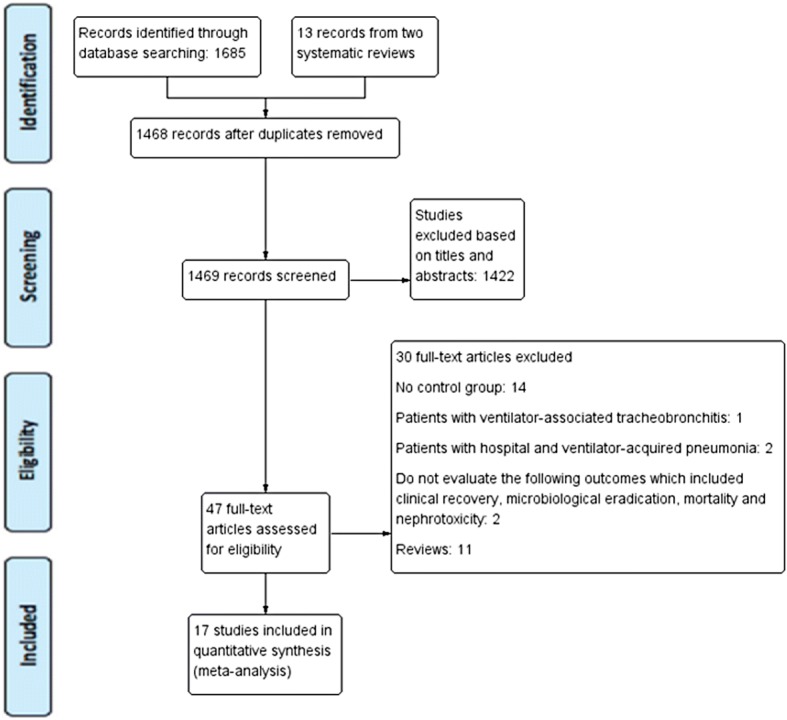
Methods: We included studies from two systematic reviews and searched PubMed, EMBASE, and Cochrane databases for other studies. Eligible studies included randomized controlled trials and observational studies. Extracted data were analyzed by pairwise and network meta-analysis.
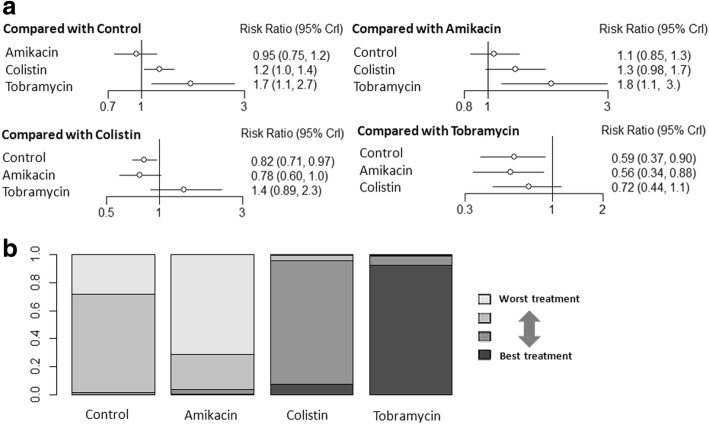
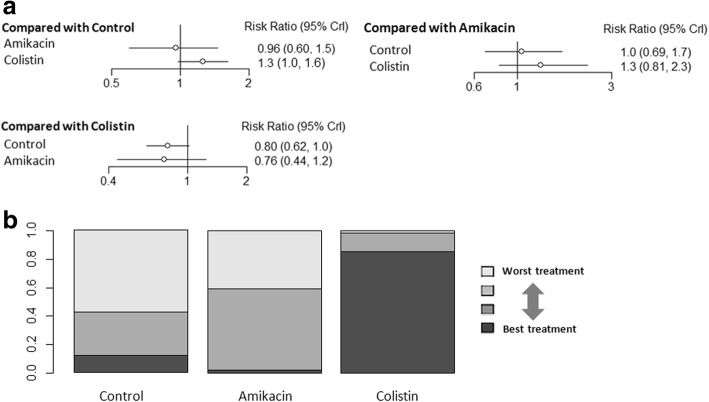
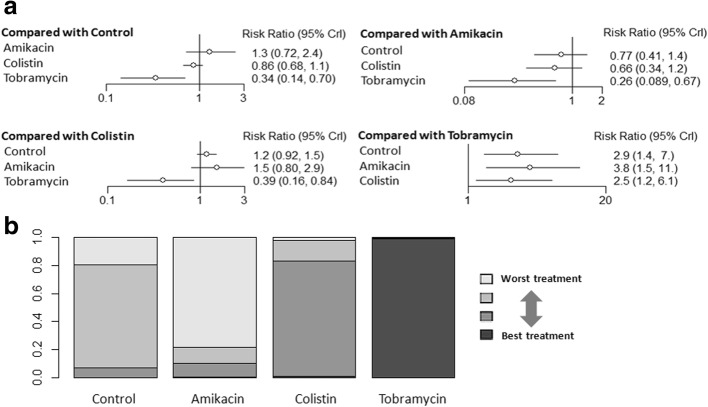
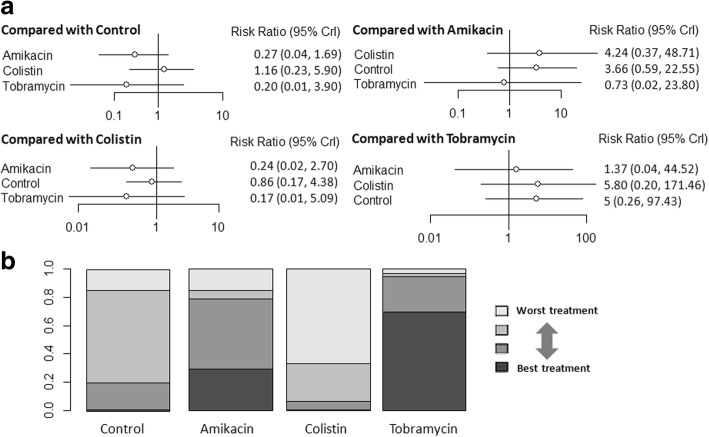
Results: Eight observational and eight randomized studies were identified for this analysis. By pairwise meta-analysis using intravenous antibiotics as the reference, patients treated with aerosolized antibiotics were associated with significantly higher rates of clinical recovery (risk ratio (RR) 1.21, 95% confidence interval (CI) 1.09-1.34; P = 0.001) and microbiological eradication (RR 1.42, 95% CI 1.22-1.650; P < 0.0001). There were no significant differences in the risks of mortality (RR 0.88, 95% CI 0.74-1.04; P = 0.127) or nephrotoxicity (RR 1.00, 95% CI 0.72-1.39; P = 0.995). Using network meta-analysis, clinical recovery benefits were seen only with aerosolized tobramycin and colistin (especially tobramycin), and microbiological eradication benefits were seen only with colistin. Aerosolized tobramycin was also associated with significantly lower mortality when compared with aerosolized amikacin and colistin and intravenous antibiotics. The assessment of rank probabilities indicated aerosolized tobramycin presented the greatest likelihood of having benefits for clinical recovery and mortality, and aerosolized colistin presented the best benefits for microbiological eradication.
Conclusions: Aerosolized antibiotics appear to be a useful treatment for VAP with respect to clinical recovery and microbiological eradication, and do not increase mortality or nephrotoxicity risks. Our network meta-analysis in patients with VAP suggests that clinical recovery benefits are associated with aerosolized tobramycin and colistin (especially tobramycin), microbiological eradication with aerosolized colistin, and survival with aerosolized tobramycin, mostly based on observational studies. Due to the low levels of evidence, definitive recommendations cannot be made before additional, large randomized studies are carried out.
Keywords: Aerosolized antibiotics; Meta-analysis; Multidrug-resistant pathogens; Network meta-analysis; Ventilator-associated pneumonia.
Conflict of interest statement
Ethics approval and consent to participate
Not applicable.
Consent for publication
Not applicable.
Competing interests
The authors declare that they have no competing interests.
Publisher’s Note
Springer Nature remains neutral with regard to jurisdictional claims in published maps and institutional affiliations.
Figures
References
-
- Kollef MH. What is ventilator-associated pneumonia and why is it important? Respir Care. 2005;50(6):714–721. - PubMed
-
- Sole-Lleonart C, Rouby JJ, Blot S, Poulakou G, Chastre J, Palmer LB, Bassetti M, Luyt CE, Pereira JM, Riera J, et al. Nebulization of antiinfective agents in invasively mechanically ventilated adults: a systematic review and meta-analysis. Anesthesiology. 2017;126(5):890–908. doi: 10.1097/ALN.0000000000001570. - DOI - PubMed
Publication types
MeSH terms
Substances
Grants and funding
LinkOut - more resources
Full Text Sources
Medical
Molecular Biology Databases
