


'Primary' Microvascular Angina: Clinical Characteristics, Pathogenesis and Management
- PMID: 30443265
- PMCID: PMC6234490
- DOI: 10.15420/icr.2018.15.2
'Primary' Microvascular Angina: Clinical Characteristics, Pathogenesis and Management
Abstract
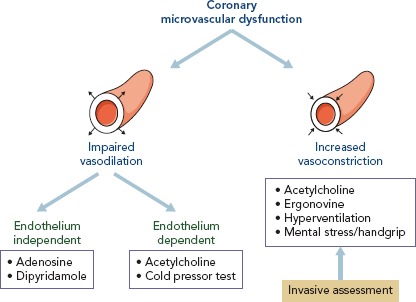
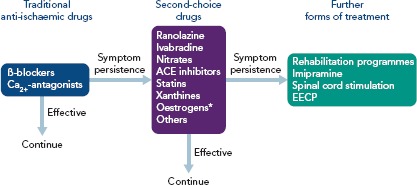
Microvascular angina (MVA), i.e. angina caused by abnormalities of the coronary microcirculation, is increasingly recognised in clinical practice. The pathogenetic mechanisms of MVA are heterogeneous and may involve both structural and functional alterations of coronary microcirculation, and functional abnormalities may variably involve an impairment of coronary microvascular dilatation and an increased microvascular constrictor activity. Both invasive and non-invasive diagnostic tools exist to identify patients with MVA in clinical practice. Prognosis has been reported to be good in primary MVA patients, although the prognostic implications of coronary microvascular dysfunction (CMVD) in more heterogeneous populations of angina patients need further assessment. Management of primary MVA can be challenging, but pharmacological and non-pharmacological treatments exist that allow satisfactory control of symptoms in most patients.
Keywords: Microvascular angina; angina therapy; clinical outcome; coronary microvascular dysfunction; myocardial ischaemia; normal coronary arteries.
Conflict of interest statement
Disclosure: The authors have no conflict of interest to declare.
Figures
References
-
- Cavusoglu Y, Entok E, Timuralp B et al. Regional distribution and extent of perfusion abnormalities, and the lung to heart uptake ratios during exercise thallium-201 SPECT imaging in patients with cardiac syndrome X. Can J Cardiol. 2005;21:57–62. - PubMed
Publication types
LinkOut - more resources
Full Text Sources
