


Follicular flushing increases the number of oocytes retrieved in poor ovarian responders undergoing in vitro fertilization: a retrospective cohort study
- PMID: 30445950
- PMCID: PMC6240264
- DOI: 10.1186/s12905-018-0681-2
Follicular flushing increases the number of oocytes retrieved in poor ovarian responders undergoing in vitro fertilization: a retrospective cohort study
Abstract
Background: To investigate the impact of follicular flushing on the number of oocytes retrieved and embryo quality and to determine the optimal number of flushings for poor ovarian responders (PORs) undergoing in vitro fertilization (IVF).
Methods: This retrospective study included 291 IVF cycles in 224 patients who were PORs and had no more than three dominant follicles on retrieval day. During oocyte retrieval, follicular fluid was aspirated and examined for an oocyte. If no oocyte was identified, follicular flushing was repeated until an oocyte was retrieved or up to a maximum of nine times.
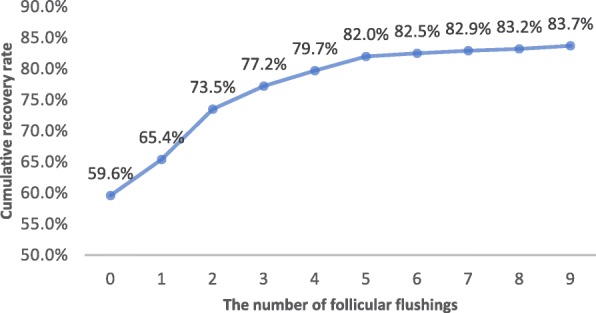
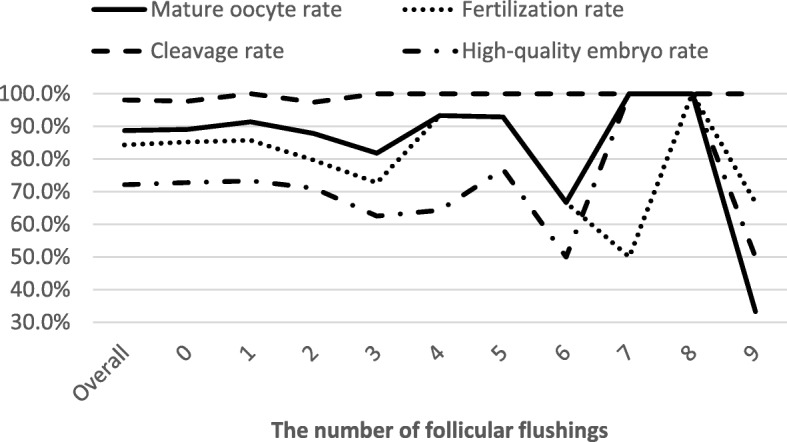
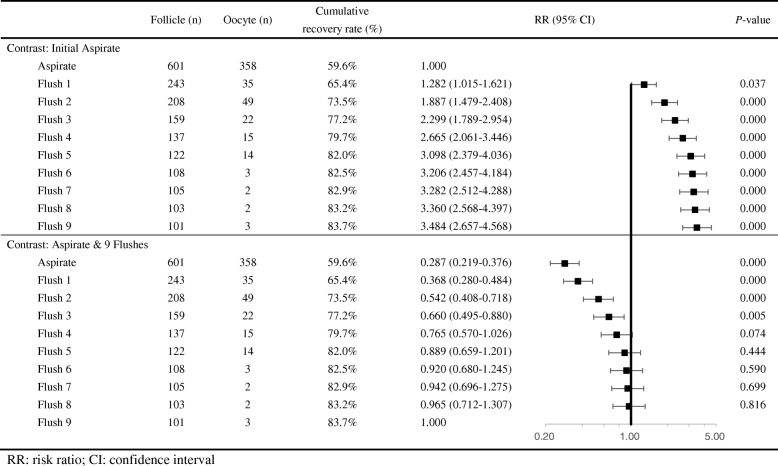
Results: The mean number of oocytes retrieved by aspiration and subsequent flushes was significantly higher than the number retrieved from the initial aspirate (1.73 ± 0.96 VS. 1.23 ± 1.00, P = 0.000). The total recovery rate was 83.7% (503/601), which was significantly higher than the 59.6% recovery rate for direct aspiration (P = 0.000). Before the 4th follicular flushing, the cumulative recovery rate increased significantly as flushing was repeated, but after the 4th flushing, the ascending trend was mitigated; and the risk ratio of recovering fewer oocytes after 4 flushes compared with after 9 flushes was 0.765 (95%CI, 0.570-1.026, P = 0.074). Significant differences were not observed in maturation rate, fertilization rate, cleavage rate or high-quality embryo rate (P > 0.05).
Conclusions: Follicular flushing may increase the number of oocytes retrieved and does not have adverse effects on oocyte or embryo quality in PORs undergoing IVF. Four times may be an optimal number of follicular flushings.
Keywords: Follicular flushing; In vitro fertilization; Oocyte retrieval; Poor ovarian response.
Conflict of interest statement
Ethics approval and consent to participate
Our study protocol was approved by the Medical Ethics Committee of the International Peace Maternity and Child Health Hospital, School of Medicine, Shanghai Jiaotong University (Reference number: GKLW 2017–87). And as the study was designed to retrospectively analyze the data of patients who had finished their treatments, the informed consents for collecting and analyzing their medical records were previously signed at the beginning of their treatments.
Consent for publication
Not applicable.
Competing interests
The authors declare that they have no competing interests.
Publisher’s Note
Springer Nature remains neutral with regard to jurisdictional claims in published maps and institutional affiliations.
Figures
References
-
- el Hussein E, Balen A, Tan S. A prospective study comparing the outcome of oocytes retrieved in the aspirate with those retrieved in the flush during transvaginal ultrasound directed oocyte recovery for in-vitro fertilization. Br J Obstet Gynaecol. 1992;99:841–844. doi: 10.1111/j.1471-0528.1992.tb14417.x. - DOI - PubMed
MeSH terms
LinkOut - more resources
Full Text Sources
