


Review
doi: 10.1016/j.tips.2018.09.008.
Epub 2018 Nov 13.
Geroneuroprotectors: Effective Geroprotectors for the Brain
Affiliations
- PMID: 30446211
- PMCID: PMC6558984
- DOI: 10.1016/j.tips.2018.09.008
Item in Clipboard
Review
Geroneuroprotectors: Effective Geroprotectors for the Brain
Trends Pharmacol Sci.
2018 Dec.
Abstract
Geroprotectors are compounds that slow the rate of biological aging and therefore may reduce the incidence of age-associated diseases such as Alzheimer's disease (AD). However, few have therapeutic efficacy in mammalian AD models. Here we describe the identification of geroneuroprotectors (GNPs), novel AD drug candidates that meet the criteria for geroprotectors.
Keywords: Alzheimer’s disease; aging; drug discovery; geroscience; multimorbidity; neuroprotection.
Copyright © 2018 Elsevier Ltd. All rights reserved.
Figures
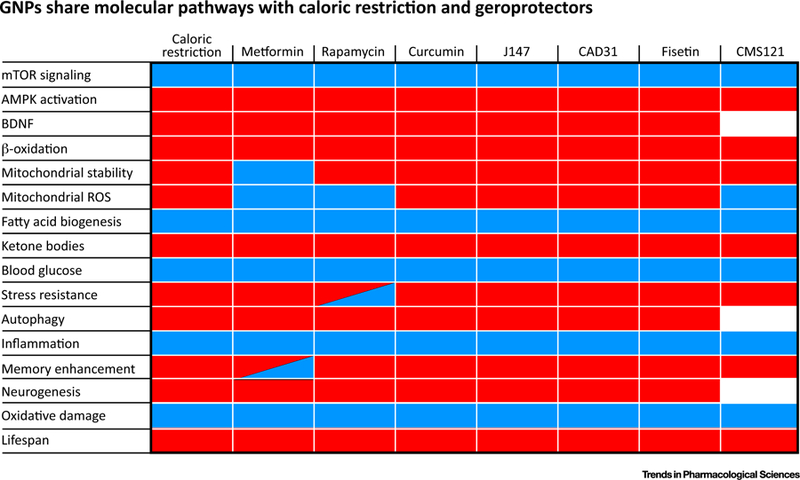
Heatmap of molecular pathways activated (shown as red) or inhibited (shown as blue) by the different compounds is shown. White spaces denote that the effects were not determined whereas the hatched boxes depict publications showing both activation and inhibition. Data are compiled from [,,–20].
References
-
- Moskalev A et al. (2015) Geroprotectors.org: a new, structured and curated database of current therpeutic interventions in aging and age-related disease. Aging (Albany N. Y.) 7, 616–628 - PMC - PubMed
-
- Salminen A and Kaarniranta K (2012) AMP-activated protein kinase (AMPK) controls the aging process via an integrated signaling network. Ageing Res. Rev 11, 230–241 - PubMed
-
- Petrascheck M et al. (2007) An antidepressant that extends lifespan in adult Caenorhabditis elegans. Nature 450, 553–556 - PubMed
Publication types
MeSH terms
Substances
Grants and funding
LinkOut - more resources
Full Text Sources
Medical
