


Bacteria engineered to produce IL-22 in intestine induce expression of REG3G to reduce ethanol-induced liver disease in mice
- PMID: 30448775
- PMCID: PMC6387784
- DOI: 10.1136/gutjnl-2018-317232
Bacteria engineered to produce IL-22 in intestine induce expression of REG3G to reduce ethanol-induced liver disease in mice
Abstract
Objective: Antimicrobial C-type lectin regenerating islet-derived 3 gamma (REG3G) is suppressed in the small intestine during chronic ethanol feeding. Our aim was to determine the mechanism that underlies REG3G suppression during experimental alcoholic liver disease.
Design: Interleukin 22 (IL-22) regulates expression of REG3G. Therefore, we investigated the role of IL-22 in mice subjected to chronic-binge ethanol feeding (NIAAA model).
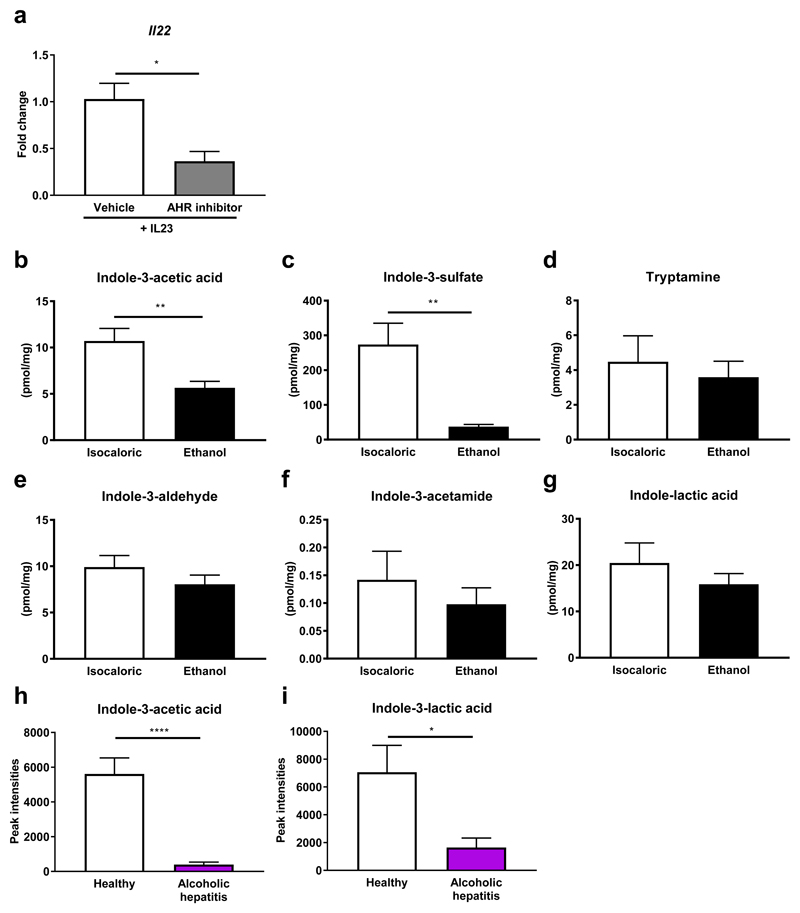
Results: In a mouse model of alcoholic liver disease, we found that type 3 innate lymphoid cells produce lower levels of IL-22. Reduced IL-22 production was the result of ethanol-induced dysbiosis and lower intestinal levels of indole-3-acetic acid (IAA), a microbiota-derived ligand of the aryl hydrocarbon receptor (AHR), which regulates expression of IL-22. Importantly, faecal levels of IAA were also found to be lower in patients with alcoholic hepatitis compared with healthy controls. Supplementation to restore intestinal levels of IAA protected mice from ethanol-induced steatohepatitis by inducing intestinal expression of IL-22 and REG3G, which prevented translocation of bacteria to liver. We engineered Lactobacillus reuteri to produce IL-22 (L. reuteri/IL-22) and fed them to mice along with the ethanol diet; these mice had reduced liver damage, inflammation and bacterial translocation to the liver compared with mice fed an isogenic control strain and upregulated expression of REG3G in intestine. However, L. reuteri/IL-22 did not reduce ethanol-induced liver disease in Reg3g-/- mice.
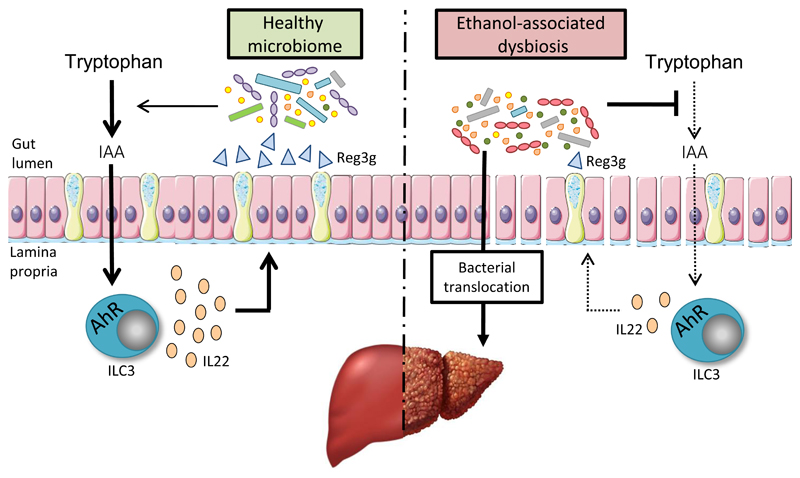
Conclusion: Ethanol-associated dysbiosis reduces levels of IAA and activation of the AHR to decrease expression of IL-22 in the intestine, leading to reduced expression of REG3G; this results in bacterial translocation to the liver and steatohepatitis. Bacteria engineered to produce IL-22 induce expression of REG3G to reduce ethanol-induced steatohepatitis.
Keywords: ILC; immune response; metabolome; microbiome.
© Author(s) (or their employer(s)) 2019. No commercial re-use. See rights and permissions. Published by BMJ.
Conflict of interest statement
Competing interests: None declared.
Figures



References
-
- Rehm J, Samokhvalov AV, Shield KD. Global burden of alcoholic liver diseases. J Hepatol. 2013;59:160–8. - PubMed
-
- Llopis M, Cassard AM, Wrzosek L, Boschat L, Bruneau A, Ferrere G, et al. Intestinal microbiota contributes to individual susceptibility to alcoholic liver disease. Gut. 2016;65:830–9. - PubMed
-
- Mukherjee S, Hooper LV. Antimicrobial defense of the intestine. Immunity. 2015;42:28–39. - PubMed
Publication types
MeSH terms
Substances
Grants and funding
LinkOut - more resources
Full Text Sources
Other Literature Sources
