


Update on prevention and treatment of sudden cardiac arrest
- PMID: 30449537
- PMCID: PMC6685756
- DOI: 10.1016/j.tcm.2018.11.002
Update on prevention and treatment of sudden cardiac arrest
Abstract
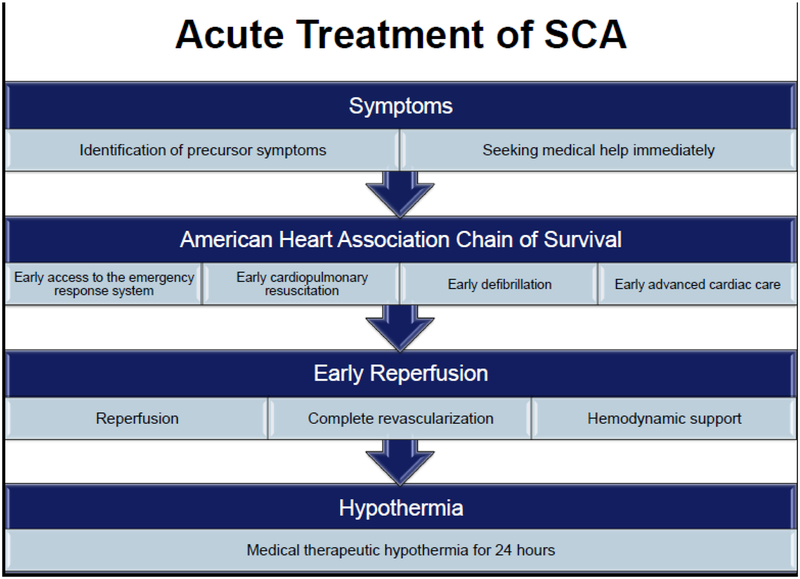
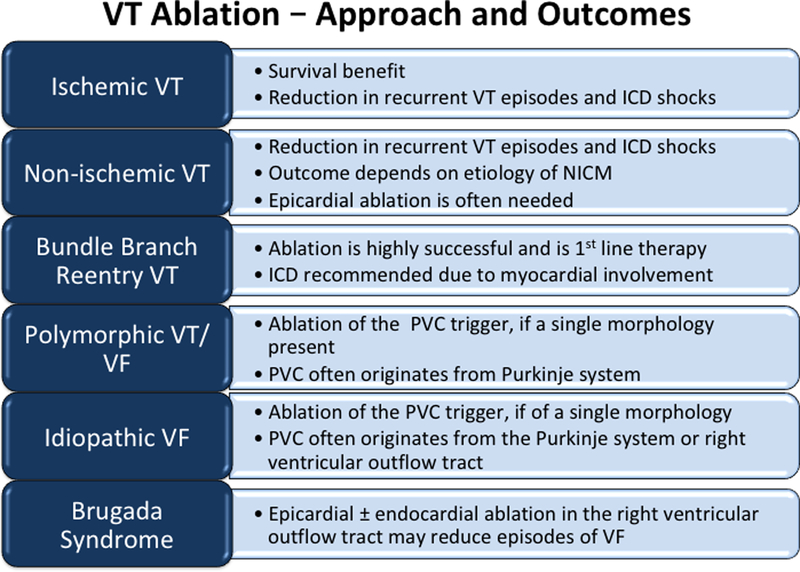
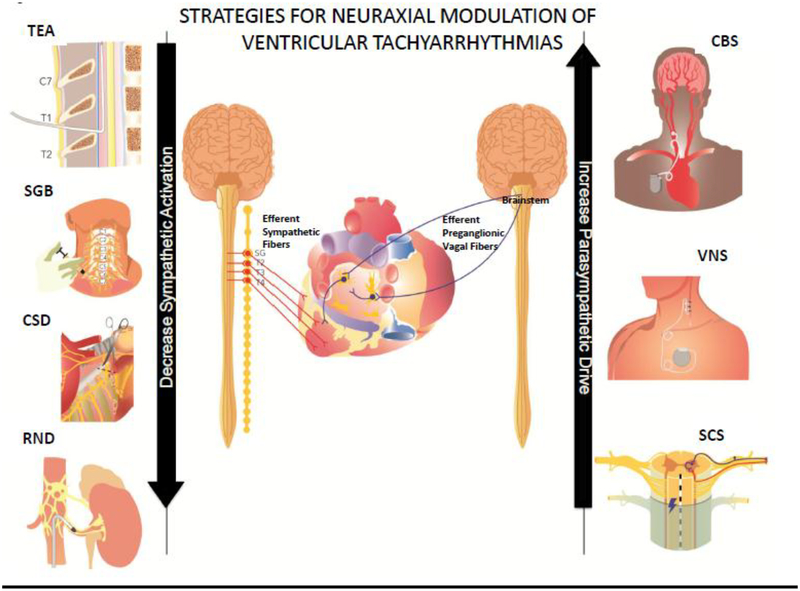
Sudden cardiac arrest is the leading cause of cardiovascular mortality, posing a substantial public health burden. The incidence and epidemiology of sudden death are a function of age, with primary arrhythmia syndromes and inherited cardiomyopathies representing the predominant causes in younger patients, while coronary artery disease being the leading etiology in those who are 35 years of age and older. Internal cardioverter defibrillators remain the mainstay of primary and secondary prevention of sudden cardiac arrest. In the acute phase, cardiac chain of survival, early reperfusion, and therapeutic hypothermia are the key steps in improving outcomes. In the chronic settings, ventricular tachycardia ablation has been shown to improve patients' quality of life by reducing frequency of defibrillator shocks. Moreover, recent studies have suggested that it may increase survival. Neuromodulation represents a novel therapeutic modality that has a great potential for improving treatment of ventricular arrhythmias.
Keywords: Ablation; Cardiac arrest; Neuromodulation; Sudden cardiac death; Ventricular arrhythmia; Ventricular tachycardia.
Copyright © 2018 Elsevier Inc. All rights reserved.
Figures
Comment in
-
Editorial commentary: The challenge of sudden cardiac arrest in patients with structural heart disease: Still a long way to go.Trends Cardiovasc Med. 2019 Oct;29(7):401-402. doi: 10.1016/j.tcm.2018.11.013. Epub 2018 Nov 27. Trends Cardiovasc Med. 2019. PMID: 30553704 No abstract available.
References
-
- Al-Khatib SM, Stevenson WG, Ackerman MJ, Gillis AM, Bryant WJ, Hlatky MA, et al. 2017 AHA/ACC/HRS Guideline for Management of Patients With Ventricular Arrhythmias and the Prevention of Sudden Cardiac Death: Executive Summary. Heart Rhythm. 2018;15(10):e190–e252. - PubMed
-
- Finocchiaro G, Papadakis M, Robertus J-L, Dhutia H, Steriotis AK, Tome M, et al. Etiology of Sudden Death in Sports. JACC. 2016;67(18):2108–15. - PubMed
-
- Hookana E, Junttila MJ, Puurunen V-PP, Tikkanen JT, Kaikkonen KS, Kortelainen M-LL, et al. Causes of nonischemic sudden cardiac death in the current era. Heart Rhythm. 2011;8(10):1570–5. - PubMed
-
- Krahn AD, Healey JS, Chauhan V, Birnie DH, Simpson CS, Champagne J, et al. Systematic Assessment of Patients With Unexplained Cardiac Arrest: Cardiac Arrest Survivors With Preserved Ejection Fraction Registry (CASPER). Circulation. 2009;120(4):278–85. - PubMed
