


Association Between Anxiety, Depression, and Post-traumatic Stress Disorder and Outcomes After Ischemic Stroke
- PMID: 30450075
- PMCID: PMC6224432
- DOI: 10.3389/fneur.2018.00890
Association Between Anxiety, Depression, and Post-traumatic Stress Disorder and Outcomes After Ischemic Stroke
Abstract
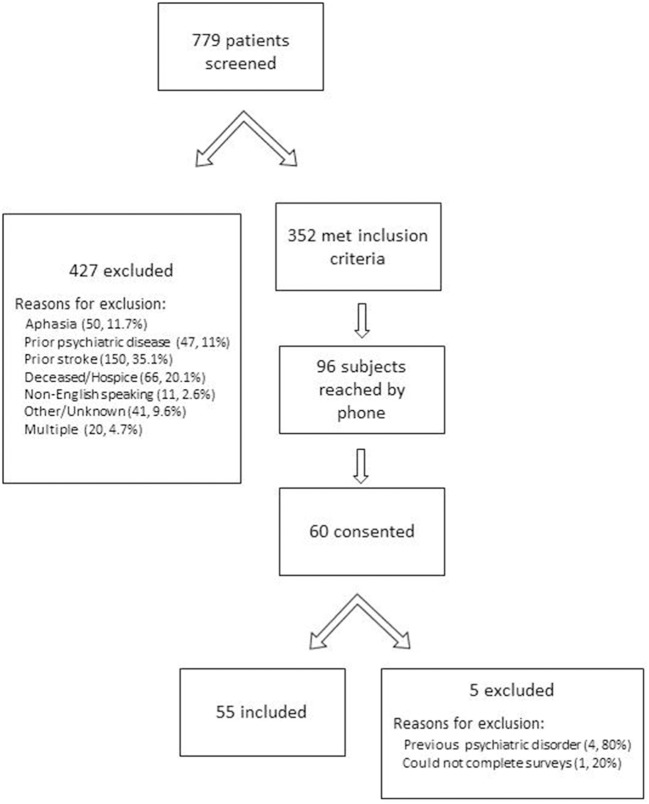
Background: Stroke patients are known to be at risk of developing anxiety, depression, and post-traumatic stress disorder (PTSD). Objective: To determine the overlap between anxiety, depression, and PTSD in patients after stroke and to determine the association between these disorders and quality of life, functional status, healthcare utilization, and return to work. Methods: A cross-sectional telephone survey was conducted to assess for depression, anxiety, PTSD, and health-related outcomes 6-12 months after first ischemic stroke in patients without prior psychiatric disease at a single stroke center. Results: Of 352 eligible subjects, 55 (16%) completed surveys. Seven subjects (13%) met criteria for probable anxiety, 6 (11%) for PTSD, and 11 for depression (20%). Of the 13 subjects (24%) who met criteria for any of these disorders, 6 (46%) met criteria for more than one, and 5 (39%) met criteria for all three. There were no significant differences in baseline characteristics, including stroke severity or neurologic symptoms, between those with or without any of these disorders. Those who had any of these disorders were less likely to be independent in their activities of daily living (ADLs) (54 vs. 95%, p < 0.001) and reported significantly worse quality of life (score of 0-100, median score of 50 vs. 80, p < 0.001) compared to those with none of these disorders. Conclusions: Anxiety, depression, and PTSD are common after stroke, have a high degree of co-occurrence, and are associated with worse outcomes, including quality of life and functional status.
Keywords: PTSD; anxiety; depression; mental health disorder; stroke.
References
-
- Zalihic A, Markotic V, Mabic M, Cerni-Obrdalj E, Zalihić D, Pivić G, et al. . Differences in quality of life after stroke and myocardial infarction. Psychiatr Danub. (2010) 22:241–8. - PubMed
Grants and funding
LinkOut - more resources
Full Text Sources
Miscellaneous
