


Preliminary study on visual recognition under low visibility conditions caused by artificial dynamic smog
- PMID: 30450314
- PMCID: PMC6232330
- DOI: 10.18240/ijo.2018.11.14
Preliminary study on visual recognition under low visibility conditions caused by artificial dynamic smog
Abstract
Aim: To quantitatively evaluate the effect of a simulated smog environment on human visual function by psychophysical methods.
Methods: The smog environment was simulated in a 40×40×60 cm3 glass chamber filled with a PM2.5 aerosol, and 14 subjects with normal visual function were examined by psychophysical methods with the foggy smog box placed in front of their eyes. The transmission of light through the smog box, an indication of the percentage concentration of smog, was determined with a luminance meter. Visual function under different smog concentrations was evaluated by the E-visual acuity, crowded E-visual acuity and contrast sensitivity.
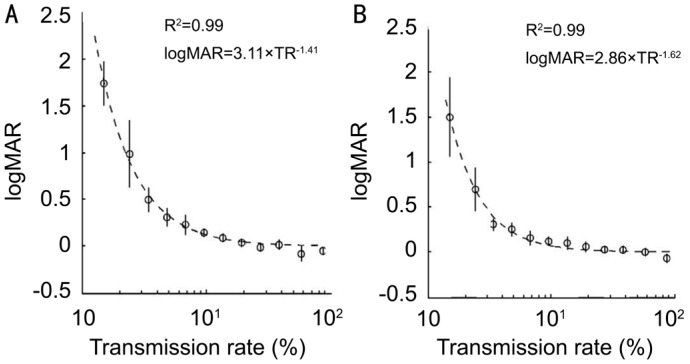
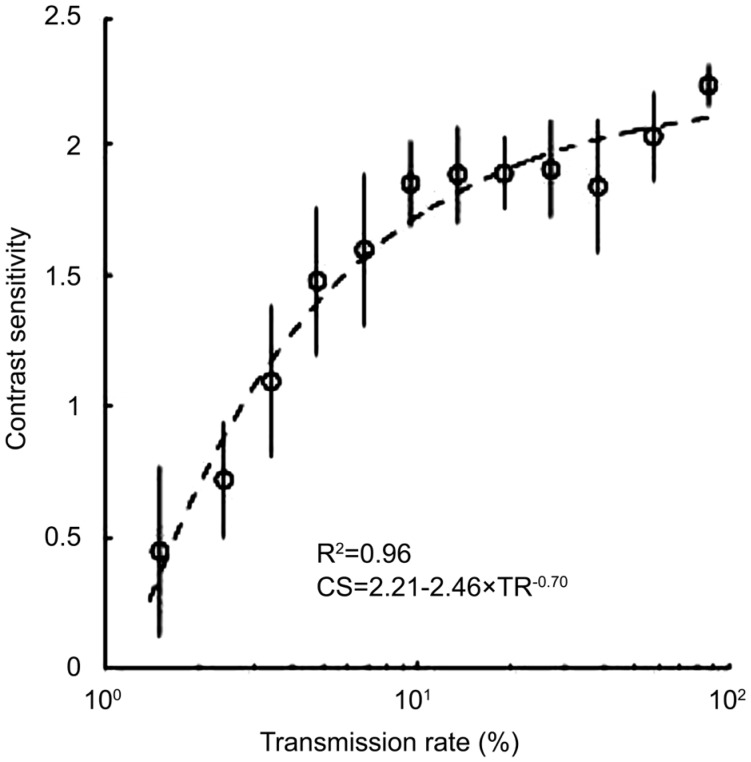
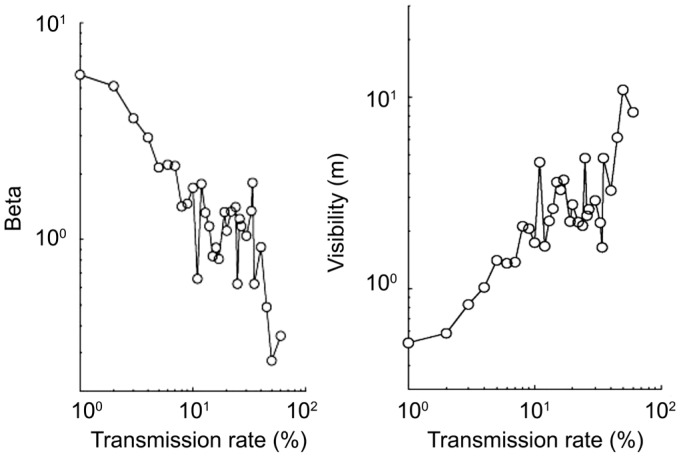
Results: E-visual acuity, crowded E-visual acuity and contrast sensitivity were all impaired with a decrease in the transmission rate (TR) according to power functions, with invariable exponents of -1.41, -1.62 and -0.7, respectively, and R2 values of 0.99 for E and crowded E-visual acuity, 0.96 for contrast sensitivity. Crowded E-visual acuity decreased faster than E-visual acuity. There was a good correlation between the TR, extinction coefficient and visibility under heavy-smog conditions.
Conclusion: Increases in smog concentration have a strong effect on visual function.
Keywords: artificial smog; low visibility conditions; visual recognition.
Figures
References
-
- Wu D, Wu C, Liao B, Chen H, Wu M, Li F, Tan H, Deng T, Li H, Jiang D, Yu JZ. Black carbon over the South China Sea and in various continental locations in South China. Atmospheric Chemistry and Physics. 2013;13(24):12257–12270.
-
- Pui DYH, Chen SC, Zuo Z. PM2.5 in China: measurements, sources, visibility and health effects, and mitigation. Particuology. 2014;13:1–26.
LinkOut - more resources
Full Text Sources