


Inverse Relationship between Metabolic Syndrome and 25-Hydroxyvitamin D Concentration in Elderly People without Vitamin D deficiency
- PMID: 30451913
- PMCID: PMC6242887
- DOI: 10.1038/s41598-018-35229-2
Inverse Relationship between Metabolic Syndrome and 25-Hydroxyvitamin D Concentration in Elderly People without Vitamin D deficiency
Abstract
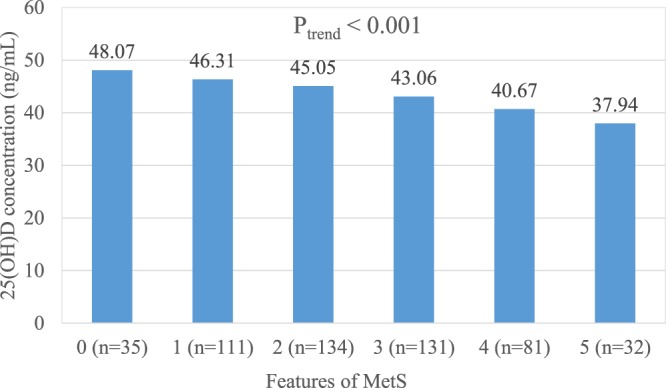
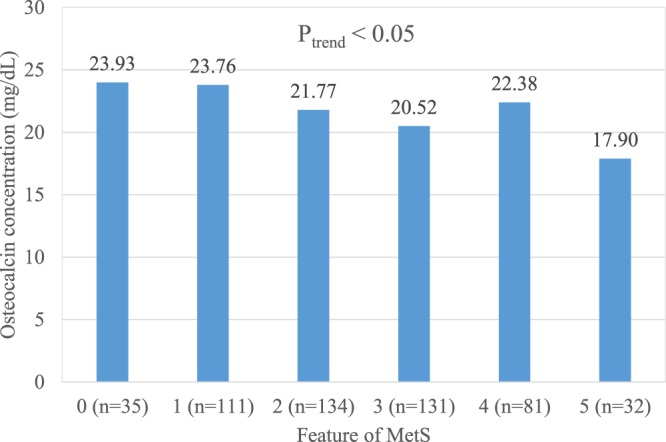
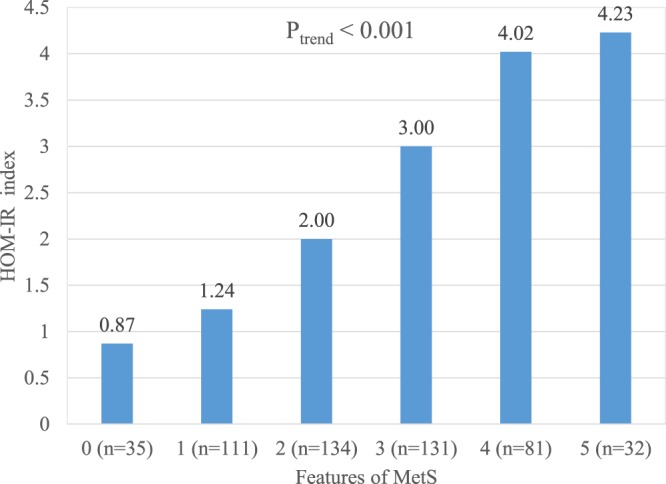
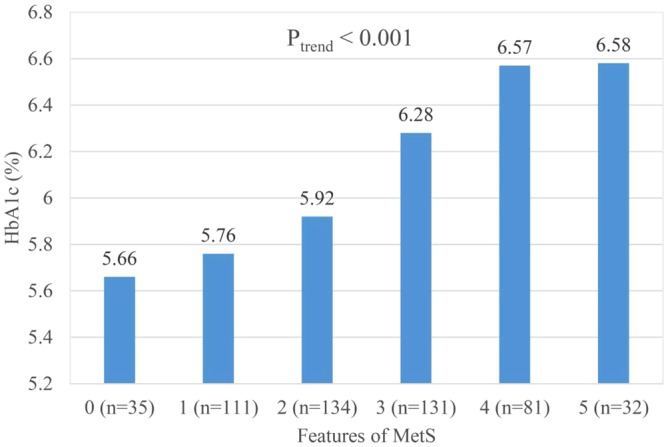
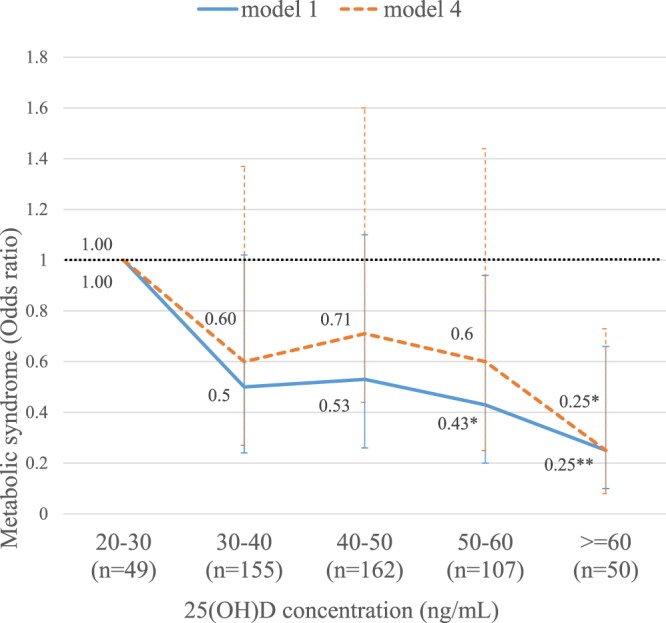
Vitamin D status is inversely associated with the prevalence of metabolic syndrome (MetS). Whether this is true in the elderly without vitamin D deficiency is rarely investigated. Our data source is a cross-sectional survey of 1,966 community-dwelling elderly Taiwanese in 2012. An overnight fasting blood were obtained for biochemistry variables. Vitamin D deficiency was defined as serum 25-hydroxyvitamin D3 [25(OH)D] concentration <20 ng/mL. MetS is defined using modified ATP-III criteria. Of 523 participants without vitamin D deficiency (Men/Women = 269/254, age = 76.0 ± 6.2 years old [65-102 years old]), mean 25(OH)D was 44.0 ± 11.1 ng/mL, and the MetS prevalence of MS was 46.5%. Serum 25(OH)D was negatively associated with osteocalcin, the homeostatic model assessment insulin resistance (HOMA-IR) index, body mass index (BMI), and glycated hemoglobin A1c. Participants with more MetS features have lower serum 25(OH)D and osteocalcin. Binary logistic regression models showed that 25(OH)D, physical activity, and osteocalcin were negatively independent MetS factors, but that the HOMA-IR index, BMI, and being female were positively independent factors. The risk of MetS was progressively lower along with the increased 25(OH)D concentration, even above 60 ng/mL. In conclusion, a low 25(OH)D concentration is an independent risk factor for MetS in elderly people without vitamin D deficiency.
Conflict of interest statement
The authors declare no competing interests.
Figures
References
Publication types
MeSH terms
Substances
LinkOut - more resources
Full Text Sources
Medical
