


Pulmonary Embolism Response Teams: A Novel Approach for the Care of Complex Patients With Pulmonary Embolism
- PMID: 30453745
- PMCID: PMC6714822
- DOI: 10.1177/1076029618812954
Pulmonary Embolism Response Teams: A Novel Approach for the Care of Complex Patients With Pulmonary Embolism
Abstract
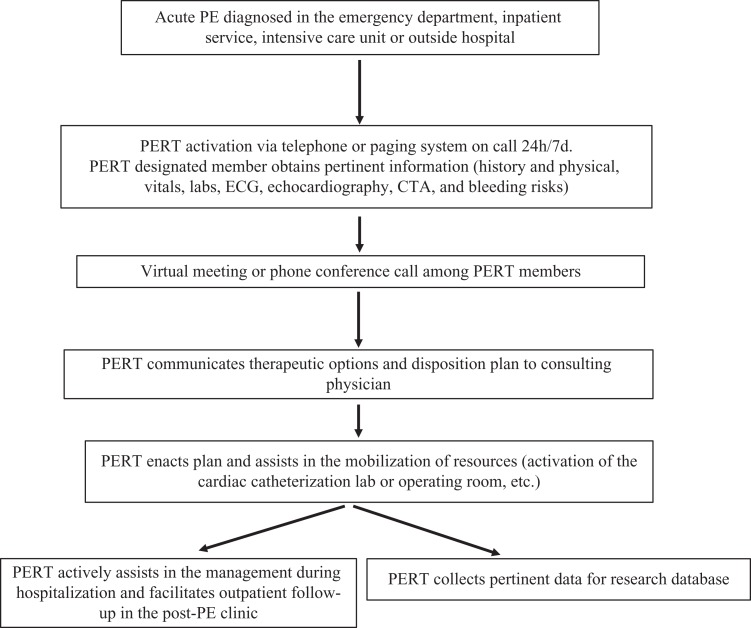
Pulmonary embolism represents the third most common cause of cardiovascular death in the United States. Reperfusion therapeutic strategies such as systemic thrombolysis, catheter directed therapies, surgical pulmonary embolectomy, and cardiopulmonary support devices are currently available for patients with high- and intermediate-high-risk pulmonary embolism. However, deciding on optimal therapy may be challenging. Pulmonary embolism response teams have been designed to facilitate multidisciplinary decision-making with the goal to improve quality of care for complex cases with pulmonary embolism. Herein, we discuss the current role and strategies on how to leverage the strengths from pulmonary embolism response teams, its possible worldwide adoption, and implementation to improve survival and change the paradigm in the care of a potentially deadly disease.
Keywords: high-risk pulmonary embolism; intermediate-high–risk pulmonary embolism; pulmonary embolism response team; reperfusion strategies.
Conflict of interest statement
Figures
References
-
- US Department of Health and Human Services. The Surgeon General’s Call to Action to Prevent Deep Vein Thrombosis and Pulmonary Embolism. 2008; http://www.surgeonGeneral.gov/library/calls/deepvein/call-to-action-ondv.... Accessed July 01, 2018. Updated August 01, 2018 - PubMed
-
- Go AS, Mozaffarian D, Roger VL, et al. Executive summary: heart disease and stroke statistics—2014 update: a report from the American Heart Association. Circulation. 2014;129(3):399–410. - PubMed
-
- Cohen AT, Agnelli G, Anderson FA, et al. Venous thromboembolism (VTE) in Europe. The number of VTE events and associated morbidity and mortality. Thromb Haemost. 2007;98(4):756–764. - PubMed
-
- Klok FA, van Kralingen KW, van Dijk AP, et al. Quality of life in long-term survivors of acute pulmonary embolism. Chest. 2010;138(6):1432–1440. - PubMed
Publication types
MeSH terms
LinkOut - more resources
Full Text Sources
Medical
