Ventilator-induced diaphragm dysfunction in critical illness
- PMID: 30453774
- PMCID: PMC6348597
- DOI: 10.1177/1535370218811950
Ventilator-induced diaphragm dysfunction in critical illness
Abstract
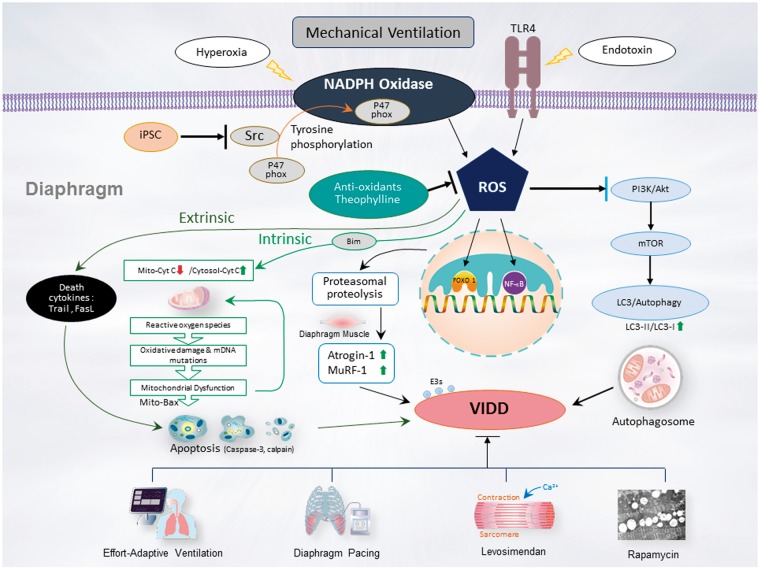
Mechanical ventilation (MV) is life-saving for patients with acute respiratory failure but also causes difficult liberation of patients from ventilator due to rapid decrease of diaphragm muscle endurance and strength, which is termed ventilator-induced diaphragmatic damage (VIDD). Numerous studies have revealed that VIDD could increase extubation failure, ICU stay, ICU mortality, and healthcare expenditures. However, the mechanisms of VIDD, potentially involving a multistep process including muscle atrophy, oxidative loads, structural damage, and muscle fiber remodeling, are not fully elucidated. Further research is necessary to unravel mechanistic framework for understanding the molecular mechanisms underlying VIDD, especially mitochondrial dysfunction and increased mitochondrial oxidative stress, and develop better MV strategies, rehabilitative programs, and pharmacologic agents to translate this knowledge into clinical benefits.
Keywords: Acute lung injury; endotoxemia; mitochondria; nuclear factor-κB; toll-like receptor 4; ventilator-induced diaphragm dysfunction.
Figures
References
-
- Dreyfuss D, Saumon G. Ventilator-induced lung injury: lessons from experimental studies. Am J Respir Crit Care Med 1998; 157:294–323 - PubMed
-
- Jubran A. Critical illness and mechanical ventilation: effects on the diaphragm. Respir Care 2006; 51:1054–61 discussion 62–4 - PubMed
-
- Petrof BJ, Jaber S, Matecki S. Ventilator-induced diaphragmatic dysfunction. Curr Opin Crit Care 2010; 16:19–25 - PubMed
-
- Dot I, Perez-Teran P, Samper MA, Masclans JR. Diaphragm dysfunction in mechanically ventilated patients. Arch Bronconeumol 2017; 53:150–6 - PubMed
Publication types
MeSH terms
LinkOut - more resources
Full Text Sources
Medical