


Schistosoma mansoni infection and socio-behavioural predictors of HIV risk: a cross-sectional study in women from Uganda
- PMID: 30453907
- PMCID: PMC6245923
- DOI: 10.1186/s12879-018-3481-2
Schistosoma mansoni infection and socio-behavioural predictors of HIV risk: a cross-sectional study in women from Uganda
Abstract
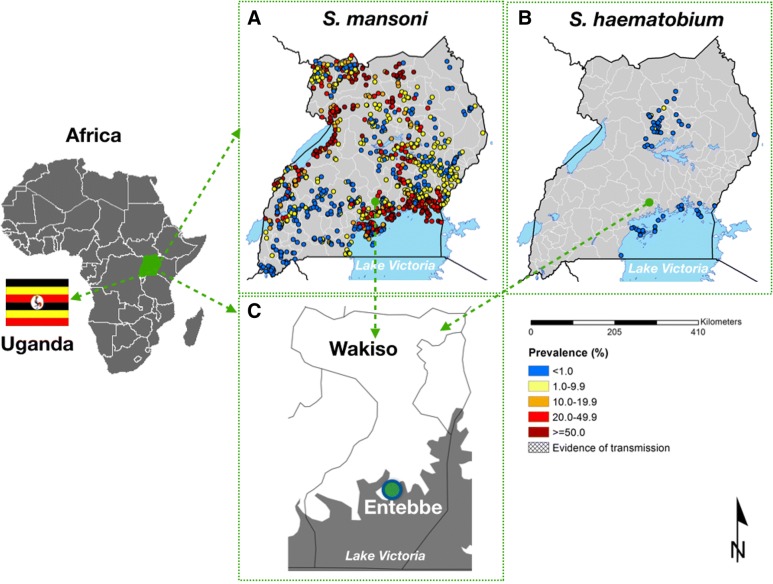
Background: Schistosoma mansoni infection has been associated with increased risk of HIV transmission in African women. This association might be causal or mediated through shared socio-behavioural factors and associated co-infections. We tested the latter hypothesis in a cross-sectional pilot study in a cohort of women from a S. mansoni endemic region of Uganda. To validate the immunological effects of S. mansoni in this cohort, we additionally assessed known schistosomiasis biomarkers.
Methods: HIV-uninfected non-pregnant adult women using public health services were tested for schistosomiasis using the urine circulating cathodic antigen test, followed by serology and Schistosoma spp.-specific PCR. Blood was obtained for herpes simplex virus (HSV)-2 serology, eosinophil counts and cytokine analysis. Samples collected from the genitourinary tract were used to test for classical sexually transmitted infections (STI), for bacterial vaginosis and to assess recent sexual activity via prostate-specific antigen testing. Questionnaires were used to capture a range of socio-economic and behavioral characteristics.
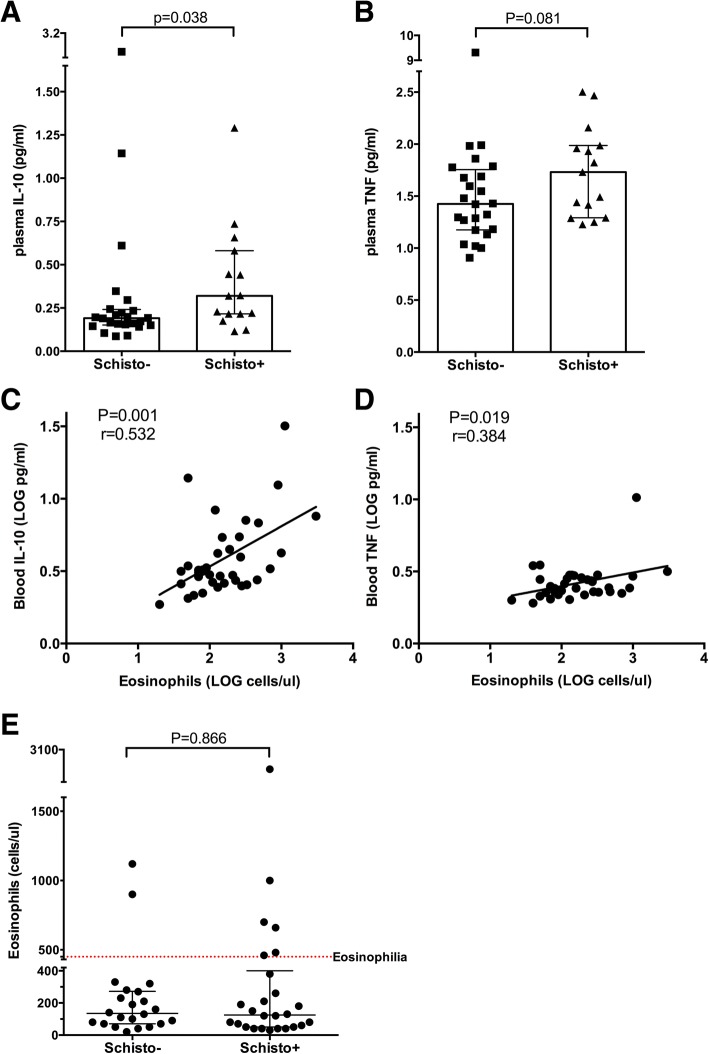
Results: Among 58 participants, 33 (57%) had schistosomiasis, which was associated with elevated levels of interleukin (IL)-10 (0.32 vs. 0.19 pg/ml; p = 0.038) and a trend toward increased tumour necrosis factor (TNF) (1.73 vs. 1.42 pg/ml; p = 0.081). Eosinophil counts correlated with levels of both cytokines (r = 0.53, p = 0.001 and r = 0.38, p = 0.019, for IL-10 and TNF, respectively); the association of eosinophilia with schistosomiasis was not significant (OR = 2.538, p = 0.282). Further, schistosomiasis was associated with lower age (per-year OR = 0.910, p = 0.047), being unmarried (OR = 0.263, p = 0.030), less frequent hormonal contraceptive (HC) use (OR = 0.121, p = 0.002, dominated by long acting injectable contraceptives) and a trend to longer time since penile-vaginal sex (OR = 0.350, p = 0.064). All women infected by Chlamydia trachomatis (n = 5), were also positive for schistosomiasis (Fisher's exact p = 0.064).
Conclusions: Intestinal schistosomiasis in adult women was associated with systemic immune alterations, suggesting that associations with immunological correlates of HIV susceptibility warrant further investigation. S. mansoni associations with socio-behavioral parameters and C. trachomatis, which may alter both genital immunity and HIV exposure and/or acquisition risk, means that future studies should carefully control for potential confounders. These findings have implications for the design and interpretation of clinical studies on the effects of schistosomiasis on HIV acquisition.
Keywords: HIV risk factors; HIV susceptibility; Injectable hormonal contraceptives; Intestinal schistosomiasis; Schistosoma mansoni; Sexually transmitted infections.
Conflict of interest statement
Ethics approval and consent to participate
All study procedures were approved by the Uganda Virus Research Institute Research and Ethics Committee, the Uganda National Council for Science and Technology, and the Institutional Review Board at the University of Toronto. Written informed consent was obtained from all participants.
Consent for publication
Not applicable.
Competing interests
The authors declare that they have no competing interests.
Publisher’s Note
Springer Nature remains neutral with regard to jurisdictional claims in published maps and institutional affiliations.
Figures
References
-
- World Health Organization. Schistosomiasis Fact Sheet [Internet]. 2017. Available from: http://www.who.int/en/news-room/fact-sheets/detail/schistosomiasis. Accessed 22 Feb 2018.
MeSH terms
Grants and funding
LinkOut - more resources
Full Text Sources
Medical
Miscellaneous
