


Genetics of Obesity in Diverse Populations
- PMID: 30456705
- PMCID: PMC6380516
- DOI: 10.1007/s11892-018-1107-0
Genetics of Obesity in Diverse Populations
Abstract
Purpose of review: The prevalence of obesity continues to rise, fueling a global public health crisis characterized by dramatic increases in type 2 diabetes, cardiovascular disease, and many cancers. In the USA, several minority populations, who bear much of the obesity burden (47% in African Americans and Hispanic/Latinos, compared to 38% in European descent groups), are particularly at risk of downstream chronic disease. Compounding these disparities, most genome-wide association studies (GWAS)-including those of obesity-have largely been conducted in populations of European or East Asian ancestry. In fact, analysis of the GWAS Catalog found that while the proportion of participants of non-European or non-Asian descent had risen from 4% in 2009 to 19% in 2016, African-ancestry participants are still just 3% of GWAS, Hispanic/Latinos are < 0.5%, and other ancestries are < 0.3% or not represented at all. This review summarizes recent developments in obesity genomics in US minority populations, with the goal of reducing obesity health disparities and improving public health programs and access to precision medicine.
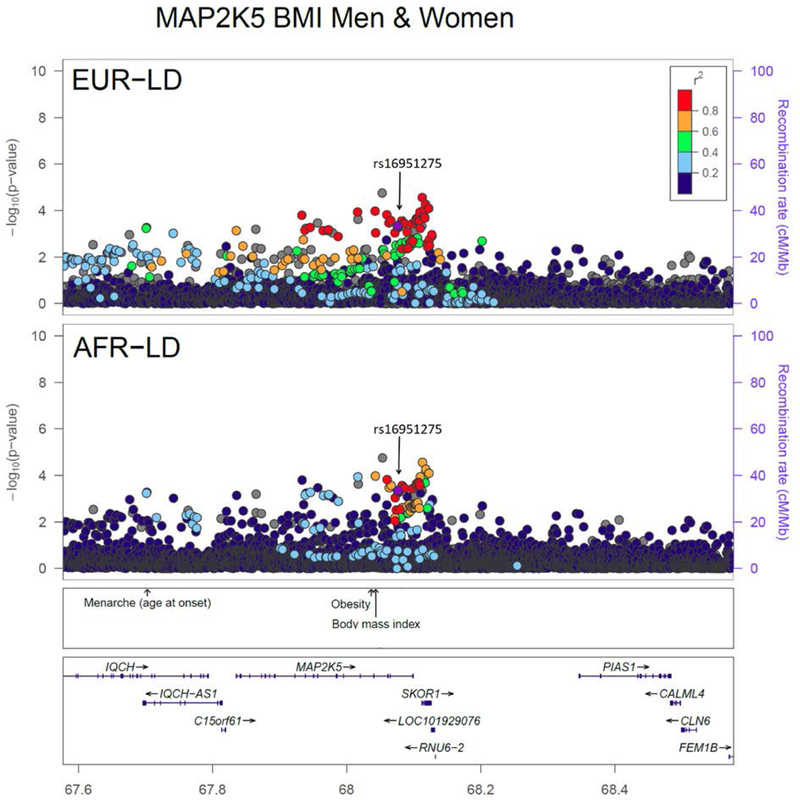
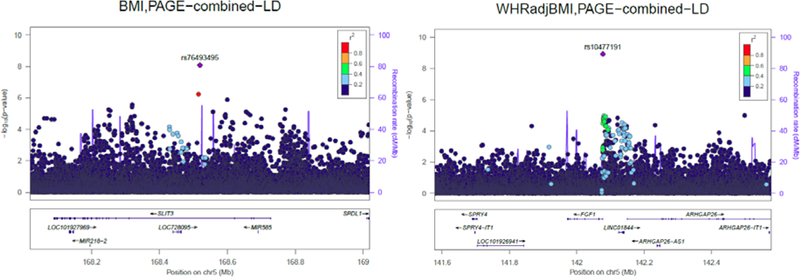
Recent findings: GWAS of populations with the highest burden of obesity are essential to narrow candidate variants for functional follow-up, to identify additional ancestry-specific variants that contribute to individual genetic susceptibility, and to advance both public health and precision medicine approaches to obesity. Given the global public health burden posed by obesity and downstream chronic conditions which disproportionately affect non-European populations, GWAS of obesity-related traits in diverse populations is essential to (1) locate causal variants in GWAS-identified regions through fine mapping, (2) identify variants which influence obesity across ancestries through generalization, and (3) discover novel ancestry-specific variants which may be low frequency in European populations but common in other groups. Recent efforts to expand obesity genomic studies to understudied and underserved populations, including AAAGC, PAGE, and HISLA, are working to reduce obesity health disparities, improve public health, and bring the promise of precision medicine to all.
Keywords: GWAS; Health disparities; Obesity; Precision medicine.
Conflict of interest statement
Conflict of Interest
Kristin L. Young, Mariaelisa Graff, Lindsay Fernandez-Rhodes, and Kari E. North declare that they have no conflict of interest.
Figures
References
-
- Hales CM, Carroll MD, Fryar CD, Ogden CL (2017) Prevalence of obesity among adults and youth: United States, 2015–2016 NCHS Data Brief, no 288. Hyattsville, MD: National Center for Health Statistics. - PubMed
-
- Zamosky L (2013) The obesity epidemic. While America swallows $147 billion in obesity-related healthcare costs, physicians called on to confront the crisis. Med Econ 90:14–17. - PubMed
Publication types
MeSH terms
Grants and funding
LinkOut - more resources
Full Text Sources
Medical
Research Materials
