Intervention Packages for Early Visceral Leishmaniasis Case Detection and Sandfly Control in Bangladesh: A Comparative Analysis
- PMID: 30457088
- PMCID: PMC6335927
- DOI: 10.4269/ajtmh.18-0290
Intervention Packages for Early Visceral Leishmaniasis Case Detection and Sandfly Control in Bangladesh: A Comparative Analysis
Abstract
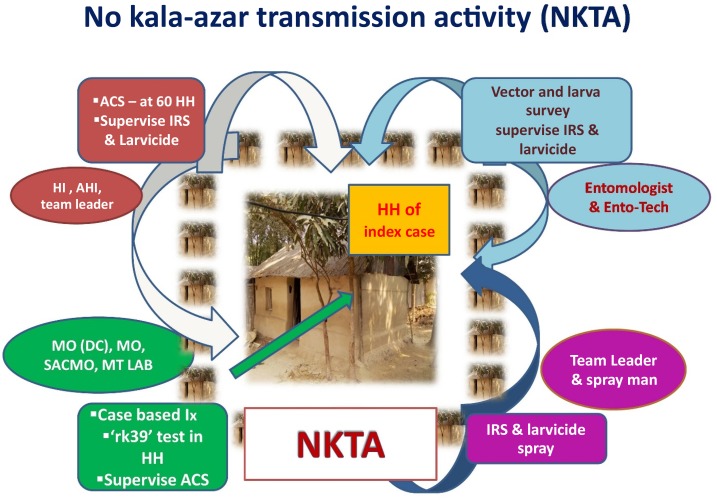
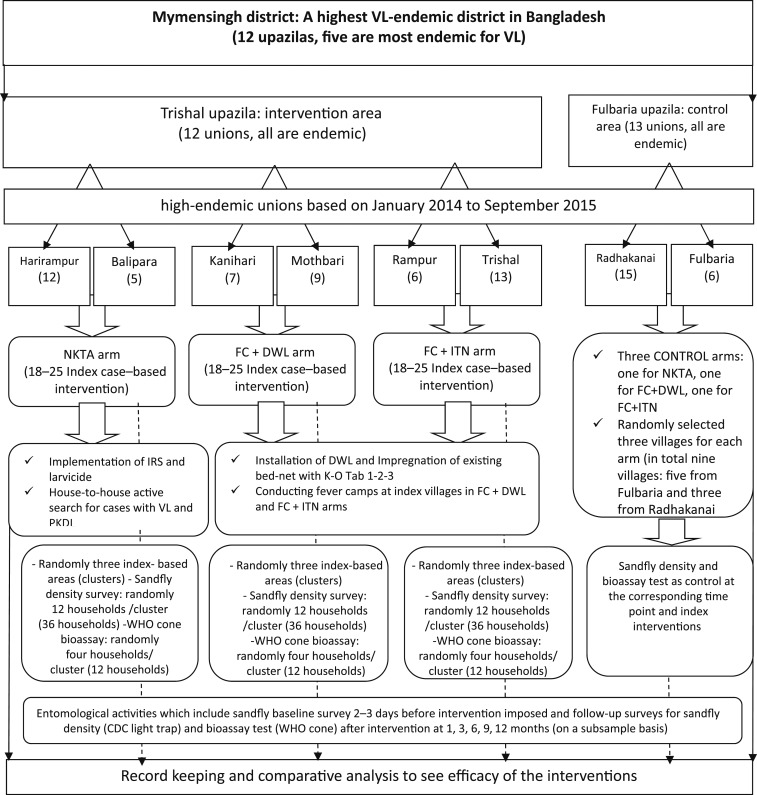
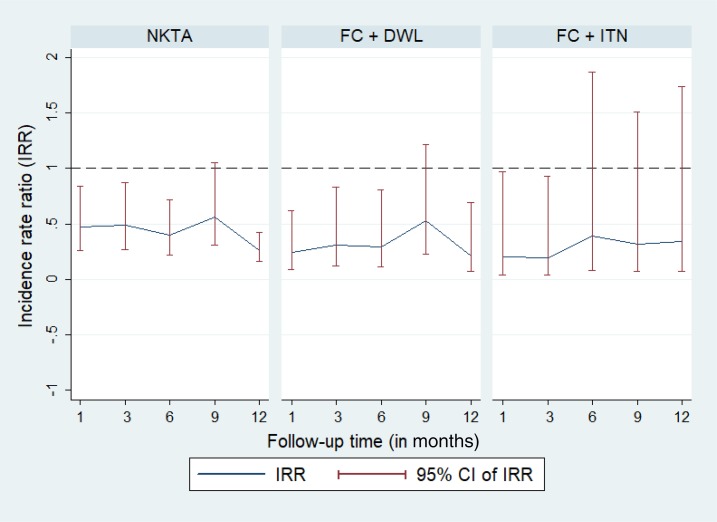
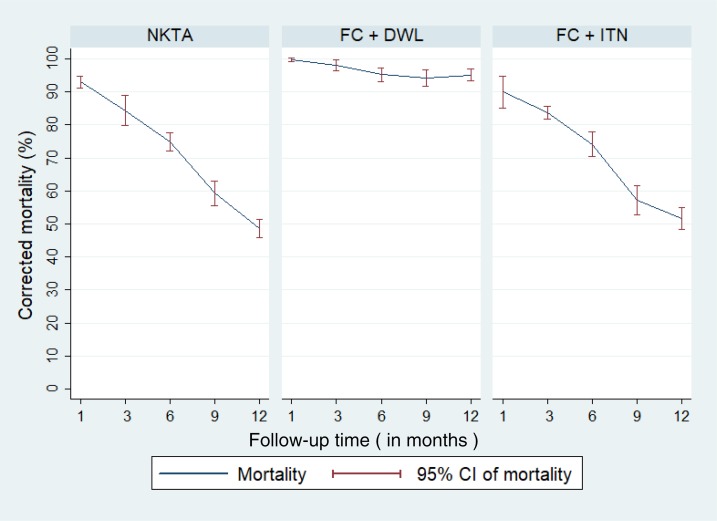
We compared the efficacy of three intervention packages for active case detection (ACD) of visceral leishmaniasis (VL)/post-kala-azar dermal leishmaniasis (PKDL) combined with sandfly control around an index case. The packages were 1) no kala-azar transmission activity involving indoor residual spraying (IRS) with deltamethrin, peri-domestic deployment of larvicide with temephos, and house-to-house search for cases; 2) fever camp (FC) plus durable wall lining (DWL) with deltamethrin; and 3) FC plus insecticide (deltamethrin) impregnated bed-nets (ITN) around an index case. Fever camp includes 1-day campaign at the village level to screen and diagnose VL, PKDL, leprosy, malaria, and tuberculosis among residents with chronic fever or skin disease. Efficacy was measured through yield of new cases, vector density reduction, and mortality at 1, 3, 6, 9, and 12 months following intervention. Fever camp + DWL was the most efficacious intervention package with 0.5 case detected per intervention, 79% reduction in vector density (incidence rate ratio [IRR] = 0.21, P = 0.010), and 95.1% (95% confidence interval: 93.4%, 96.8%) sandfly mortality at 12 months. No kala-azar transmission activity was efficacious for vector control (74% vector reduction, IRR = 0.26, P < 0.0001 at 9 months; and 84% sandfly mortality at 3 months), but not for case detection (0 case per intervention). Fever camp + ITN was efficacious in detection of VL/PKDL cases (0.43 case per intervention), but its efficacy for vector control was inconsistent. We recommend index case-based FC for ACD combined with DWL or IRS plus larvicide for sandfly control during the consolidation and maintenance phases of the VL elimination program of the Indian subcontinent.
Figures
References
-
- World Health Organization , 2005. Regional Technical Advisory Group on Kala-Azar Elimination. Report of the First Meeting, Manesar, Haaryana, 20–23 December 2004. New Delhi, India: Regional Office for South-East Asia.
-
- Ahmed B-N, Nabi SG, Rahman M, Selim S, Bashar A, Rashid MM, Lira FY, Choudhury TA, Mondal D, 2014. Kala-azar (visceral leishmaniasis) elimination in Bangladesh: successes and challenges. Curr Trop Med Rep 1: 163–169.
-
- Bern C, Chowdhury R, 2006. The epidemiology of visceral leishmaniasis in Bangladesh: prospects for improved control. Indian J Med Res 123: 275–288. - PubMed
-
- Rahman R, Bangali M, Kabir H, Naher F, Mahboob S, 2008. Kala-azar Situation in Bangladesh, pp. 11–12. National guideline and training module for Kala-azar elimination in Bangladesh. Directorate General of Health Services, Ministry of Health and Family Welfare, Dhaka, Bangladesh.
Publication types
MeSH terms
Substances
Grants and funding
LinkOut - more resources
Full Text Sources