


Impact of a custom-made 3D printed ergonomic grip for direct laryngoscopy on novice intubation performance in a simulated easy and difficult airway scenario-A manikin study
- PMID: 30458013
- PMCID: PMC6245686
- DOI: 10.1371/journal.pone.0207445
Impact of a custom-made 3D printed ergonomic grip for direct laryngoscopy on novice intubation performance in a simulated easy and difficult airway scenario-A manikin study
Abstract
Direct laryngoscopy using a Macintosh laryngoscope is the most widely used approach; however, this skill is not easy for novices and trainees. We evaluated the performance of novices using a laryngoscope with a three-dimensional (3D)-printed ergonomic grip on an airway manikin. Forty second-year medical students were enrolled. Endotracheal intubation was attempted using a conventional Macintosh laryngoscope with or without a 3D-printed ergonomic support grip. Primary outcomes were intubation time and overall success rate. Secondary outcomes were number of unsuccessful attempts, first-attempt success rate, airway Cormack-Lehane (CL) grade, and difficulty score. In the easy airway scenario, intubation time, and the overall success rate were similar between two group. CL grade and ease-of-use scores were significantly better for those using the ergonomic support grip (P < 0.05). In the difficult airway scenario, intubation time (49.7±37.5 vs. 35.5±29.2, P = 0.013), the first-attempt success rate (67.5% vs. 90%, P = 0.029), number of attempts (1.4±0.6 vs. 1.1±0.4, P = 0.006), CL grade (2 [2, 2] vs. 2 [1, 1], P = 0.012), and ease-of-use scores (3.5 [2, 4] vs. 4 [3, 5], P = 0.008) were significantly better for those using the ergonomic support grip. Linear mixed model analysis showed that the ergonomic support grip had a favorable effect on CL grade (P<0.001), ease-of-use scores (P<0.001), intubation time (P = 0.015), and number of intubation attempts (P = 0.029). Our custom 3D-printed ergonomic laryngoscope support grip improved several indicators related to the successful endotracheal intubation in the easy and difficult scenario simulated on an airway manikin. This grip may be useful for intubation training and practice.
Conflict of interest statement
The authors have declared that no competing interests exist.
Figures


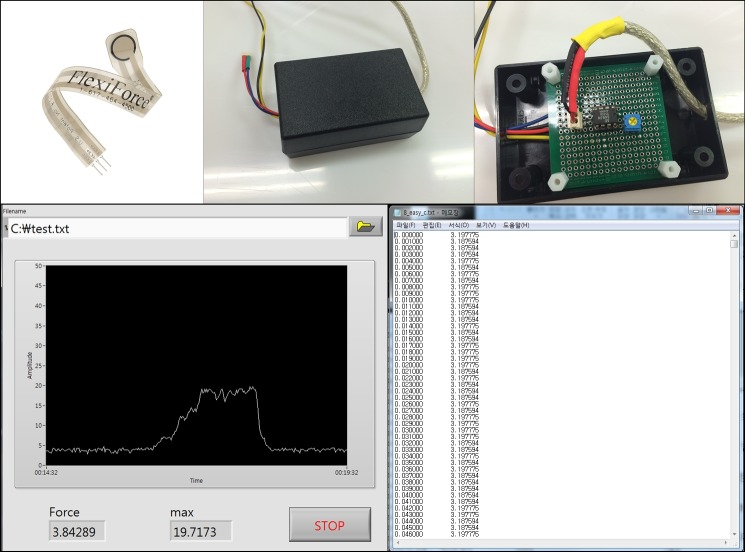

References
-
- Konrad C, Schupfer G, Wietlisbach M, Gerber H. Learning Manual Skills in Anesthesiology: Is There a Recommended Number of Cases for Anesthetic Procedures? Anesthesia & Analgesia. 1998;86: 635–639. 10.1213/00000539-199803000-00037 - DOI - PubMed
-
- Maharaj CH, McDonnell JG, Harte BH, Laffey JG. A comparison of direct and indirect laryngoscopes and the ILMA in novice users: a manikin study. Anaesthesia. Wiley/Blackwell (10.1111); 2007;62: 1161–1166. 10.1111/j.1365-2044.2007.05216.x - DOI - PubMed
-
- Nouruzi-Sedeh P, Schumann M, Groeben H. Laryngoscopy via Macintosh Blade versus GlideScopeSuccess Rate and Time for Endotracheal Intubation in Untrained Medical Personnel. Anesthes. The American Society of Anesthesiologists; 2009;110: 32–37. 10.1097/ALN.0b013e318190b6a7 - DOI - PubMed
-
- Miki T, Inagawa G, Kikuchi T, Koyama Y, Goto T. Evaluation of the Airway Scope, a new video laryngoscope, in tracheal intubation by naive operators: a manikin study. Acta Anaesthesiol Scand. Wiley/Blackwell (10.1111); 2007;51: 1378–1381. 10.1111/j.1399-6576.2007.01450.x - DOI - PubMed
-
- Frova G, Sorbello M. Algorithms for difficult airway management: a review. Minerva Anestesiol. 2009;75: 201–209. - PubMed
Publication types
MeSH terms
LinkOut - more resources
Full Text Sources
Medical
