Why Children With Dyslexia Struggle With Writing and How to Help Them
- PMID: 30458545
- PMCID: PMC6430506
- DOI: 10.1044/2018_LSHSS-DYSLC-18-0024
Why Children With Dyslexia Struggle With Writing and How to Help Them
Abstract
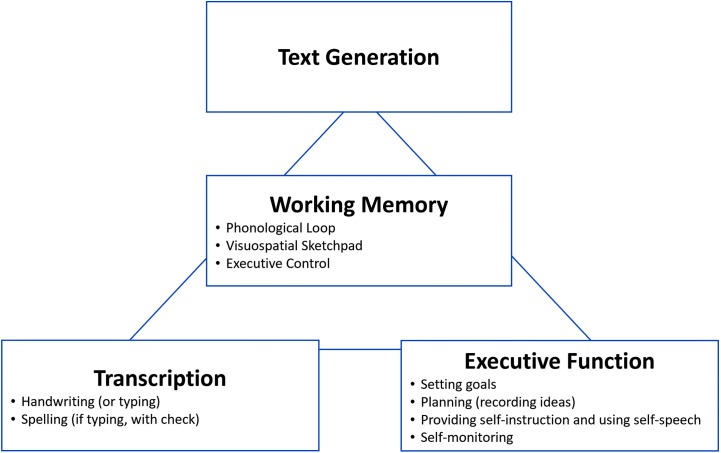
Purpose: Children with dyslexia often have related writing difficulties. In the simple view of writing model, high-quality writing depends on good transcription skills, working memory, and executive function-all of which can be difficult for children with dyslexia and result in poor spelling and low overall writing quality. In this article, we describe the challenges of children with dyslexia in terms of the simple view of writing and instructional strategies to increase spelling and overall writing quality in children with dyslexia.
Method: For spelling strategies, we conducted systematic searches across 2 databases for studies examining the effectiveness of spelling interventions for students with dyslexia as well as including studies from 2 meta-analyses. To locate other instructional practices to increase writing quality (e.g., handwriting and executive function), we examined recent meta-analyses of writing and supplemented that by conducting forward searches.
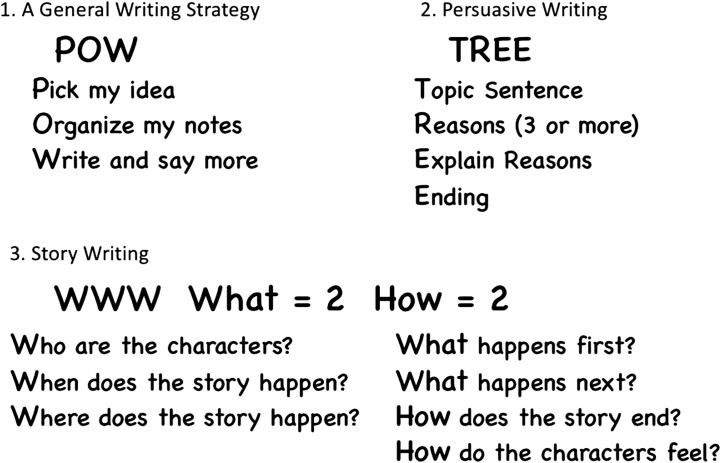
Results: Through the search, we found evidence of effective remedial and compensatory intervention strategies in spelling, transcription, executive function, and working memory. Some strategies included spelling using sound-spellings and morphemes and overall quality using text structure, sentence combining, and self-regulated strategy development.
Conclusions: Many students with dyslexia experience writing difficulty in multiple areas. However, their writing (and even reading) skills can improve with the instructional strategies identified in this article. We describe instructional procedures and provide links to resources throughout the article.
Figures
References
-
- Altemeier L. E., Abbott R. D., & Berninger V. W. (2008). Executive functions for reading and writing in typical literacy development and dyslexia. Journal of Clinical and Experimental Neuropsychology, 30, 588–606. https://doi.org/10.1080/13803390701562818 - PubMed
-
- Archer A. L., Gleason M. M., & Vachon V. L. (2003). Decoding and fluency: Foundation skills for struggling older readers. Learning Disability Quarterly, 26, 89–101. https://doi.org/10.2307/1593592
-
- Badian N. A. (1999). Persistent arithmetic, reading, or arithmetic and reading disability. Annals of Dyslexia, 49, 45–70. https://doi.org/10.1007/s11881-999-0019-8
-
- Bangert-Drowns R. L., Hurley M. M., & Wilkinson B. (2004).The effects of school-based writing-to-learn interventions on academic achievement: A meta-analysis. Review of Educational Research, 74, 29–58. https://doi.org/10.3102/00346543074001029
-
- Belson S. I., Hartmann D., & Sherman J. (2013). Digital note taking: The use of electronic pens with students with specific learning disabilities. Journal of Special Education Technology, 28(2), 13–24. https://doi.org/10.1177/016264341302800202
Publication types
MeSH terms
Grants and funding
LinkOut - more resources
Full Text Sources
Medical