


The help for people with money, employment or housing problems (HOPE) intervention: pilot randomised trial with mixed methods feasibility research
- PMID: 30459961
- PMCID: PMC6233378
- DOI: 10.1186/s40814-018-0365-6
The help for people with money, employment or housing problems (HOPE) intervention: pilot randomised trial with mixed methods feasibility research
Erratum in
-
Correction to: The help for people with money, employment or housing problems (HOPE) intervention: pilot randomised trial with mixed methods feasibility research.Pilot Feasibility Stud. 2018 Nov 28;4:177. doi: 10.1186/s40814-018-0374-5. eCollection 2018. Pilot Feasibility Stud. 2018. PMID: 30505459 Free PMC article.
Abstract
Background: Job loss, austerity measures, financial difficulties and house repossession contribute to the risk of self-harm and suicide during recessions. Navigating the benefits system and accessing sources of welfare and debt advice is a difficult experience for vulnerable people, further contributing to their distress. Whilst there is some evidence that advice-type interventions can lead to financial gain, there is mixed evidence for their effectiveness in improving mental health in those experiencing financial difficulties. There have been no interventions targeting those who have self-harmed due to economic hardship.
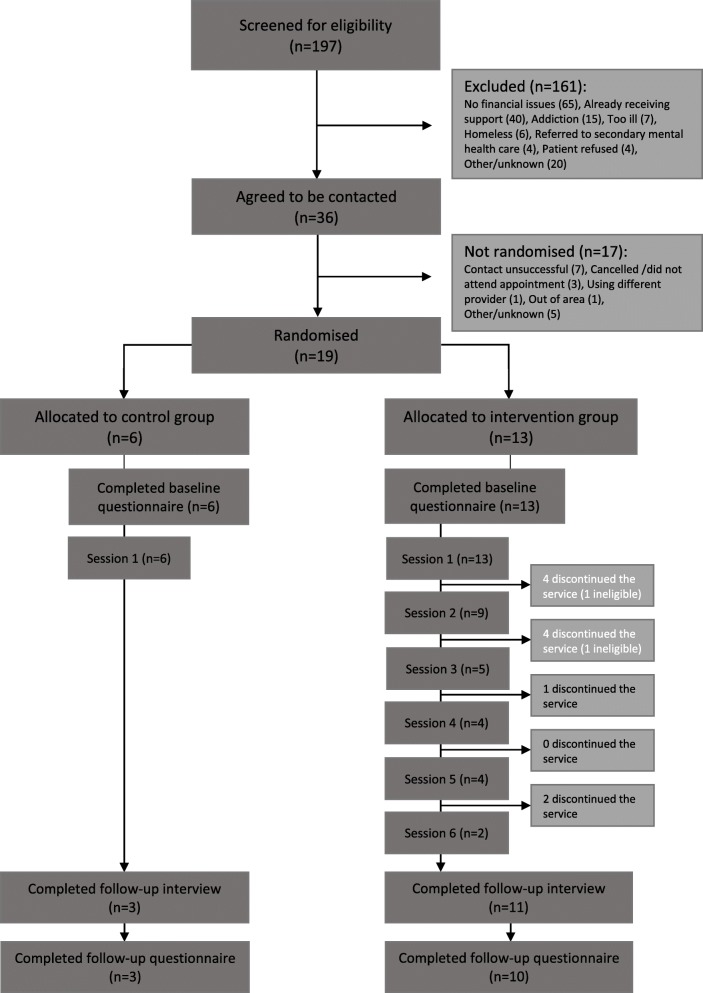
Methods: Our aim was to determine the feasibility and acceptability of a brief psychosocial intervention (the 'HOPE' service) for people presenting to hospital emergency departments (ED) following self-harm or in acute distress because of financial, employment or welfare (benefit) difficulties. Nineteen people consented to random allocation to the intervention or control arm on a 2:1 basis. Participants randomised to the intervention arm (n = 13) received up to six sessions of 1:1 support provided by community support staff trained in Motivational Interviewing (MI). Control participants (n = 6) received a one-off session signposting them to relevant support organisations. Fourteen participants were followed up after 3 months. Participants and mental health workers took part in qualitative interviews. The acceptability of outcome measures including the PHQ-9, GAD-7, repeat self-harm, EQ5D-5 L and questions about debt, employment and welfare benefits were explored.
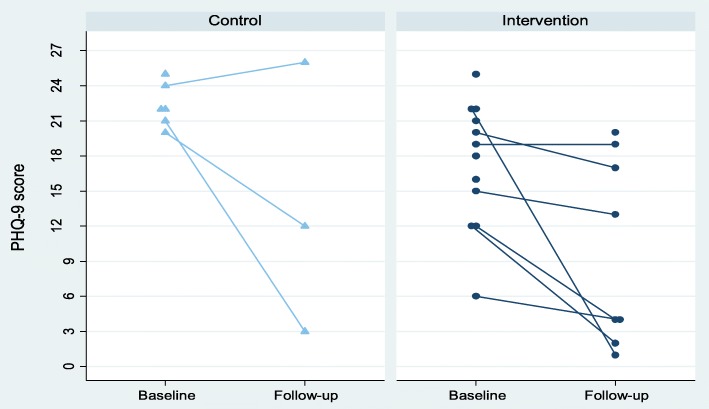
Results: Interviews indicated the main benefits of the service as the resolution of specific financial problems and receiving support when participants were feeling most vulnerable. Randomisation was acceptable to most participants although not always fully understood and control participants could be disappointed. Recruitment was slow (1-2 per month). The outcome measures were acceptable and appeared sensitive to change.
Discussion: The HOPE intervention is feasible and acceptable. There was evidence of need and it is a relatively inexpensive intervention. Refining aspects of the intervention would be straightforward. A full-scale RCT would be feasible, if broadened eligibility criteria led to increased recruitment and improvements were made to staff training and support.
Trial registration: ISRCTN58531248.
Keywords: Feasibility; Financial hardship; Motivational interviewing; Self-harm; Support intervention.
Conflict of interest statement
The study received ethical approval from South West Central Bristol Research Ethics Committee (REC: 16/SW/0005). Individual written consent was taken for each participant including consent to report anonymised data.Written consent to publish anonymised data was given in the individual consent taken for each participant.The authors declare they have no competing interests.Springer Nature remains neutral with regard to jurisdictional claims in published maps and institutional affiliations.
Figures
References
-
- Paul KI, Moser K. Unemployment impairs mental health: meta-analyses. J Vocat Behav. 2009;74:264–282. doi: 10.1016/j.jvb.2009.01.001. - DOI
-
- Platt S, Hawton K. Suicidal behaviour and the labour market. In: Hawton K, van Heeringen K, editors. The international handbook of suicide and attempted suicide. Chichester, UK: Wiley; 2000. pp. 309–384.
Grants and funding
LinkOut - more resources
Full Text Sources
