


The relationship between computed tomography-derived body composition, systemic inflammatory response, and survival in patients undergoing surgery for colorectal cancer
- PMID: 30460764
- PMCID: PMC6438413
- DOI: 10.1002/jcsm.12357
The relationship between computed tomography-derived body composition, systemic inflammatory response, and survival in patients undergoing surgery for colorectal cancer
Abstract
Introduction: Colorectal cancer is the fourth leading cause of cancer mortality in developed countries. There is evidence supporting a disproportionate loss of skeletal muscle as an independent prognostic factor. The importance of the systemic inflammatory response as a unifying mechanism for specific loss of skeletal muscle mass in patients with cancer is increasingly recognized. The aim of the present study was to delineate the relationship between the systemic inflammatory response, skeletal muscle index (SMI), skeletal muscle density (SMD), and overall survival in patients with colorectal cancer.
Materials and methods: The study included 650 patients with primary operable colorectal cancer. Computed tomography scans were used to define the presence of visceral obesity, sarcopenia (low SMI), and myosteatosis (low SMD). Tumour and patient characteristics were recorded. Survival analysis was carried out using univariate and multivariate Cox regression.
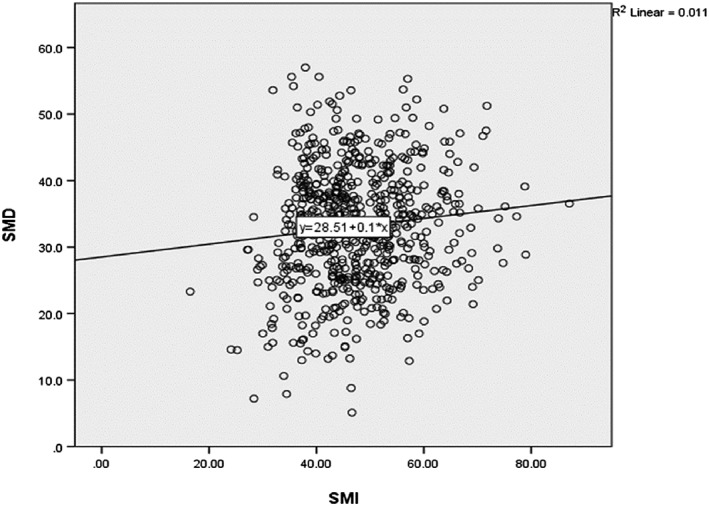
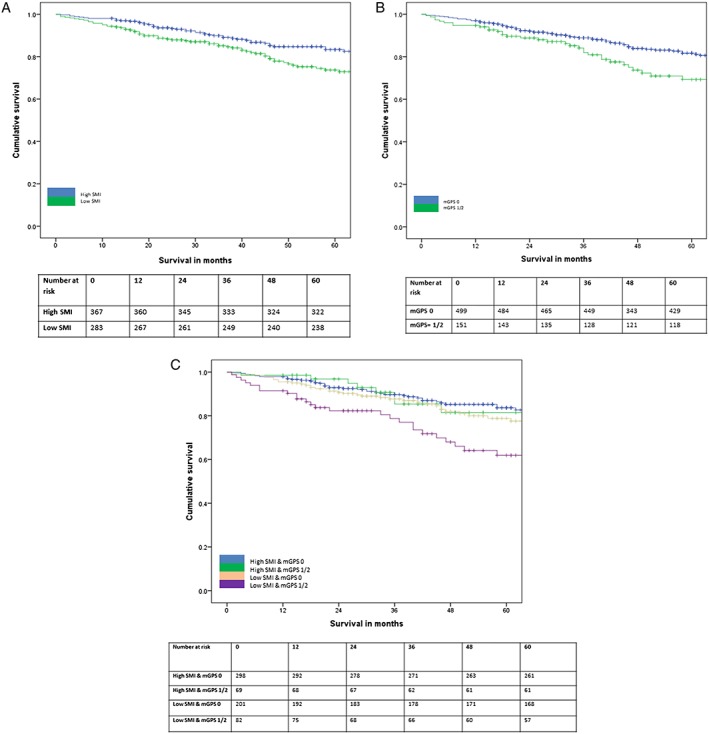
Results: A total of 650 patients (354 men and 296 women) were included. The majority of patients were over 65 years of age (64%) and overweight or obese (68%). On univariate survival analysis, age, ASA, TNM stage, modified Glasgow Prognostic Score (mGPS), body mass index, subcutaneous fat index, visceral obesity, SMI, and SMD were significantly associated with overall survival (all P < 0.05). A low SMI and SMD were significantly associated with an elevated mGPS (<0.05). On multivariate analysis, SMI (Martin) [hazard ratio (HR) 1.50, 95% confidence interval (CI) 1.04-2.18, P = 0.031], SMD (Xiao) (HR 1.42, 95% CI 0.98-2.05, P = 0.061), and mGPS (HR 1.44, 95% CI 1.15-1.79, P = 0.001) were independently associated with overall survival. SMD but not SMI was significantly associated with ASA (P < 0.001).
Conclusions: This study delineates the relationship between the loss of quantity and quality of skeletal muscle mass, the systemic inflammatory response, and survival in patients with operable colorectal cancer.
Keywords: Body composition; Colorectal cancer; Computed tomography; Glasgow prognostic score; Systemic inflammation; TNM stage.
© 2018 The Authors. Journal of Cachexia, Sarcopenia and Muscle published by John Wiley & Sons Ltd on behalf of the Society on Sarcopenia, Cachexia and Wasting Disorders.
Conflict of interest statement
The authors declare that they have no conflict of interest.
Figures
Comment in
-
A tale of two CT studies: the combined impact of multiple human body composition projects in cancer.J Cachexia Sarcopenia Muscle. 2019 Feb;10(1):6-8. doi: 10.1002/jcsm.12406. J Cachexia Sarcopenia Muscle. 2019. PMID: 30920777 Free PMC article. No abstract available.
References
-
- Torre LA, Bray F, Siegel RL, Ferlay J, Lortet‐Tieulent J, Jemal A. Global cancer statistics, 2012. CA Cancer J Clin 2015;65:87–108. - PubMed
-
- Aapro M, Arends J, Bozzetti F, Fearon K, Grunberg SM, Herrstedt J, et al. Early recognition of malnutrition and cachexia in the cancer patient: a position paper of a European School of Oncology Task Force. Ann Oncol 2014;25:1492–1499. - PubMed
-
- Arends J, Baracos V, Bertz H, Bozzetti F, Calder PC, Deutz NEP, et al. ESPEN expert group recommendations for action against cancer‐related malnutrition. Clin Nutr (Edinburgh, Scotland) 2017;36:1187–1196. - PubMed
-
- Prado CM, Lieffers JR, McCargar LJ, Reiman T, Sawyer MB, Martin L, et al. Prevalence and clinical implications of sarcopenic obesity in patients with solid tumours of the respiratory and gastrointestinal tracts: a population‐based study. Lancet Oncol 2008;9:629–635. - PubMed
Publication types
MeSH terms
LinkOut - more resources
Full Text Sources
Medical
