


Psychological Distress Transmission in Same-sex and Different-sex Marriages
- PMID: 30461313
- PMCID: PMC6386620
- DOI: 10.1177/0022146518813097
Psychological Distress Transmission in Same-sex and Different-sex Marriages
Abstract
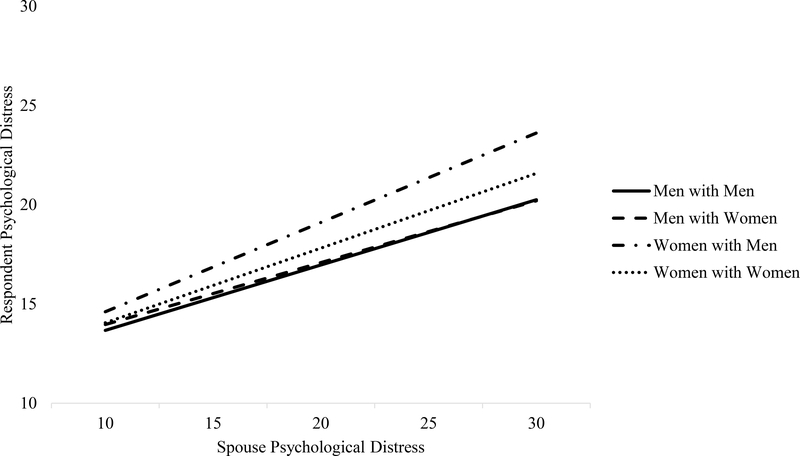
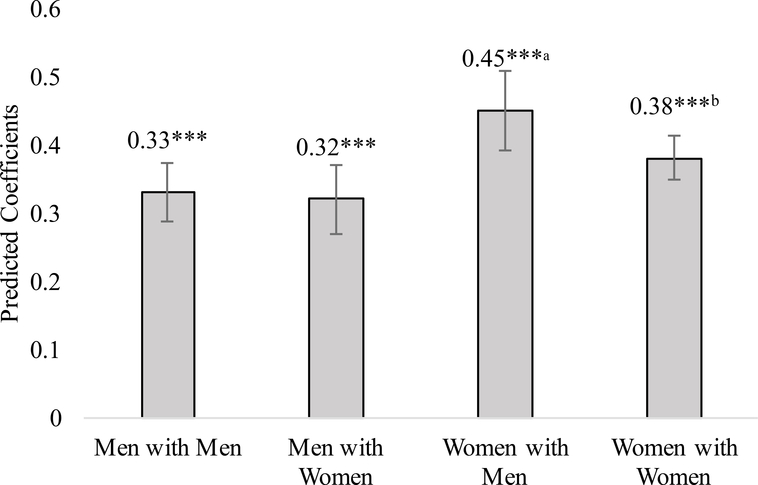
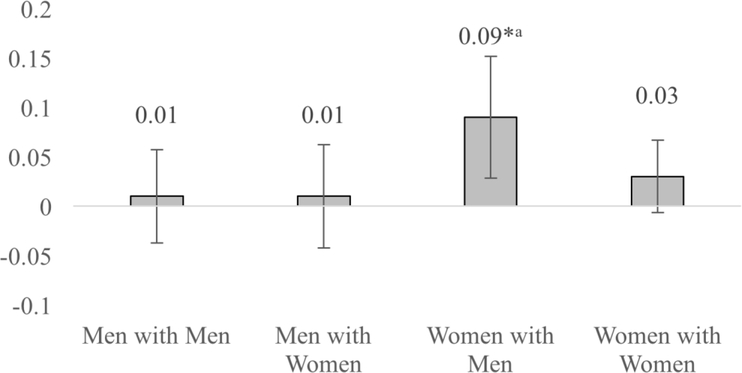
Ample work stresses the interdependence of spouses' psychological distress and that women are more influenced by their spouse's distress than men. Yet previous studies have focused primarily on heterosexual couples, raising questions about whether and how this gendered pattern might unfold for men and women in same-sex marriages. We analyze 10 days of diary data from a purposive sample of men and women in same-sex and different-sex marriages ( n = 756 individuals from 378 couples) to examine psychological distress transmission between spouses and how this process may differ for men and women in same-sex and different-sex marriages. We find that women are more strongly influenced by their partners' distress than men, regardless of whether they are married to a man or a woman, and that this relationship is particularly strong for women with male spouses.
Keywords: LGBT; bisexual; emotion work; gay; gender; intimacy; lesbian; marriage; mental health; psychological distress; transgender.
Figures
References
-
- Almeida DM and Kessler RC. 1998. “Everyday Stressors and Gender Differences in Daily Distress.” Journal of personality and social psychology 75(3):670–80. - PubMed
-
- Antonucci Toni C. and Akiyama Hiroko. 1987. “An Examination of Sex Differences in Social Support among Older Men and Women.” Sex Roles 17(11–12):737–49.
-
- Barbee Anita P. et al. 1993. “Effects of Gender Role Expectations on the Social Support Process.” Journal of Social Issues 49(3):175–90.
-
- Belle D 1982. Lives in Stress: Women and Depression. Beverly Hills, CA: Sage.
-
- Butterworth Peter and Rodgers Bryan. 2006. “Concordance in the Mental Health of Spouses: Analysis of a Large National Household Panel Survey.” Psychological Medicine 36(05):685–97. - PubMed
Publication types
MeSH terms
Grants and funding
LinkOut - more resources
Full Text Sources
Medical
