


Prevalence of the fabella and its association with pain in the posterolateral corner of the knee: A cross-sectional study in a Romanian population
- PMID: 30461651
- PMCID: PMC6392660
- DOI: 10.1097/MD.0000000000013333
Prevalence of the fabella and its association with pain in the posterolateral corner of the knee: A cross-sectional study in a Romanian population
Abstract
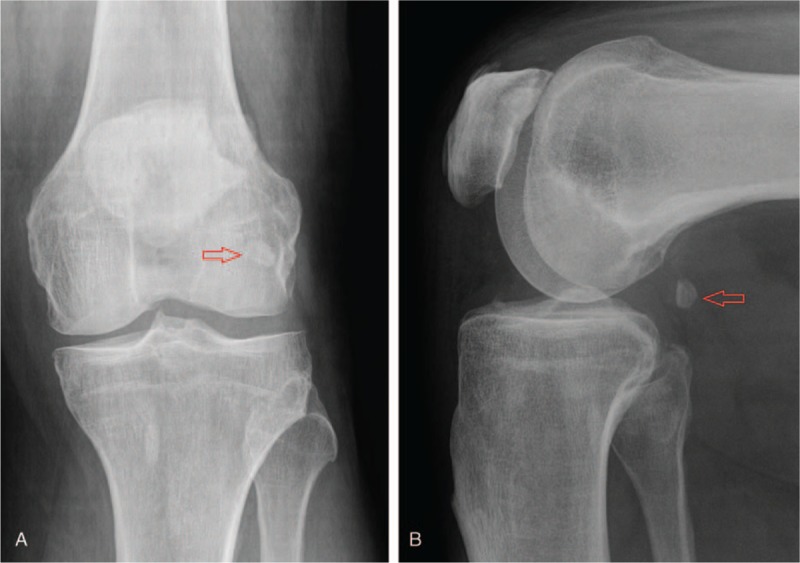
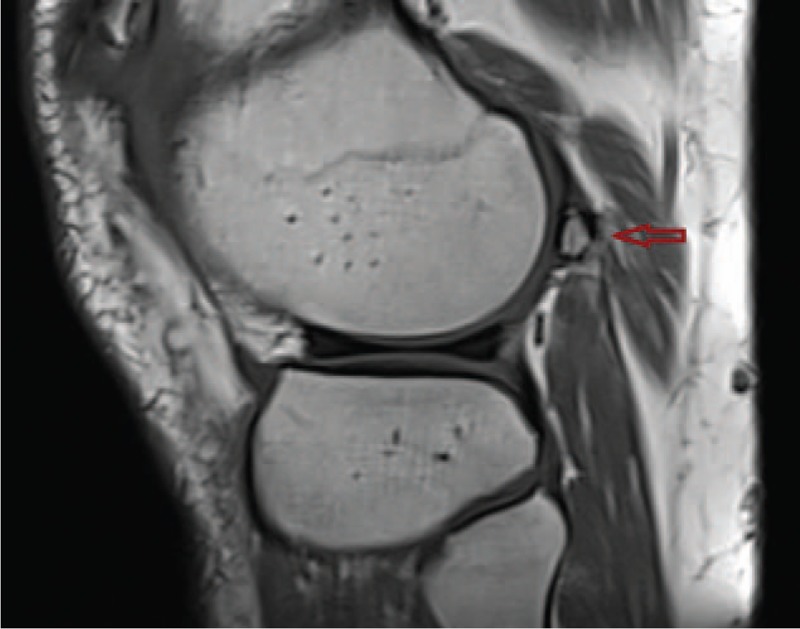
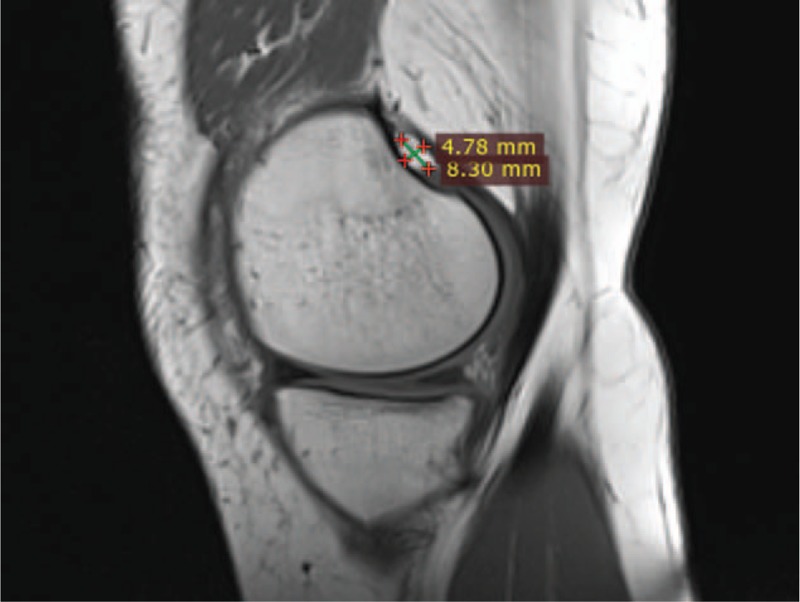
The functions and clinical consequences of the fabella, a sesamoid bone found in the posterolateral aspect of the knee joint, are still a reason of intense debate in the scientific literature. Its incidence was reported to range between 20% and 87% and its presence was usually associated with the persistent pain in the posterolateral region of the knee. The aim of our study was to measure the prevalence, anatomic and clinical features of the fabella within a cross-sectional study, conducted in a Romanian orthopaedic center. Between 2015 and 2017, a consecutive series of 562 patients with knee injuries or persistent knee pain has been examined by radiographs and Magnetic Resonance Imaging and a set of anatomical and clinical parameters have been recorded. Collected data was evaluated with RadiANT DICOM Viewer and statistically analyzed with GraphPad Prism 7. The level of significance was set at P <.05. The incidence of the fabella in our study group was 16.93%, lower than previously reported for Caucasian populations. We found statistically significant differences regarding the possible association of the fabella with pain in the posterolateral corner of the knee (P = .04) and the 2 dimensions of the bone according to gender (P = .03 respectively P = .01), but the prevalence was not influenced by gender (P = .6). The anatomic characteristics could be important in differentiating this sesamoid bone from calcifications or loose bodies located in the knee joint region. Due to the high association with the posterolateral knee pain, the fabella should be recorded during knee examination as a differential diagnosis, before any surgical procedure.
Conflict of interest statement
The authors have no conflicts of interest to disclose.
Figures
References
-
- Singh J, James SL, Kroon HM, et al. Tumor and tumor-like lesions of the patella—a multicenter experiment. Eur Radiol 2009;19:701–12. - PubMed
-
- Sarin VK, Erickson GM, Giori NJ, et al. Coincident development of sesamoid bones and clues to their evolution. Anat Rec 1999;257:174–80. - PubMed
-
- Kawashima T, Takeishi H, Yoshitoni S, et al. Anatomical study of the fabella, fabellar complex and its clinical implications. Surg Radiol Anat 2007;29:611–6. - PubMed
-
- Franceschi F, Longo VG, Ruzzini L, et al. Dislocation of an enlarged fabella as uncommon cause of knee pain: a case report. Knee 2007;14:330–2. - PubMed
Publication types
MeSH terms
LinkOut - more resources
Full Text Sources
Medical
