Review
. 2019 Jan 21;48(2):415-427.
doi: 10.1039/c7cs00748e.

Combatting antibiotic-resistant bacteria using nanomaterials

Affiliations
Review

Combatting antibiotic-resistant bacteria using nanomaterials

Akash Gupta et al. Chem Soc Rev. .

Abstract

The dramatic increase in antimicrobial resistance for pathogenic bacteria constitutes a key threat to human health. The Centers for Disease Control and Prevention has recently stated that the world is on the verge of entering the "post-antibiotic era", one where more people will die from bacterial infections than from cancer. Recently, nanoparticles (NPs) have emerged as new tools that can be used to combat deadly bacterial infections. Nanoparticle-based strategies can overcome the barriers faced by traditional antimicrobials, including antibiotic resistance. In this tutorial review, we have highlighted multiple nanoparticle-based approaches to eliminate bacterial infections, providing crucial insight into the design of elements that play critical roles in creating antimicrobial nanotherapeutics. In particular, we have focused on the pivotal role played by NP-surface functionality in designing nanomaterials as self-therapeutic agents and delivery vehicles for antimicrobial cargo.


Conflict of interest statement

Conflicts of interest

The authors declare no competing financial interest.

Figures
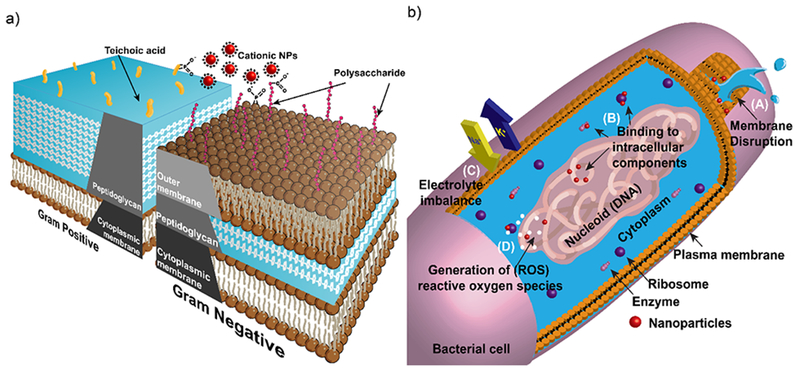
Figure 1.
Figure 1.
Schematic diagram showing a) cell wall structures of Gram-positive and Gram-negative bacteria. b) antimicrobial mechanism of NPs. i) disruption of cell membrane resulting in cytoplasmic leakage. ii) binding and disruption of intracellular components. iii) disrupting electron transport causing electrolyte imbalance. iv) generation of reactive oxygen species (ROS).
Figure 2.
Figure 2.
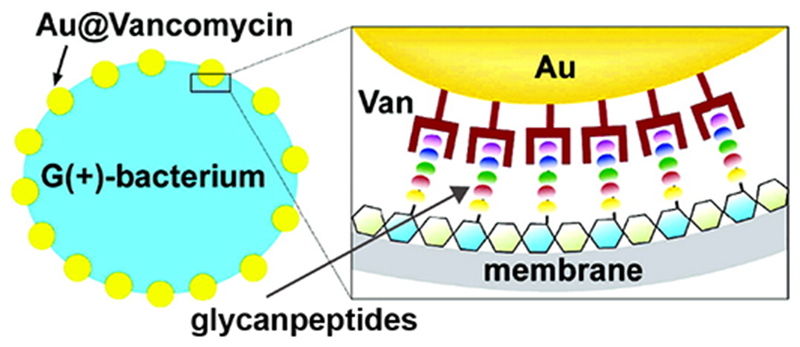
Schematic diagram showing the binding of vancomycin capped gold nanoparticles with vancomycin-resistant enterococci. Reproduced from reference with permission from American Chemical Society, Copyright © 2003.
Figure 3.
Figure 3.
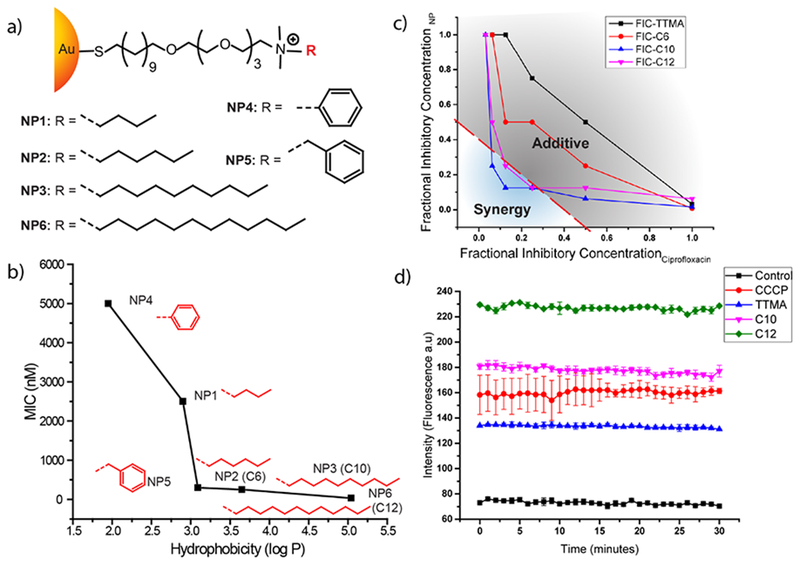
a) Molecular structures of the ligands used to functionalize 2nm AuNPs. b) MIC values of AuNPs with different hydrophobic ligands against E. coli. c) Graphs showing synergistic and additive interactions between the nanoparticles and antibiotic (ciprofloxacin). Data are fractional inhibitory concentration (FICs) of the NPs and antibiotics in combination. Synergy is observed by hydrophobic C10 and C12 NPs. d) Fluorescence kinetics of EtBr accumulation inside E. coli cells, evidencing blocking of efflux pumps by CCCP (efflux pump inhibitor, positive control) and hydrophobic NPs C10 and C12. Reproduced from Reference with permission from American Chemical Society, Copyright © 2014 and Reference with permission from IOP Publishing Ltd, Copyright © 2017.
Figure 4.
Figure 4.
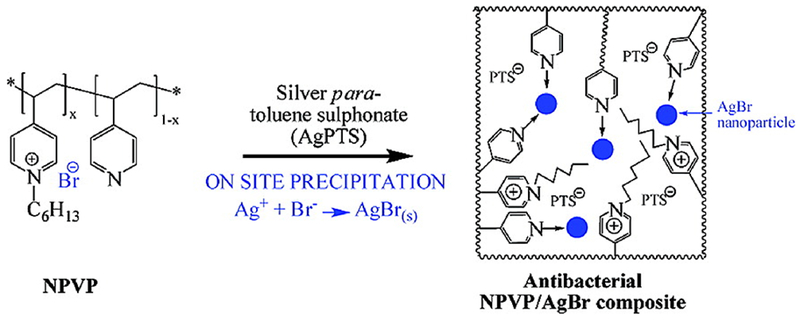
Schematic representation of the synthesis of AgBR/NPVP composite. Reproduced from reference with permission from American Chemical Society, Copyright © 2006.
Figure 5.
Figure 5.
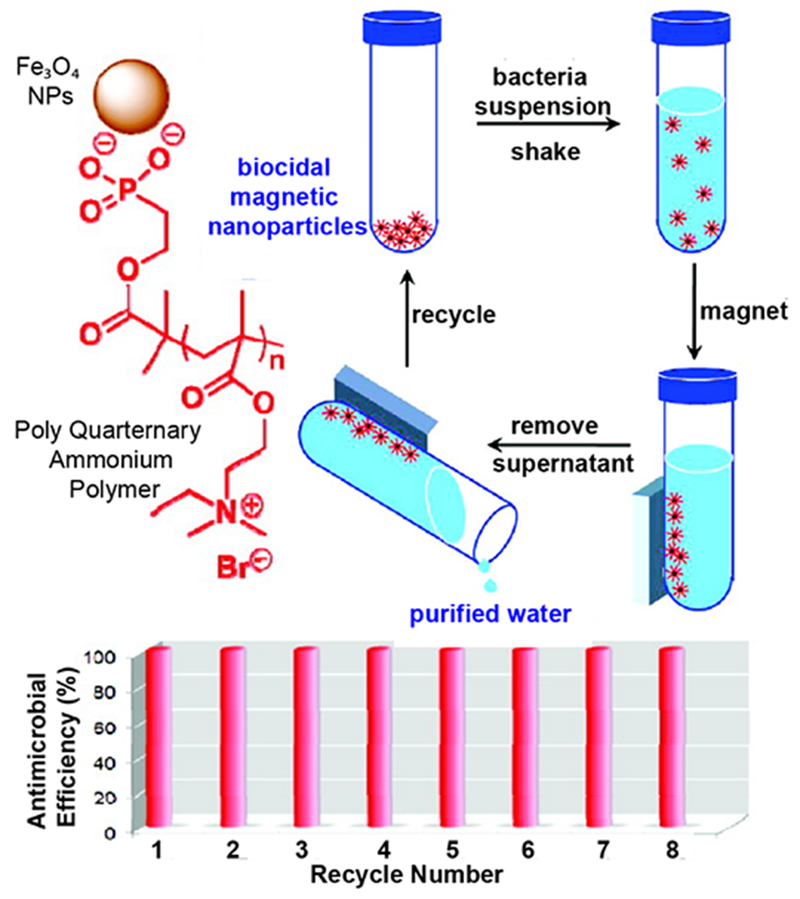
Schematic diagram showing magnetic NP-functionalized with polymer recycled for antibacterial application. Reproduced from reference with permission from American Chemical Society, Copyright © 2011.
Figure 6.
Figure 6.
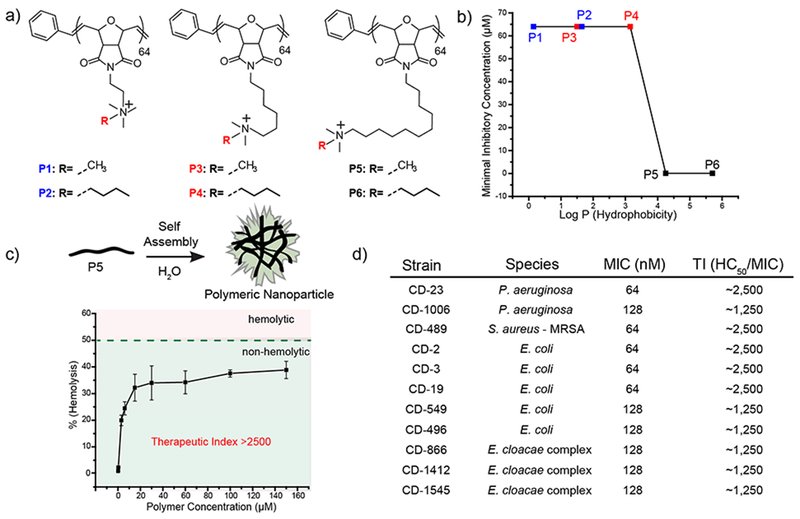
a) Molecular structures of the polymers used in the study. b) Minimal inhibitory Concentrations (MICs) of polymer derivatives plotted against Log P. Log P represents calculated hydrophobicity of each monomer. c) schematic showing self-assembly of polymers and graph showing hemolytic activity against red blood cells. d) Table showing MIC and therapeutic indices of P5 PNPs against clinical isolates. Reproduced from reference with permission from American Chemical Society, Copyright © 2018.
Figure 7.
Figure 7.
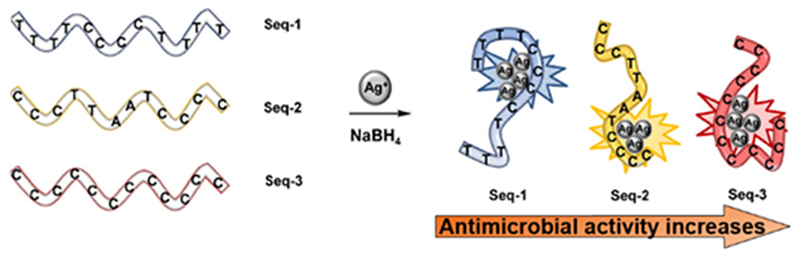
Schematic diagram showing the preparation of DNA-AgNCs. Reproduced from reference with permission from American Chemical Society, Copyright © 2016.
Figure 8.
Figure 8.
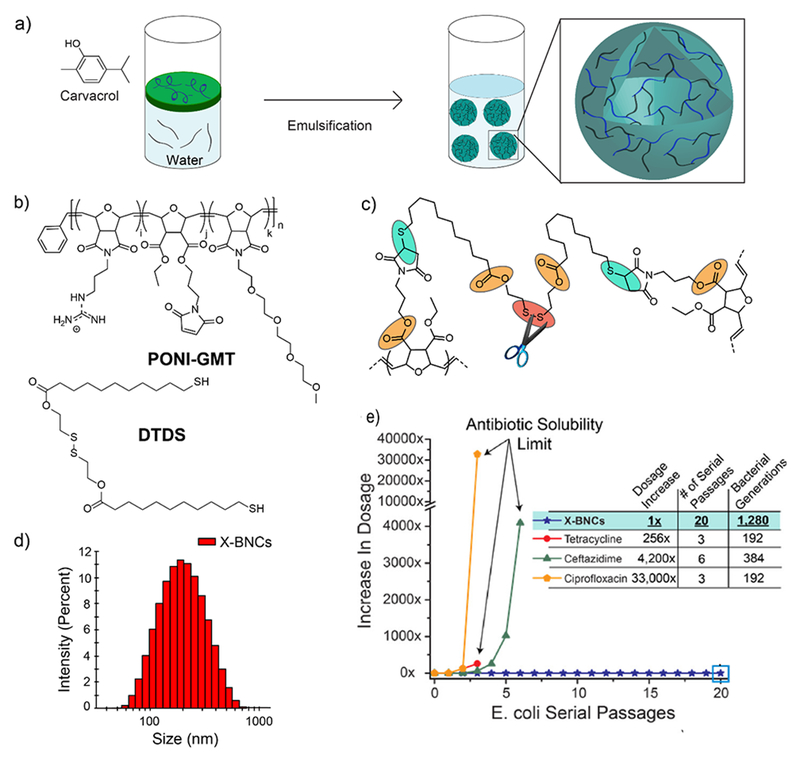
a) Schematic diagram showing the fabrication of biodegradable-polymer stabilized nanosponges. b) Structures of PONI-GMT and DTDS. c) Cross-linked PONI-GMT-DTDS structure showing linkage points reactive to endogenous biomolecules. d) DLS histogram of nanosponges. e) Resistance development assay against E. coli using nanosponges and antibiotics. The y-axis indicates the increase in dosage as compared to the initial bacterial cells (0th passage). Reproduced from reference with permission from American Chemical Society, Copyright © 2018.
Figure 9.
Figure 9.
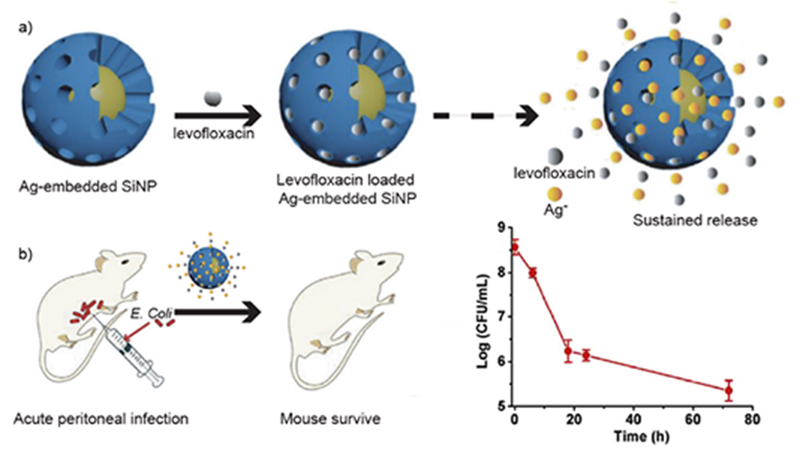
Schematic diagram showing a) fabrication of Ag@MSN loaded with levofloxacin for synergistic treatment of bacteria. b) Schematic illustration showing in vivo infection with graph showing decrease in intraperitoneal colony counts after NP treatment. Reproduced from reference with permission from Elsevier, Copyright © 2016.
Figure 10.
Figure 10.
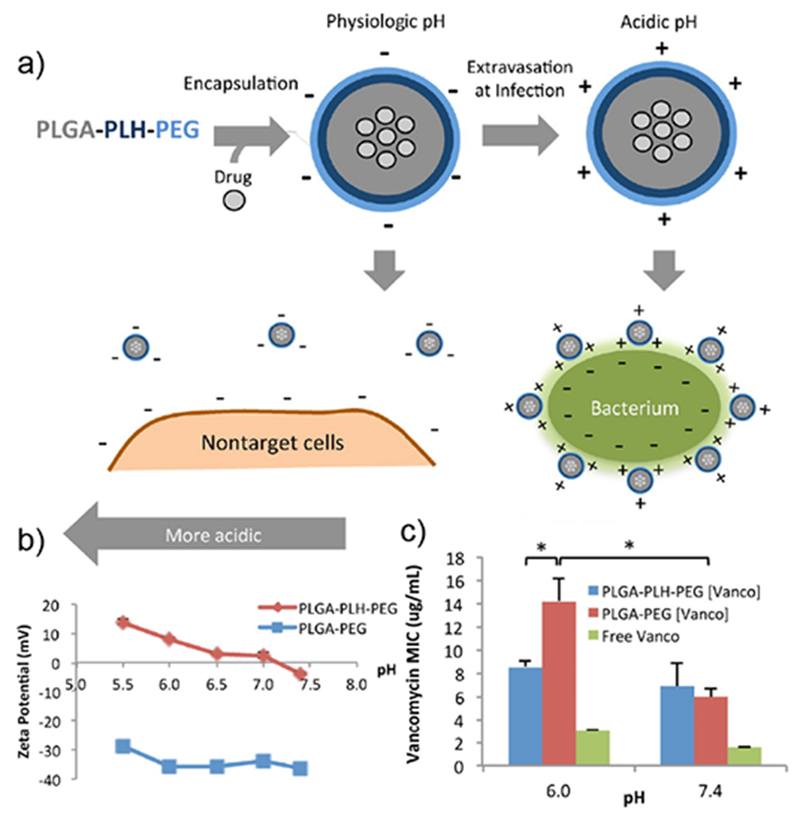
Schematic diagram showing the design of charge switchable NPs for delivery of vancomycin to bacterial cells. b) Zeta potential of NPs, ZP of PLGA-PLH-PEG increases with decreasing pH. c) Minimum inhibitory concentrations (MICs) of vancomycin against S. aureus in different conditions. Significant loss of drug activity observed in PLGA-PEG (Vanco) and free Vanco. Reproduced from reference with permission from American Chemical Society, Copyright © 2012.
Figure 11.
Figure 11.
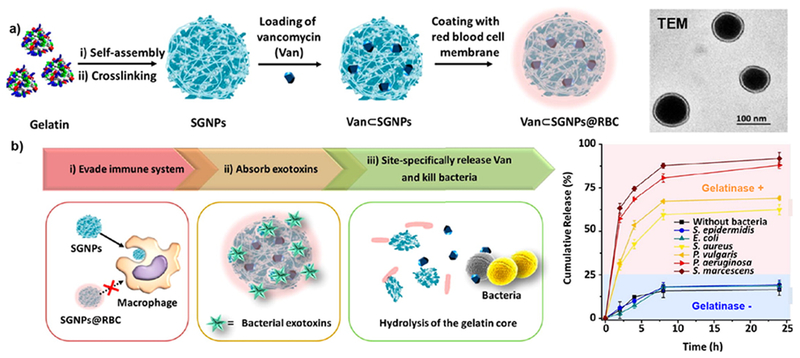
Schematic representation for fabrication of vancomycin encapsulated gelatin nanoparticles with RBC membrane coating layer (Van⊂SGNPs@RBC). (b) Diagram showing the ability of Van⊂SGNPs@RBC to evade macrophage recognition and release drugs in presence of bacterial infection. Graph shows drug releasing profiles of NPs in presence of gelatinase (+/−) bacteria. Reproduced from reference with permission from American Chemical Society, Copyright © 2014.

References

    1. FY15 Detect and Protect Against Antibiotic Resistance Budget Initiative; Centers for Disease Control and Prevention; Atlanta, GA, 2003, http://www.cdc.gov/drugresistance/threat-report-2013/pdf/FY15-DPAR-budge....
    1. Willyard C, Nature, 2017, 543, 15. - PubMed
    1. Prestinaci F; Pezzotti P; Pantosti A Pathog. Glob. Health 2015, 109 (7), 309. - PMC - PubMed
    1. Ventola CL, P T A peer-reviewed J. Formul. Manag, 2015, 40, 277–83. - PMC - PubMed
    1. Neu HC, Science (80-.)., 1992, 257, 1064–1073. - PubMed

MeSH terms