


Immune biomarkers of response to immune-checkpoint inhibitors in head and neck squamous cell carcinoma
- PMID: 30462163
- PMCID: PMC6336003
- DOI: 10.1093/annonc/mdy507
Immune biomarkers of response to immune-checkpoint inhibitors in head and neck squamous cell carcinoma
Abstract
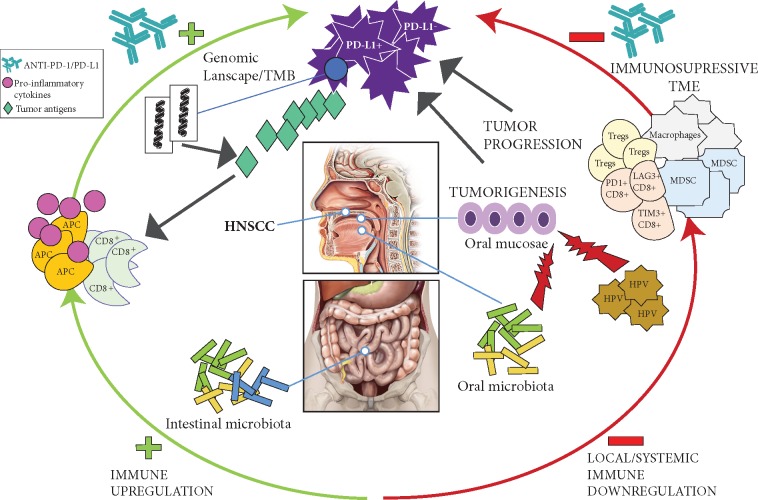
Anti-programmed cell death protein 1 (PD-1) agents have become the standard of care for platinum-refractory recurrent/metastatic head and neck squamous cell carcinoma (HNSCC) and are currently being evaluated in various disease settings. However, despite the gain in overall survival seen in some of the clinical trials, the majority of patients display primary resistance and do not benefit from these agents. Taking into consideration the potentially severe immune-related toxicities and their high cost, the search for predictive biomarkers of response is crucial. Besides Programmed death ligand-1 (PD-L1) expression, other biomarkers such as immune infiltration, tumor mutational burden or immune-gene expression profiling have been explored, but none of them has been validated in this disease. Among these, the microbiota has recently garnered tremendous interest since it has proven to influence the efficacy of PD-1 blockade in some tumor types. With the accumulating evidence on the effect of the microbiota in HNSCC tumorigenesis and progression, the study of its potential role as a predictive immune biomarker is warranted. This review examines the available evidence on emerging immune predictive biomarkers of response to anti-PD-1/PD-L1 therapy in HNSCC, introducing the microbiota and its potential use as a predictive immune biomarker in this disease.
Figures
References
Publication types
MeSH terms
Substances
LinkOut - more resources
Full Text Sources
Other Literature Sources
Medical
Research Materials
