


Nutrient Profile Models with Applications in Government-Led Nutrition Policies Aimed at Health Promotion and Noncommunicable Disease Prevention: A Systematic Review
- PMID: 30462178
- PMCID: PMC6247226
- DOI: 10.1093/advances/nmy045
Nutrient Profile Models with Applications in Government-Led Nutrition Policies Aimed at Health Promotion and Noncommunicable Disease Prevention: A Systematic Review
Abstract
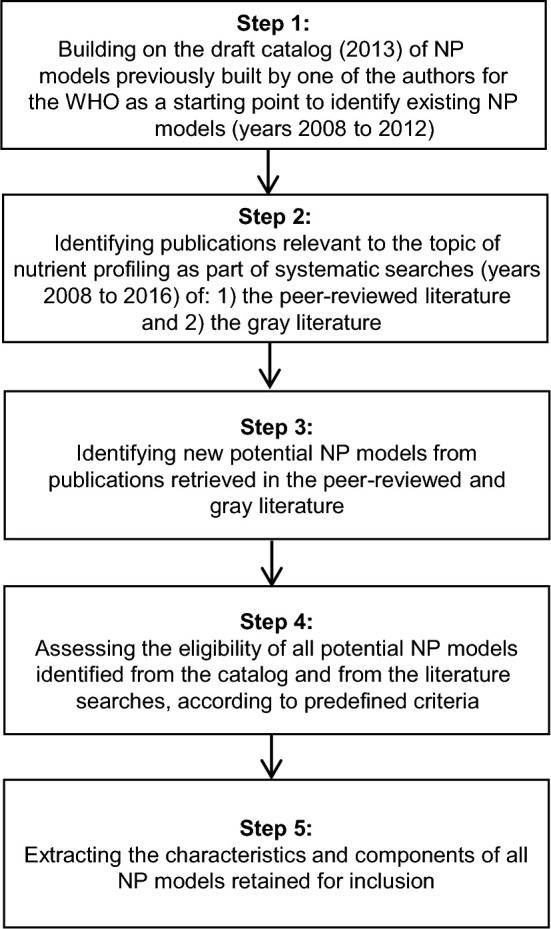
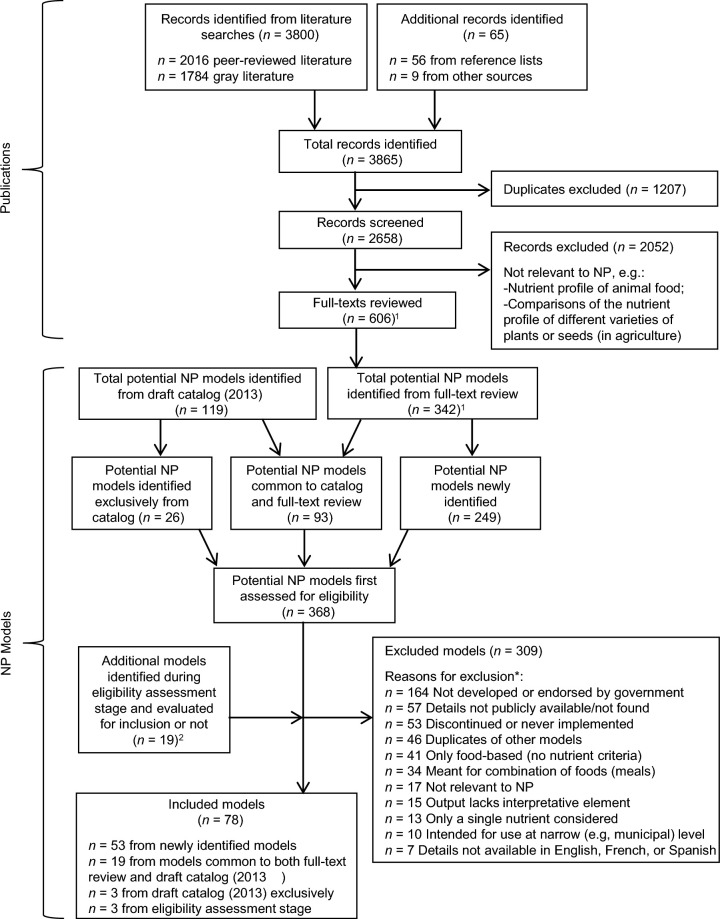
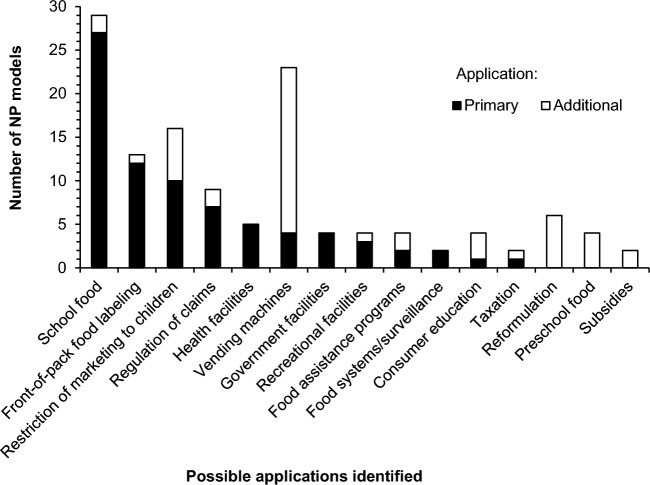
Nutrient profile (NP) models, tools used to rate or evaluate the nutritional quality of foods, are increasingly used by government bodies worldwide to underpin nutrition-related policies. An up-to-date and accessible list of existing NP models is currently unavailable to support their adoption or adaptation in different jurisdictions. This study used a systematic approach to develop a global resource that summarizes key characteristics of NP models with applications in government-led nutrition policies. NP models were identified from an unpublished WHO catalog of NP models last updated in 2012 and from searches conducted in different databases of the peer-reviewed (n = 3; e.g., PubMed) and gray literature (n = 15). Included models had to meet the following inclusion criteria (selected) as of 22 December 2016: 1) developed or endorsed by governmental or intergovernmental organizations, 2) allow for the evaluation of individual food items, and 3) have publicly available nutritional criteria. A total of 387 potential NP models were identified, including n = 361 from the full-text assessment of >600 publications and n = 26 exclusively from the catalog. Seventy-eight models were included. Most (73%) were introduced within the past 10 y, and 44% represent adaptations of ≥1 previously built model. Models were primarily built for school food standards or guidelines (n = 27), food labeling (e.g., front-of-pack; n = 12), and restriction of the marketing of food products to children (n = 10). All models consider nutrients to limit, with sodium, saturated fatty acids, and total sugars being included most frequently; and 86% also consider ≥1 nutrient to encourage (e.g., fiber). No information on validity testing could be identified for 58% of the models. Given the proliferation of NP models worldwide, this new resource will be highly valuable for assisting health professionals and policymakers in the selection of an appropriate model when the establishment of nutrition-related policies requires the use of nutrient profiling.
Figures
References
-
- World Health Organization Nutrient profiling: report of a WHO/IASO technical meeting. London, United Kingdom, 4–6 October 2010 [Internet] 2011[cited 2016 Jul 22]. Available from: http://www.who.int/nutrition/publications/profiling/WHO_IASO_report2010/en/.
-
- Lobstein T, Davies S. Defining and labelling ‘healthy’ and ‘unhealthy’ food. Public Health Nutr 2009;12(3):331–40. - PubMed
-
- Sacks G, Rayner M, Stockley L, Scarborough P, Snowdon W, Swinburn B. Applications of nutrient profiling: potential role in diet-related chronic disease prevention and the feasibility of a core nutrient-profiling system. Eur J Clin Nutr 2011;65(3):298–306. - PubMed
-
- Rayner M, Scarborough P, Kaur A. Nutrient profiling and the regulation of marketing to children. Possibilities and pitfalls. Appetite 2013;62:232–5. - PubMed
-
- World Health Organization Nutrient profiling [Internet]. [cited 2015 Aug 11]. Available from: http://www.who.int/nutrition/topics/profiling/en/.
Publication types
MeSH terms
Grants and funding
LinkOut - more resources
Full Text Sources
Miscellaneous
