


Working Memory Training in Alcohol Use Disorder: A Randomized Controlled Trial
- PMID: 30462837
- PMCID: PMC6587824
- DOI: 10.1111/acer.13910
Working Memory Training in Alcohol Use Disorder: A Randomized Controlled Trial
Abstract
Background: Alcohol use disorder (AUD) is associated with cognitive deficits such as impaired executive functions, which are hypothesized to contribute to the progression of the disease and worsen treatment outcome. Training of working memory (WM) to improve cognitive functions and thereby reduce alcohol use has been proposed as a novel treatment strategy.
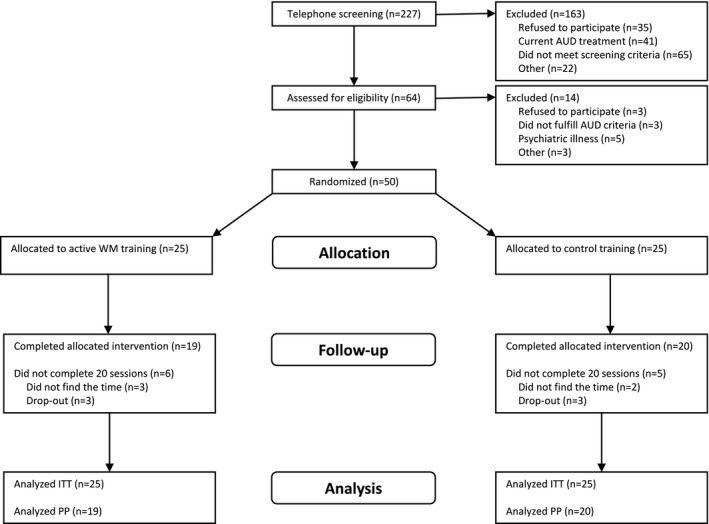
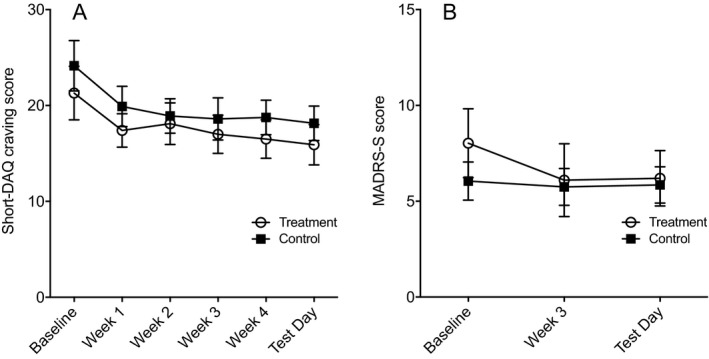
Methods: Patients with AUD (n = 50) who were recruited to an outpatient addiction clinic were randomized to receive 5 weeks of active WM training or control training. Participants had weekly follow-up visits, and all cognitive training sessions were done online at home. Primary outcomes were WM function and change in self-reported heavy drinking. Secondary outcomes were craving, other drinking outcomes, and performance on a range of neuropsychological tasks from the Cambridge Neuropsychological Test Automated Battery.
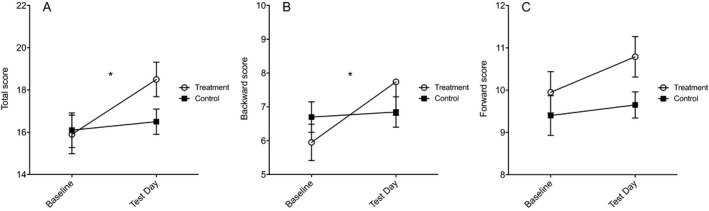
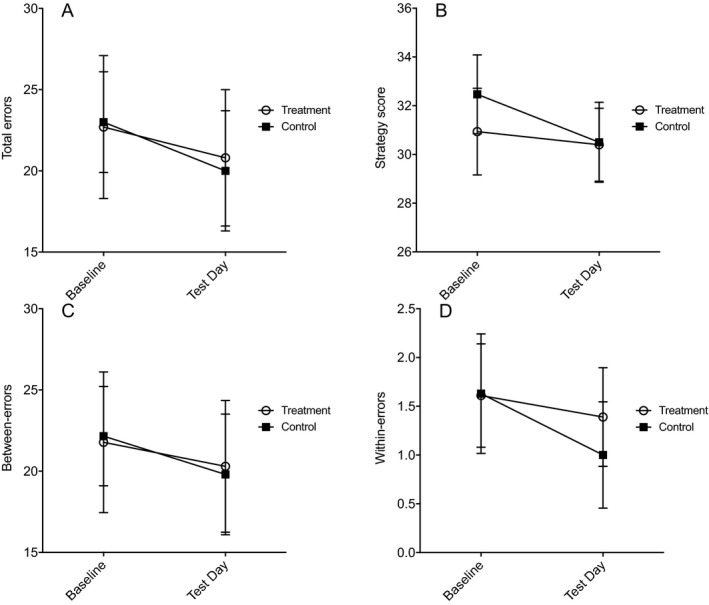
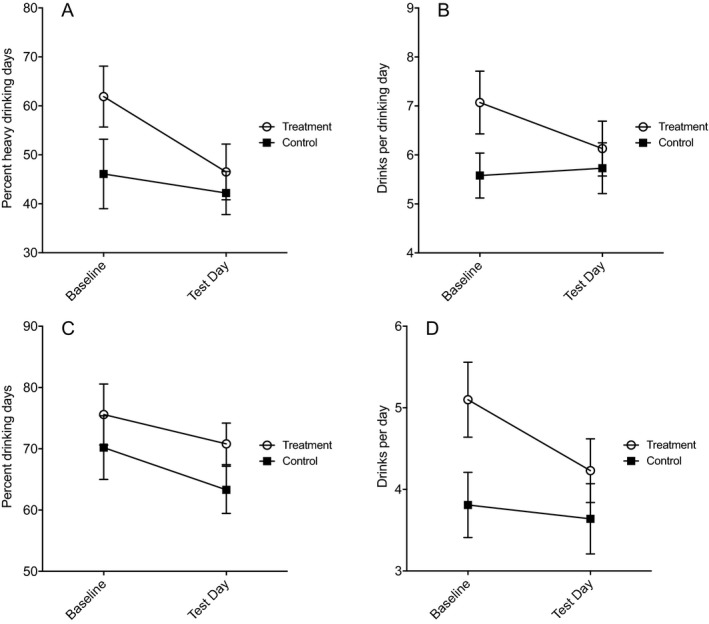
Results: The active training group demonstrated a significantly greater improvement in verbal WM compared with the control group. No statistically significant effect of training was found on the primary drinking outcome, but a trend was observed indicating that WM training reduces the number of drinks per drinking occasion. WM training had no statistically significant effect on any of the other neuropsychological tasks.
Conclusions: Cognitive training can improve WM function in individuals with AUD, suggesting that such interventions are feasible to administer in this patient population. The results do not support an effect of WM training on heavy drinking or transfer effects to other cognitive domains. Future studies should evaluate WM training as an adjunct to evidence-based treatments for AUD to assess potential synergistic effects.
Trial registration: ClinicalTrials.gov NCT02113618.
Keywords: Alcohol Use Disorder; Cogmed; Cognitive Training; Working Memory.
© 2018 The Authors. Alcoholism: Clinical & Experimental Research published by Wiley Periodicals, Inc. on behalf of Research Society on Alcoholism.
Figures
References
-
- American Psychiatric Association (2000) Diagnostic and Statistical Manual of Mental Disorders 4th ed., text rev. American Psychiatric Association, Washington DC.
-
- American Psychiatric Association (2013) Diagnostic and Statistical Manual of Mental Disorders 5th ed. American Psychiatric Association, Arlington, VA.
-
- Anton RF, Moak DH, Latham P (1995) The Obsessive Compulsive Drinking Scale: a self‐rated instrument for the quantification of thoughts about alcohol and drinking behavior. Alcohol Clin Exp Res 19:92–99. - PubMed
-
- Au J, Sheehan E, Tsai N, Duncan GJ, Buschkuehl M, Jaeggi SM (2015) Improving fluid intelligence with training on working memory: a meta‐analysis. Psychon Bull Rev 22:366–377. - PubMed
-
- Bäckman L, Nyberg L, Soveri A, Johansson J, Andersson M, Dahlin E, Neely AS, Virta J, Laine M, Rinne JO (2011) Effects of working‐memory training on striatal dopamine release. Science 333:718. - PubMed
Publication types
MeSH terms
Associated data
Grants and funding
- SLS-313731/Söderström-Königska project grant/International
- Foundation for Professor Bror Gadelius Memorial Fund/International
- FO2012-0043/Research Council of the Swedish Alcohol Retailing Monopoly/International
- SLS500921/Swedish Society of Medicine/International
- SLS573691/Swedish Society of Medicine/International
LinkOut - more resources
Full Text Sources
Medical
