


Renal dysfunction among adult HIV/AIDS patients on antiretroviral therapy at a tertiary facility in Ghana
- PMID: 30463531
- PMCID: PMC6249759
- DOI: 10.1186/s12882-018-1130-z
Renal dysfunction among adult HIV/AIDS patients on antiretroviral therapy at a tertiary facility in Ghana
Abstract
Background: Kidney diseases have emerged as significant cause of morbidity and mortality in HIV subject on antiretroviral therapy (ART). In Ghana, routine follow up of HIV positive clients is by estimation of serum creatinine and urea levels. Glomerular Filtration Rate (GFR) is not routinely calculated and proteinuria is not routinely checked. This study sought to investigate the kidney profiles of adult HIV/AIDS patients being managed on ART at the Cape Coast Teaching Hospital (CCTH), Ghana.
Methods: A hospital-based analytical cross sectional study with a retrospective component was conducted using systematic sampling method to recruit HIV/AIDS who visited the ART clinic. A total of 440 participants of both sexes aged 18 years and above, confirmed as HIV/AIDS positive and on ART were involved in this study. Blood and urine samples were collected from all subjects and the levels of serum creatinine and urea and proteinuria were estimated and eGFR calculated using the Modification of Diet in Renal Disease (MDRD) equations. Data analyses were performed using Stata version 13 software (Stata Corp, Texas USA).
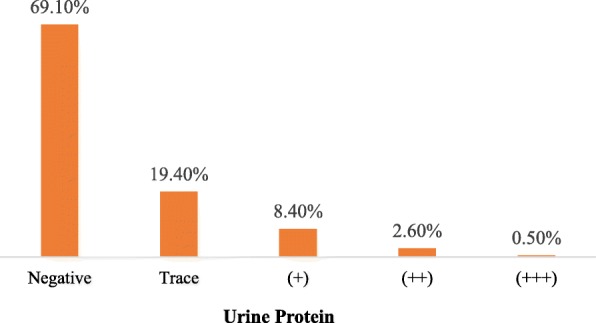
Results: The mean age (years) of participants was 45.5 years (±11.6) with 288 (65.4%) being on Tenofovir based ART regimen. The mean eGFR was found to decrease from 112.4 ml/min/1.73 m at baseline, to 103.4 ml/min/1.73 m after 6 months on ART and to a mean of 99.4 ml/min/1.73 m at recruitment into this study. Factors which were found to be associated with having eGFR < 60 included age, gender and CD4 count though not statistically significant. Patients > 45 years had the highest odds with OR 2.0 (95% CI: 0.8-5.1), females had higher odds with OR 1.5 (95% CI: 0.5-5.2), and those with CD4 count > 350 had OR of 0.4 (95% CI 0.2-1.3). A total of 30.9% of the participants had proteinuria at recruitment. TDF based ART regimen had no statistically significant effect on serum creatinine and urea levels.
Conclusion: Estimated GFR decreased after 6 months among patients on ART despite normal serum creatinine and urea levels. This finding suggests that clients in care at HIV/ART clinics in Ghana may benefit from routine estimation of GFR and proteinuria.
Conflict of interest statement
Ethics approval and consent to participate
This study was approved by the Institutional Review Board of the University of Cape-Coast (IRB-UCC). Permission to undertake the study at the HIV Clinic of the hospital was sought and granted by the hospital management. The participants enrolled in the study gave written informed consent after full explanation of the study protocol.
Consent for publication
Not applicable
Competing interests
The authors declare that they have no competing interests.
Publisher’s Note
Springer Nature remains neutral with regard to jurisdictional claims in published maps and institutional affiliations.
Figures

References
MeSH terms
Substances
LinkOut - more resources
Full Text Sources
Medical
Research Materials
Miscellaneous
