


Alterations in VASP phosphorylation and profilin1 and cofilin1 expression in hyperoxic lung injury and BPD
- PMID: 30463566
- PMCID: PMC6249974
- DOI: 10.1186/s12931-018-0938-1
Alterations in VASP phosphorylation and profilin1 and cofilin1 expression in hyperoxic lung injury and BPD
Abstract
Background: Hyperoxia is a frequently employed therapy for prematurely born infants, induces lung injury and contributes to development of bronchopulmonary dysplasia (BPD). BPD is characterized by decreased cellular proliferation, cellular migration, and failure of injury repair systems. Actin binding proteins (ABPs) such as VASP, cofilin1, and profilin1 regulate cell proliferation and migration via modulation of actin dynamics. Lung mesenchymal stem cells (L-MSCs) initiate repair processes by proliferating, migrating, and localizing to sites of injury. These processes have not been extensively explored in hyperoxia induced lung injury and repair.
Methods: ABPs and CD146+ L-MSCs were analyzed by immunofluorescence in human lung autopsy tissues from infants with and without BPD and by western blot in lung tissue homogenates obtained from our murine model of newborn hyperoxic lung injury.
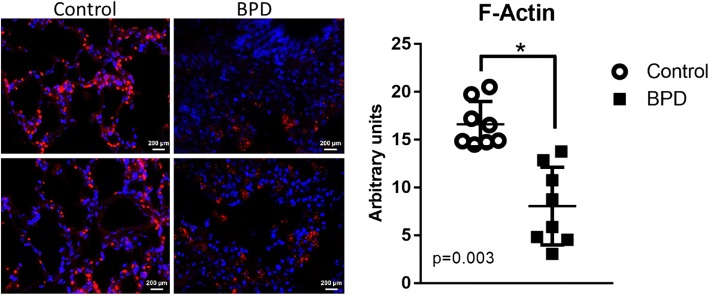
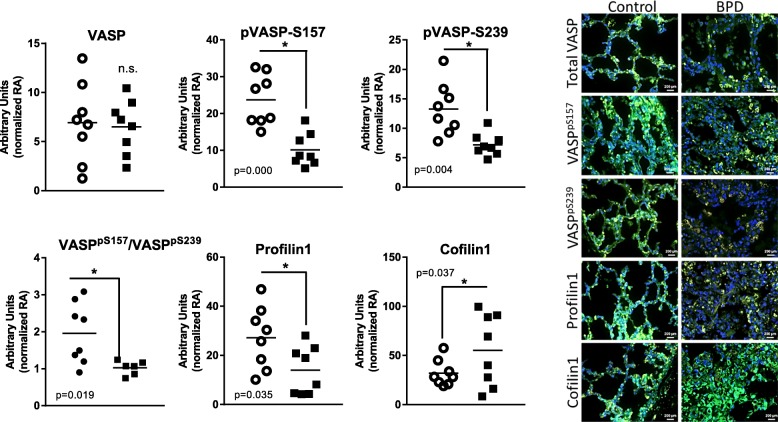
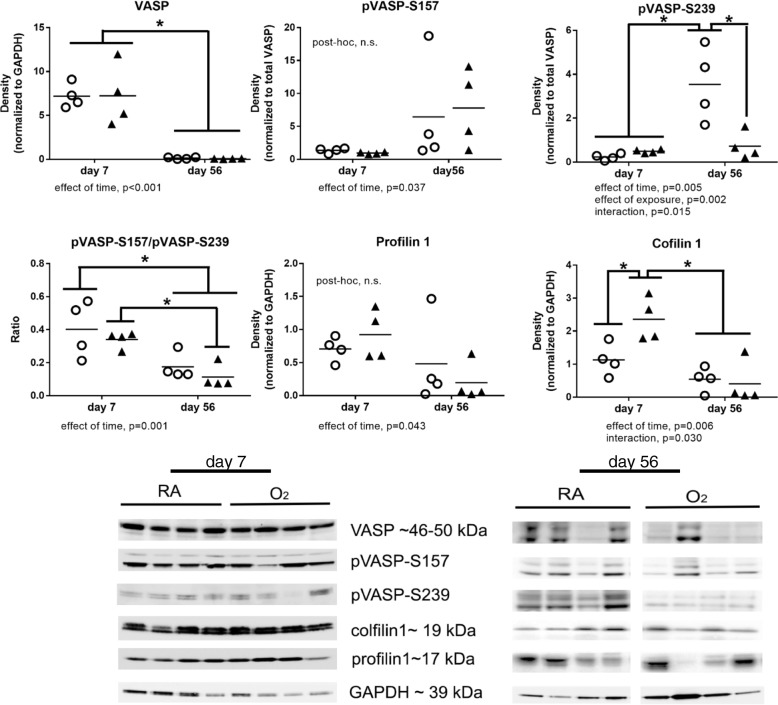
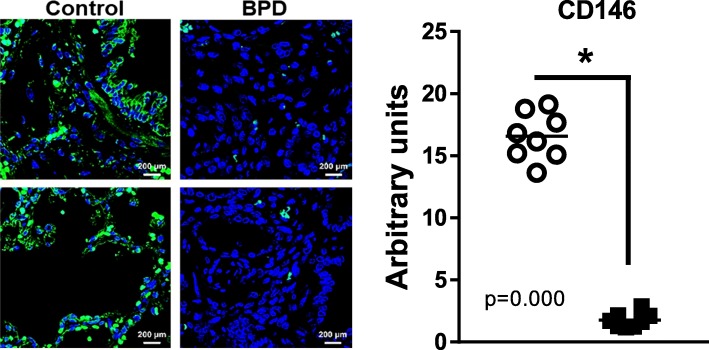
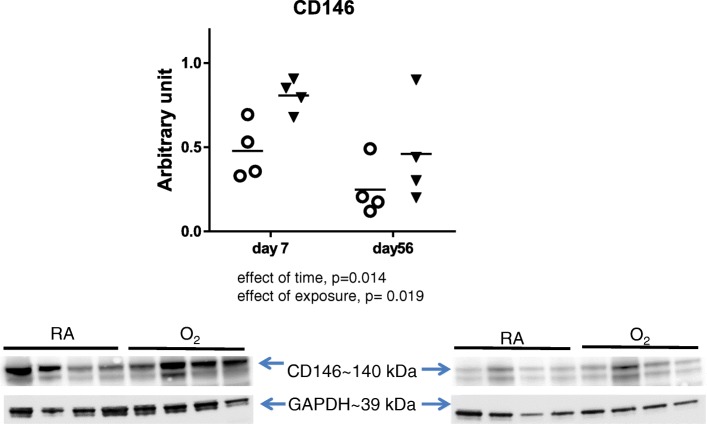
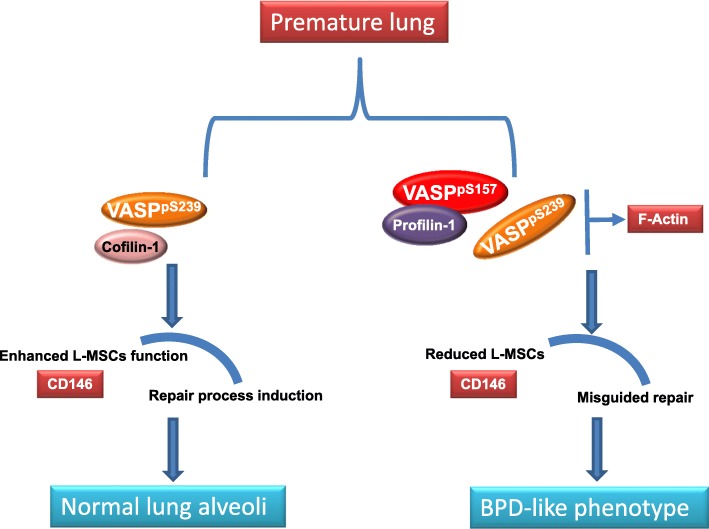
Results: Decreased F-actin content, ratio of VASPpS157/VASPpS239, and profilin 1 expression were observed in human lung tissues but this same pattern was not observed in lungs from hyperoxia-exposed newborn mice. Increases in cofilin1 expression were observed in both human and mouse tissues at 7d indicating a dysregulation in actin dynamics which may be related to altered growth. CD146 levels were elevated in human and newborn mice tissues (7d).
Conclusion: Altered phosphorylation of VASP and expression of profilin 1 and cofilin 1 in human tissues indicate that the pathophysiology of BPD involves dysregulation of actin binding proteins. Lack of similar changes in a mouse model of hyperoxia exposure imply that disruption in actin binding protein expression may be linked to interventions or morbidities other than hyperoxia alone.
Keywords: Actin binding proteins; BPD; CD146; Cofilin1; Hyperoxia; L-MSCs; Profilin1; VASP; VASPpS157; VASPpS239.
Conflict of interest statement
Ethics approval and consent to participate
Animal study protocols (#AR07–00028) were approved by the IACUC at The Research Institute at Nationwide Children’s Hospital. Human lung autopsy tissues from infants that died with BPD and infants that died at similar postnatal ages from non-pulmonary causes (control) were obtained from Dr. Gloria Pryhuber and collected as part of the BRINDL repository and Lung Map consortium.
Consent for publication
Not Applicable
Competing interests
The authors declare that they have no competing interests.
Publisher’s Note
Springer Nature remains neutral with regard to jurisdictional claims in published maps and institutional affiliations.
Figures
References
-
- Aszodi A, Pfeifer A, Ahmad M, Glauner M, Zhou XH, Ny L, Andersson KE, Kehrel B, Offermanns S, Fassler R. The vasodilator-stimulated phosphoprotein (VASP) is involved in cGMP- and cAMP-mediated inhibition of agonist-induced platelet aggregation, but is dispensable for smooth muscle function. EMBO J. 1999;18:37–48. doi: 10.1093/emboj/18.1.37. - DOI - PMC - PubMed
-
- Pula G, Krause M. Role of Ena/VASP proteins in homeostasis and disease. Handb Exp Pharmacol. 2008:39–65. - PubMed
MeSH terms
Substances
Grants and funding
LinkOut - more resources
Full Text Sources
Miscellaneous
