


Establishment of a continuous in vitro culture of Babesia duncani in human erythrocytes reveals unusually high tolerance to recommended therapies
- PMID: 30463941
- PMCID: PMC6311517
- DOI: 10.1074/jbc.AC118.005771
Establishment of a continuous in vitro culture of Babesia duncani in human erythrocytes reveals unusually high tolerance to recommended therapies
Abstract
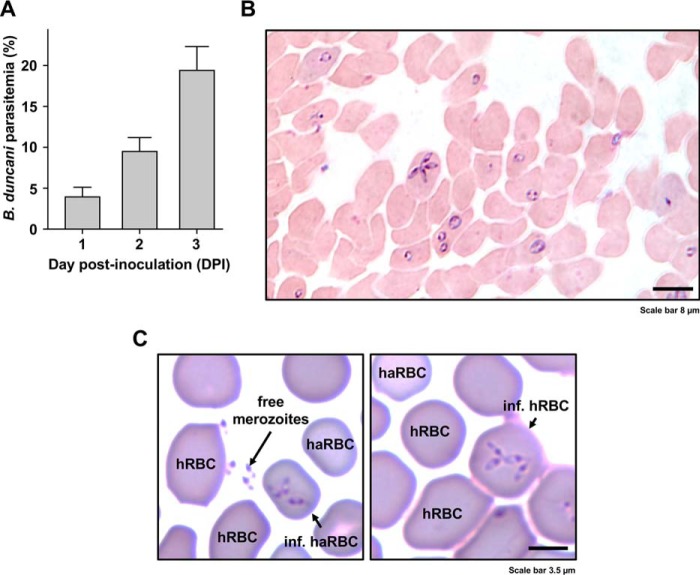
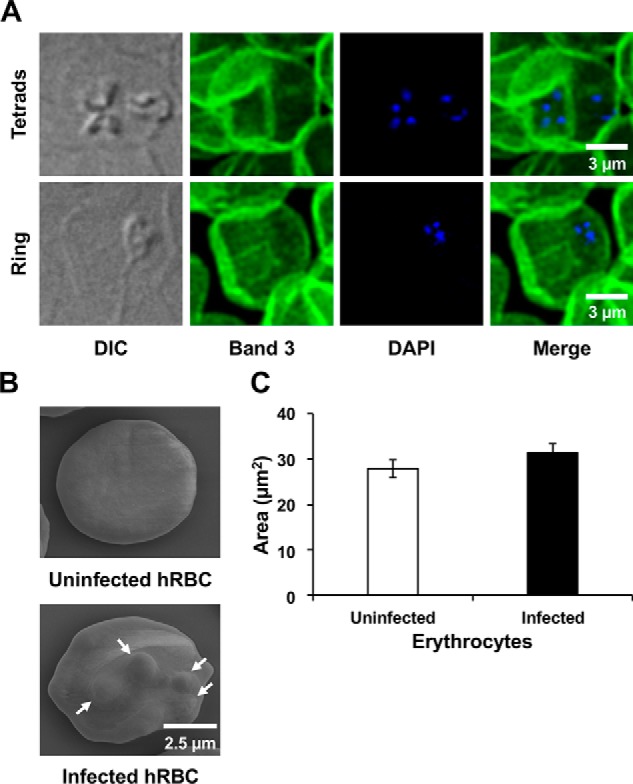
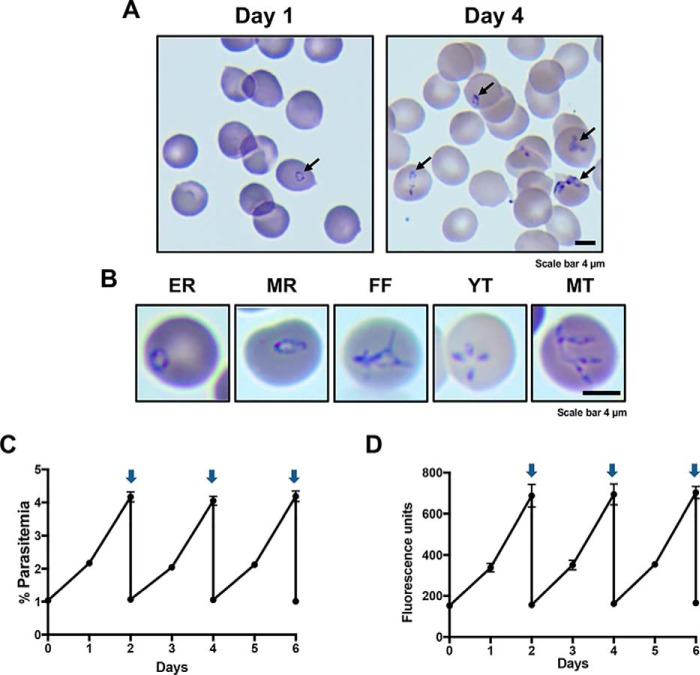
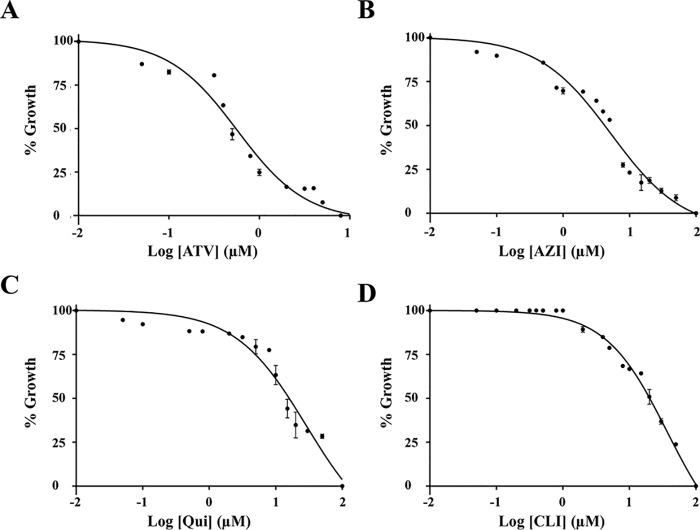
Human babesiosis is an emerging tick-borne disease caused by apicomplexan parasites of the genus Babesia Clinical cases caused by Babesia duncani have been associated with high parasite burden, severe pathology, and death. In both mice and hamsters, the parasite causes uncontrolled fulminant infections, which ultimately lead to death. Resolving these infections requires knowledge of B. duncani biology, virulence, and susceptibility to anti-infectives, but little is known and further research is hindered by a lack of relevant model systems. Here, we report the first continuous in vitro culture of B. duncani in human red blood cells. We show that during its asexual cycle within human erythrocytes, B. duncani develops and divides to form four daughter parasites with parasitemia doubling every ∼22 h. Using this in vitro culture assay, we found that B. duncani has low susceptibility to the four drugs recommended for treatment of human babesiosis, atovaquone, azithromycin, clindamycin, and quinine, with IC50 values ranging between 500 nm and 20 μm These data suggest that current practices are of limited effect in treating the disease. We anticipate this new disease model will set the stage for a better understanding of the biology of this parasite and will help guide better therapeutic strategies to treat B. duncani-associated babesiosis.
Keywords: Babesia duncani; apicomplexa; cell culture; erythrocyte; human babesiosis; in vitro culture; infectious disease; inhibitor; parasitology; red blood cells; tick-borne disease.
© 2018 Abraham et al.
Conflict of interest statement
The authors declare that they have no conflicts of interest with the contents of this article. The content is solely the responsibility of the authors and does not necessarily represent the official views of the National Institutes of Health.
Figures
References
-
- Conrad P. A., Kjemtrup A. M., Carreno R. A., Thomford J., Wainwright K., Eberhard M., Quick R., Telford S. R. 3rd, and Herwaldt B. L. (2006) Description of Babesia duncani n. sp. (Apicomplexa: Babesiidae) from humans and its differentiation from other piroplasms. Int. J. Parasitol. 36, 779–789 10.1016/j.ijpara.2006.03.008 - DOI - PubMed
Publication types
MeSH terms
Substances
Grants and funding
LinkOut - more resources
Full Text Sources
