


Survival outcome differences based on treatments used and knowledge of the primary tumour site for patients with cancer of unknown and known primary in Ontario
- PMID: 30464680
- PMCID: PMC6209558
- DOI: 10.3747/co.25.4003
Survival outcome differences based on treatments used and knowledge of the primary tumour site for patients with cancer of unknown and known primary in Ontario
Abstract
Introduction: Patients with cancer of unknown primary (cup) have pathologically confirmed metastatic tumours with unidentifiable primary tumours. Currently, very little is known about the relationship between the treatment of patients with cup and their survival outcomes. Thus, we compared oncologic treatment and survival outcomes for patients in Ontario with cup against those for a cohort of patients with metastatic cancer of known primary site.
Methods: Using the Ontario Cancer Registry and the Same-Day Surgery and Discharge Abstract databases maintained by the Canadian Institute for Health Information, we identified all Ontario patients diagnosed with metastatic cancer between 1 January 2000 and 31 December 2005. Ontario Health Insurance Plan treatment records were linked to identify codes for surgery, chemotherapy, or therapeutic radiation related to oncology. Multivariable Cox regression models were constructed, adjusting for histology, age, sex, and comorbidities.
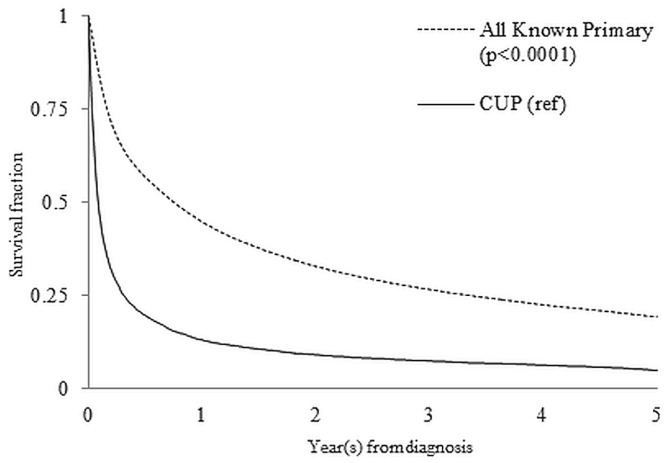
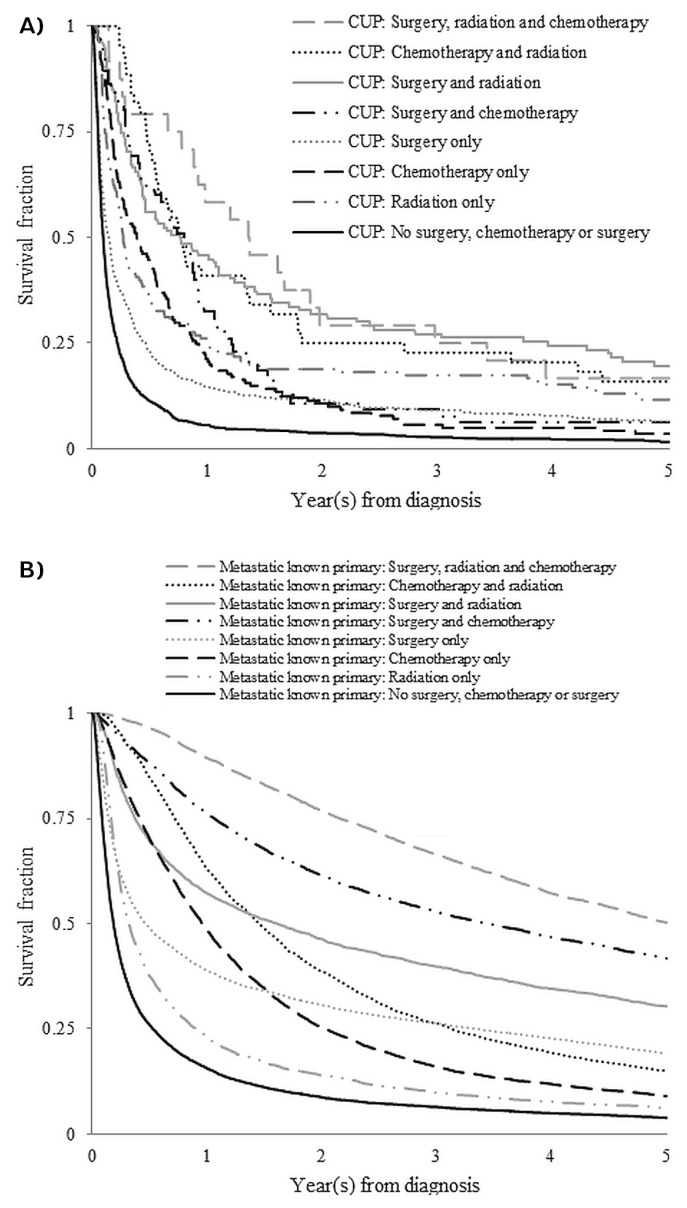
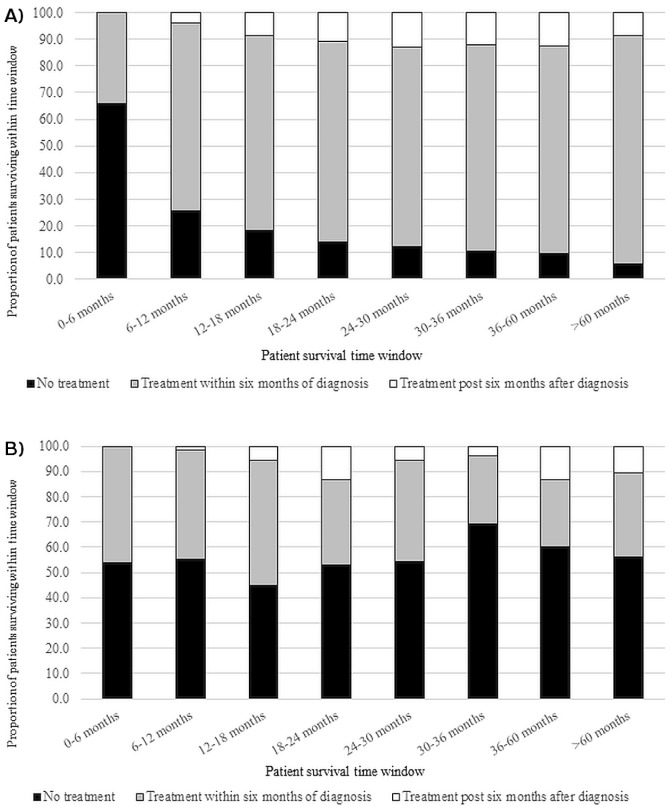
Results: In 45,347 patients (96.3%), the primary tumour site was identifiable, and in 1743 patients (3.7%), cup was diagnosed. Among the main tumour sites, cup ranked as the 6th largest. The mean Charlson score was significantly higher (p < 0.0001) in patients with cup (1.88) than in those with a known primary (1.42). Overall median survival was 1.9 months for patients with cup compared with 11.9 months for all patients with a known-primary cancer. Receipt of treatment was more likely for patients with a known primary site (n= 35,012, 77.2%) than for those with cup (n = 891, 51.1%). Among patients with a known primary site, median survival was significantly higher for treated than for untreated patients (19.0 months vs. 2.2 months, p < 0.0001). Among patients with cup, median survival was also higher for treated than for untreated patients (3.6 months vs. 1.1 months, p < 0.0001).
Conclusions: In Ontario, patients with cup experience significantly lower survival than do patients with metastatic cancer of a known primary site. Treatment is associated with significantly increased survival both for patients with cup and for those with metastatic cancer of a known primary site.
Keywords: Cancer of unknown primary; Ontario Cancer Registry; Ontario Health Insurance Plan; administrative data; cup; survival analyses.
Conflict of interest statement
CONFLICT OF INTEREST DISCLOSURES We have read and understood Current Oncology’s policy on disclosing conflicts of interest, and we declare the following interests: PKR is a co-founder of Cytognomix Inc.; SMM has received unrestricted research grants from Merck, GlaxoSmithKline, Sanofi Pasteur, Pfizer, and Roche–Assurex for unrelated studies, and has also received fees as an advisory board member for Sanofi Pasteur; EW has received fees as an advisory board member from Amgen, Bayer, Eisai, Merck, and Roche, and EW’s institution receives funding from AstraZeneca, Bristol–Myers Squibb, Eisai, Merck, and Roche for trials in which he is a co-investigator; GSZ has received fees as an advisory board member for Amgen and GlaxoSmithKline, and executive education fees from Bayer; the remaining authors have no conflicts to disclose.
Figures
References
Publication types
MeSH terms
Grants and funding
LinkOut - more resources
Full Text Sources
