


People's explanatory preferences for scientific phenomena
- PMID: 30465103
- PMCID: PMC6249345
- DOI: 10.1186/s41235-018-0135-2
People's explanatory preferences for scientific phenomena
Abstract
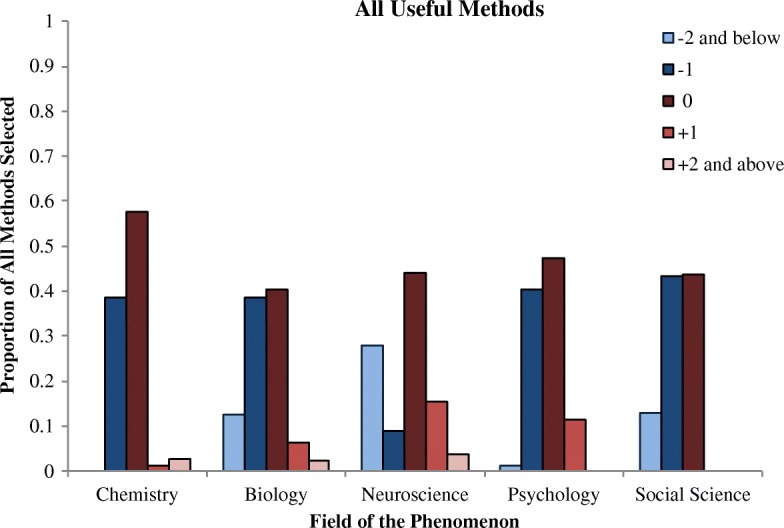
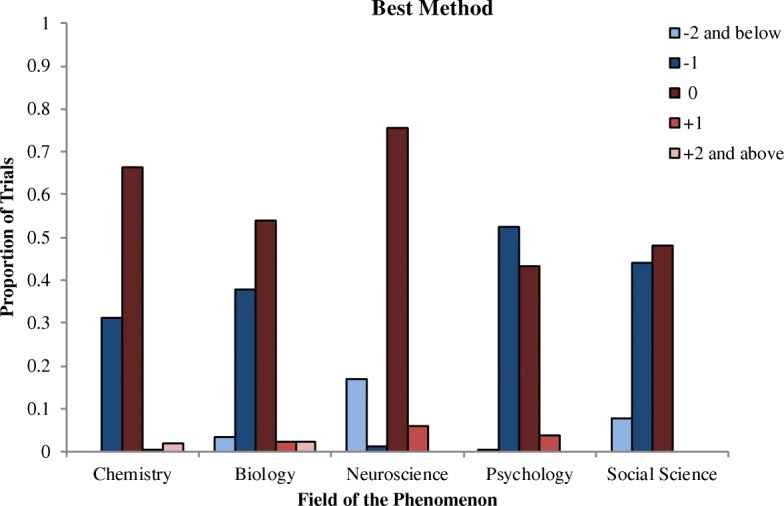
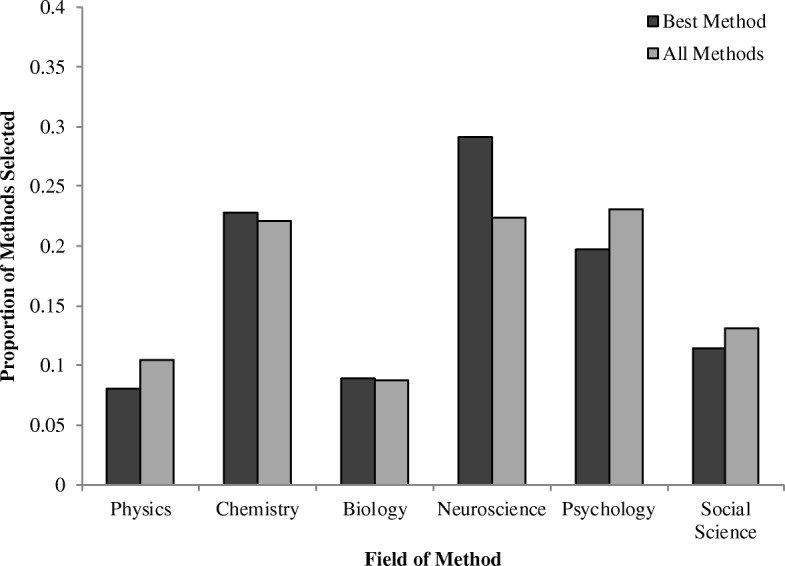
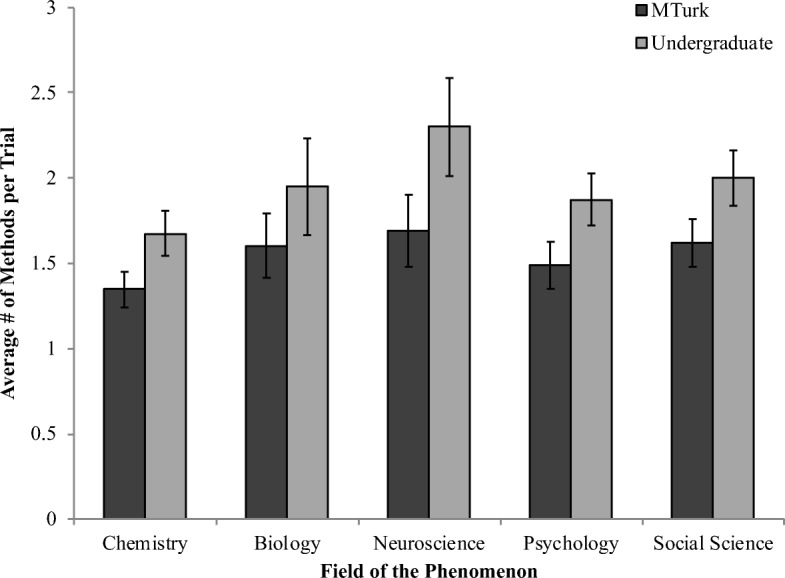
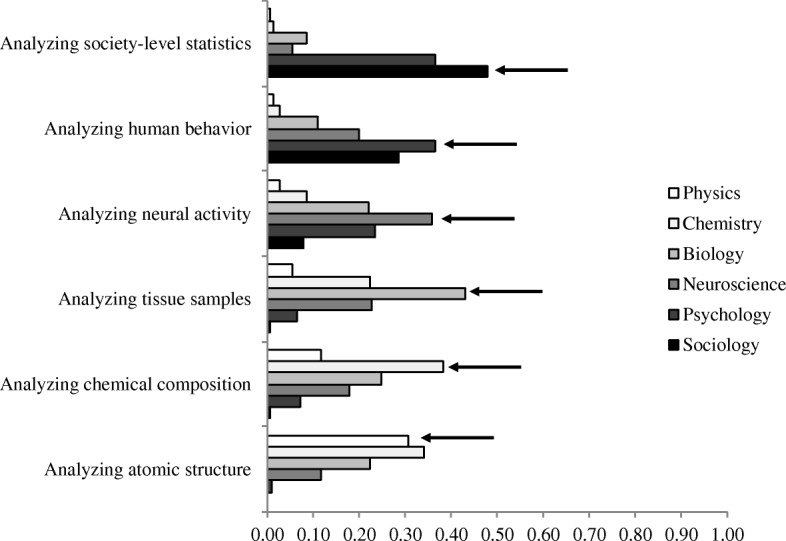
Previous work has found that people are drawn to explanations of psychological phenomena when these explanations contain neuroscience information, even when that information is irrelevant. This preference may be due to a general preference for reductive explanations; however, prior work has not investigated whether people indeed prefer such explanations or whether this preference varies by scientific discipline. The current study asked 82 participants to choose which methods would be most appropriate for investigating topics in six scientific fields. Participants generally preferred methods that either matched the field of investigation (e.g., biology for biology) or that came from the immediately more reductive field (e.g., chemistry for biology). Both of these patterns were especially evident for the pairing of psychology and neuroscience. Additionally, participants selected significantly more methods as being useful for explaining neuroscience phenomena. These results suggest that people's sense of the relations among scientific fields are fairly well calibrated but display some general attraction to neuroscience.
Conflict of interest statement
Ethics approval and consent to participate
Informed consent of all participants was obtained and their rights were protected according to the Declaration of Helsinki (University of Pennsylvania Institutional Review Board, exempt). Data from this study will be made available on the Open Science Framework.
Competing interests
The authors declare that they have no competing interests.
Publisher’s Note
Springer Nature remains neutral with regard to jurisdictional claims in published maps and institutional affiliations.
Figures
References
-
- Bloom P. Descartes’ baby: How the science of child development explains what makes us human. New York: Basic Books; 2004.
-
- Carnap R. The logical syntax of language. Oxford: Harcourt, Brace; 1937.
-
- Craver CF. Explaining the brain: Mechanisms and the mosaic unity of neuroscience. Oxford: Clarendon Press; 2007.
Grants and funding
LinkOut - more resources
Full Text Sources