


Proposed study designs for approval based on a surrogate endpoint and a post-marketing confirmatory study under FDA's accelerated approval regulations for disease modifying osteoarthritis drugs
- PMID: 30465809
- PMCID: PMC11514055
- DOI: 10.1016/j.joca.2018.11.002
Proposed study designs for approval based on a surrogate endpoint and a post-marketing confirmatory study under FDA's accelerated approval regulations for disease modifying osteoarthritis drugs
Abstract
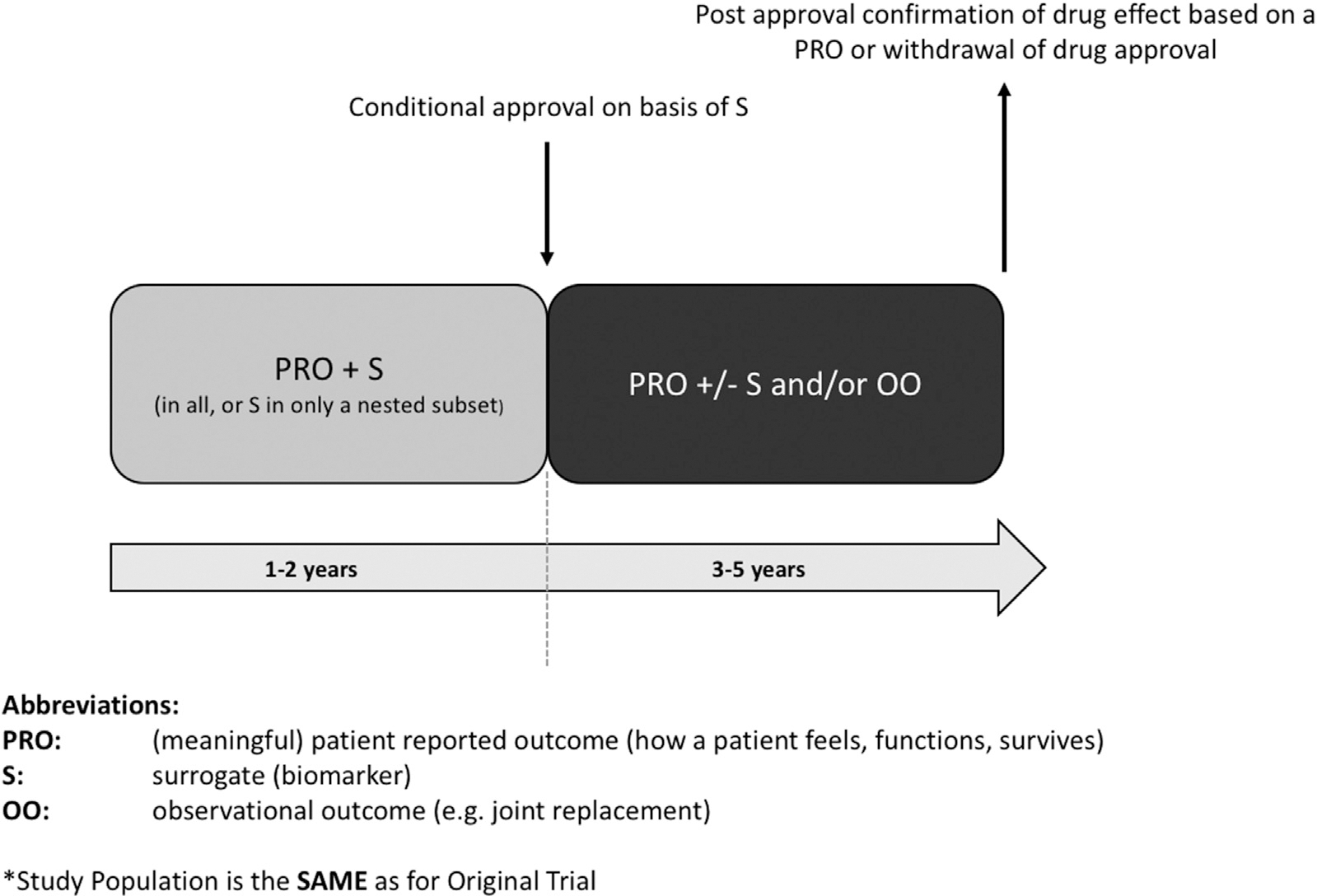
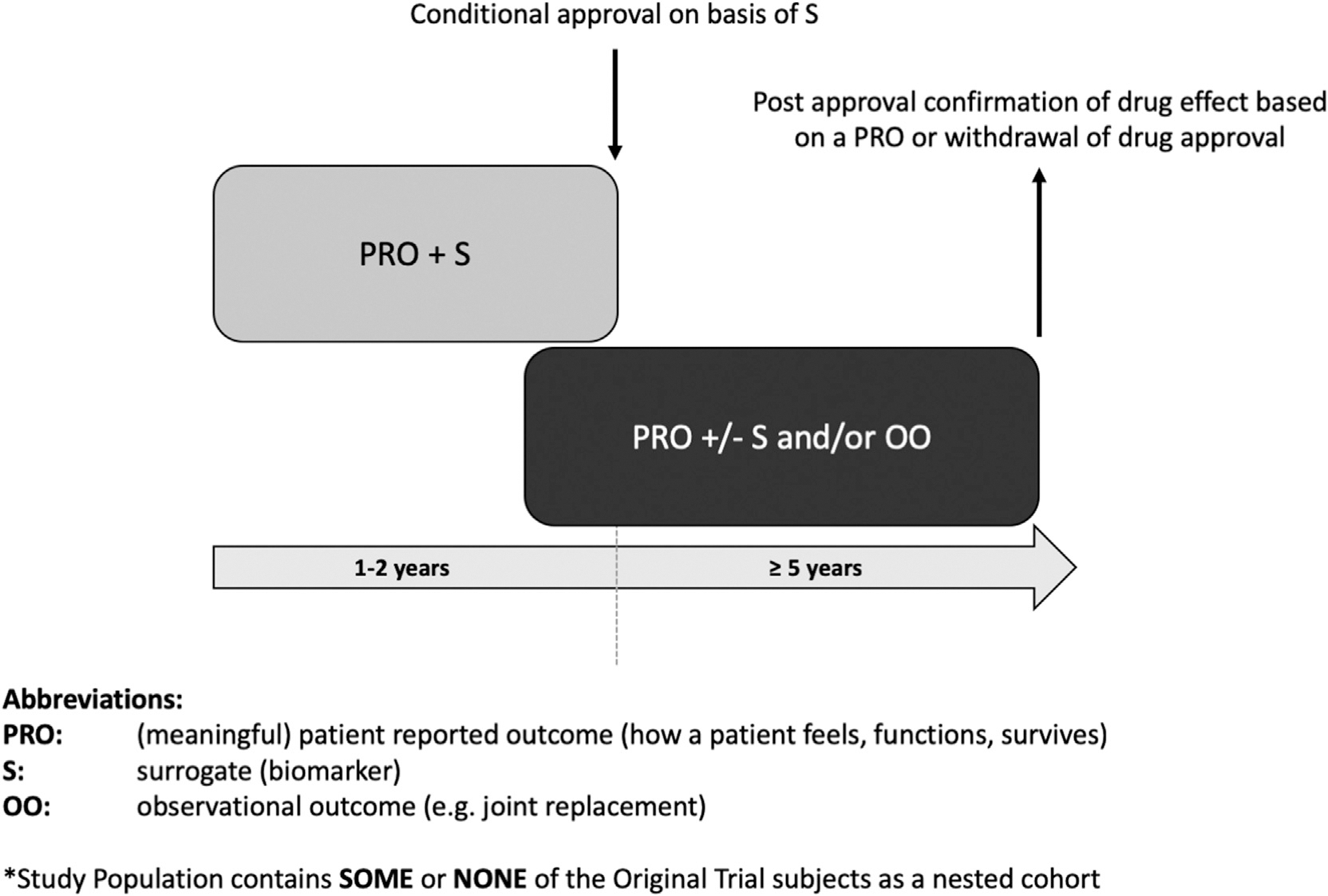
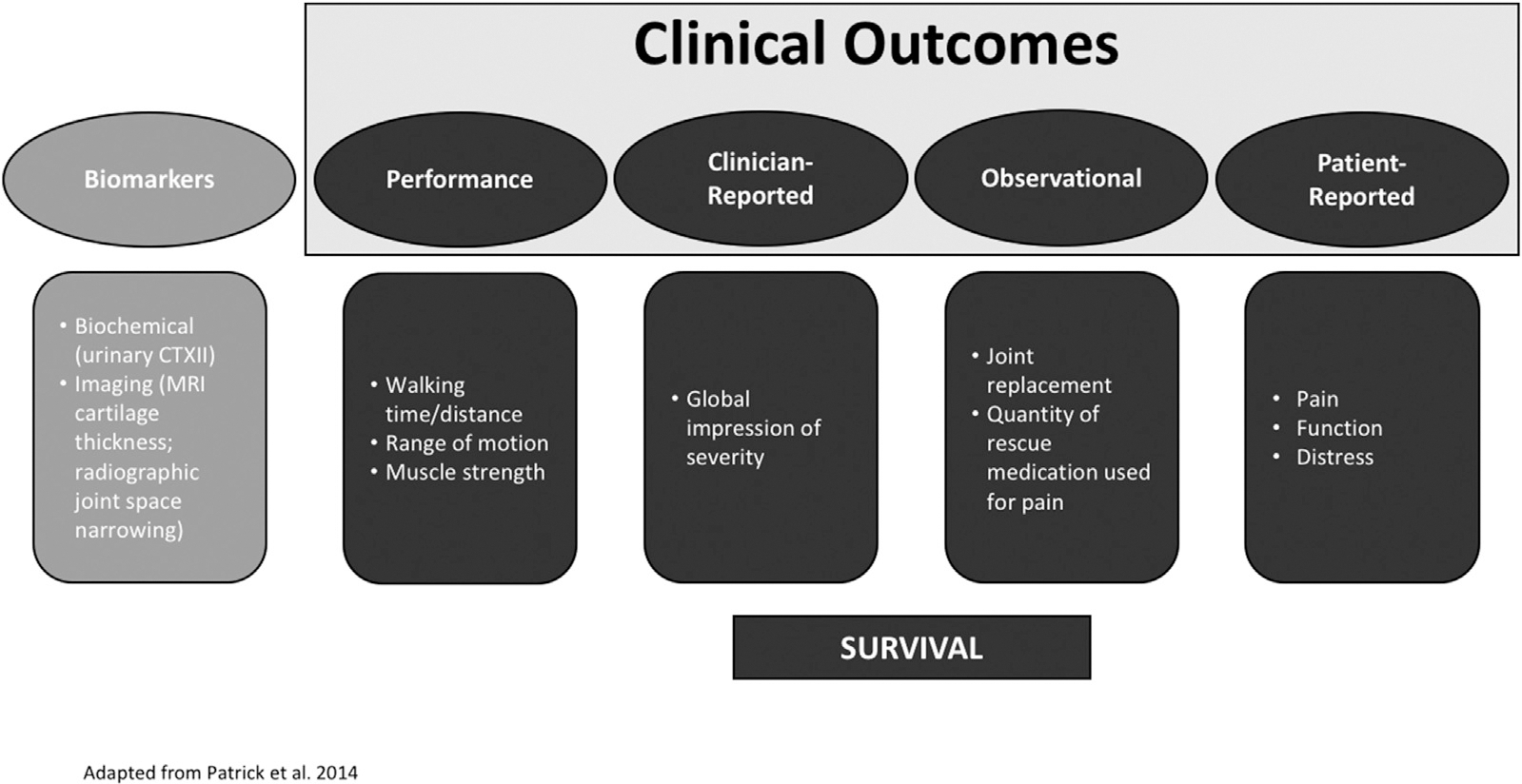
In 1992, the Food and Drug Administration (FDA) instituted the accelerated approval regulations that allow drugs or biologics for serious conditions that fill an unmet medical need to be approved on the basis of a surrogate endpoint or an intermediate clinical endpoint. The current definition of a serious condition includes chronic disabling conditions, such as osteoarthritis (OA), and thereby provides expanded opportunities for the use of biomarkers for regulatory approval of drugs for OA. The use of surrogates or intermediate clinical endpoints for initial regulatory approval of a drug or biologic requires confirmation in a post-marketing study of a drug effect on a clinically relevant outcome, such as on how a patient feels, functions or survives. Current FDA guidance requires that the post-marketing approval (PMA) study be ongoing during the time of initial drug approval. This white paper arose out of the need to brainstorm trial designs that might be suitable for PMA of drugs initially approved, on the basis of a surrogate or intermediate clinical endpoint, for treatment of OA to alter disease progression, abnormal function or pathological changes in the morphology of the joint. In this white paper we define the concept and regulations regarding accelerated approval and propose two major study design scenarios for PMA trials in OA. The long-term goal is to discuss and refine these designs in consultation with regulatory agencies in order to facilitate development of drugs to fill the large unmet need in OA.
Keywords: Biomarker; Drug development; Randomized clinical trial; Serious condition; Trial design.
Copyright © 2018 Osteoarthritis Research Society International. Published by Elsevier Ltd. All rights reserved.
Conflict of interest statement
Conflicts of interest
No author has any conflicts of interest related specifically to this work. Relevant financial activities outside the submitted work during the prior 36 months are as follows:
V Kraus received personal fees from Novartis, Flexion Therapeutics, TissueGene, GlaxoSmithKline, 23andME, Sanofi;
L Simon has no conflicts of interest related to this work but as a drug development consultant, he has consulted with multiple companies regarding trial designs and outcome measures including PROs, clinician-reported outcomes, and functional measures; consulting fees have been received from Eupraxia, Asahi, Samumed, Metabolex, Flexion, EMDSerono, Talagen, Tigenix, Genzyme.
CaloSyn, Horizon, Pozen, Analgesic Solutions, Bayer, Durect, Sanofi, JRX Biopharm;
JN Katz received a grant through his institution from Samumed; T Neogi received personal fees from EMD Merck Serono and Novartis;
DJ Hunter received personal fees from Merck Serono, TLC Bio and TissueGene;
A Guermazi received personal fees from BICL, LLC, Pfizer, GE, AstraZeneca, TissueGene, Roche, Galapagos and Merck Serono;
MA Karsdal is Chief Executive Officer of Nordic Bioscience specializing in biomarkers.
Figures
Comment in
-
Disease modification in OA - will we ever get there?Nat Rev Rheumatol. 2019 Mar;15(3):133-135. doi: 10.1038/s41584-019-0174-1. Nat Rev Rheumatol. 2019. PMID: 30733580 No abstract available.
References
-
- Food and Drug Administration. In: Services HaH, Ed. Subpart H – Accelerated Approval of New Drugs for Serious or Life-threatening Illnesses, 2017.
-
- Food and Drug Administration. In: Services HaH, Ed. Subpart E – Accelerated Approval of Biological Products for Serious or Life-threatening Illnesses, 2017.
-
- Food and Drug Administration. Guidance for Industry: Expedited Programs for Serious Conditions – Drugs and Biologics, 2014.
-
- Food and Drug Administration Safety and Innovation Act 2012. Public Law No. 112–144, 901, 126 Stat 993, 1083.
-
- Public Law No. 114–255, 130 Stat 103321st Century Cures Act 2016.
Publication types
MeSH terms
Substances
Grants and funding
LinkOut - more resources
Full Text Sources
Medical
