


Comparison of enzyme-linked immunosorbent assay systems using rift valley fever virus nucleocapsid protein and inactivated virus as antigens
- PMID: 30466469
- PMCID: PMC6249750
- DOI: 10.1186/s12985-018-1071-y
Comparison of enzyme-linked immunosorbent assay systems using rift valley fever virus nucleocapsid protein and inactivated virus as antigens
Abstract
Background: Rift Valley Fever (RVF) is a mosquito-borne viral zoonosis. To detect RVF virus (RVFV) infection, indirect immunoglobulin G (IgG) and immunoglobulin M (IgM) enzyme linked immunosorbent assays (ELISAs) which utilize recombinant RVFV nucleocapsid (RVFV-N) protein as assay antigen, have reportedly been used, however, there is still a need to develop more sensitive and specific methods of detection.
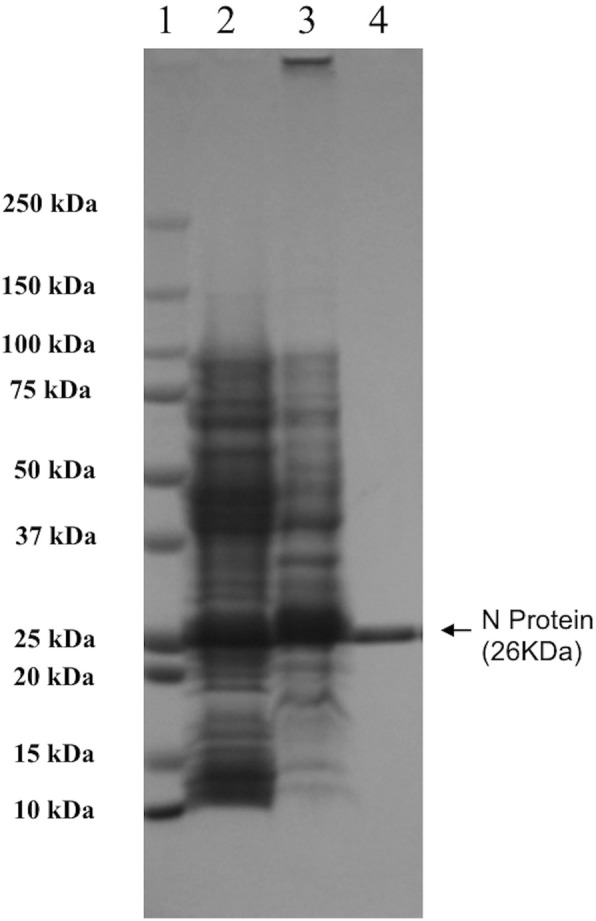
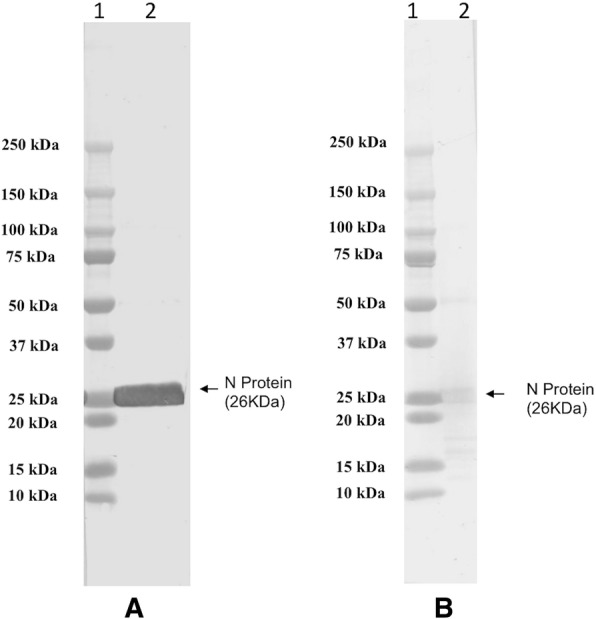
Methods: RVFV-N protein was expressed in Escherichia coli (E. coli) and purified by histidine-tag based affinity chromatography. This recombinant RVFV-N (rRVFV-N) protein was then used as antigen to develop an IgG sandwich ELISA and IgM capture ELISAs for human sera. Ninety six serum samples collected from healthy volunteers during the RVF surveillance programme in Kenya in 2013, and 93 serum samples collected from RVF-suspected patients during the 2006-2007 RVF outbreak in Kenya were used respectively, to evaluate the newly established rRVFV-N protein-based IgG sandwich ELISA and IgM capture ELISA systems in comparison with the inactivated virus-based ELISA systems.
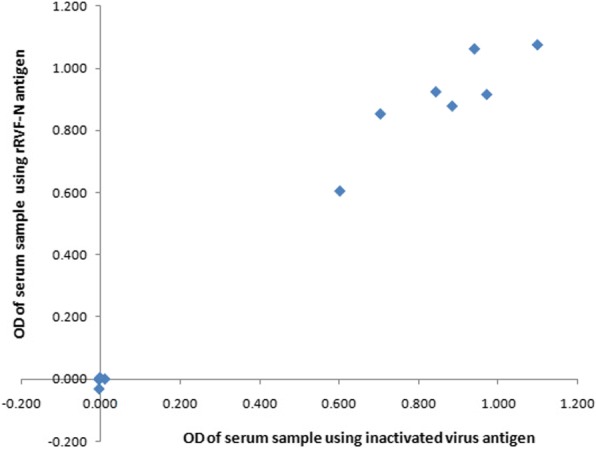
Results: rRVFV-N protein-based-IgG sandwich ELISA and IgM capture ELISA for human sera were established. Both the new ELISA systems were in 100% concordance with the inactivated virus-based ELISA systems, with a sensitivity and specificity of 100%.
Conclusions: Recombinant RVFV-N is a safe and affordable antigen for RVF diagnosis. Our rRVFV-N-based ELISA systems are safe and reliable tools for diagnosis of RVFV infection in humans and especially useful in large-scale epidemiological investigation and for application in developing countries.
Keywords: Expression; IgG sandwich ELISA; IgM capture ELISA; Nucleocapsid protein; RVFV.
Conflict of interest statement
Ethics approval and consent to participate
This research was approved by the Institutional Review Board at the Kenya Medical Research Institute, Kenya (SSC PROTOCOL NO.1698). All experiments were performed in accordance with approved guidelines and regulations.
Consent for publication
Not applicable.
Competing interests
Authors declare no conflict of interest including any financial, personal or other relationships with other people or organization that could inappropriately influence, or be perceived to influence the work.
Publisher’s Note
Springer Nature remains neutral with regard to jurisdictional claims in published maps and institutional affiliations.
Figures

References
-
- Daubney R, Hudson JR, Garnham PC. Enzootic hepatitis or Rift Valley fever. An undescribed virus disease of sheep, cattle and humans from East Africa. J Pathol Bacteriol. 1931;34:545–579. doi: 10.1002/path.1700340418. - DOI
-
- Woods CW, Karpati AM, Grein T, Mc Carthy N, Gaturuku P, Muchiri E, Dunster L, Henderson A, Kahn AS, Swanepoel R, Bonmarin I, Martin L, Mann P, Smoak BL, Ryan M, Ksiazek TG, Arthur RR, Ndikuyeze A, Agata NN, Peters CJ, World Health Organization Hemorrhagic Fever Task Force An outbreak of Rift Valley fever in northeastern Kenya, 1997–1998. Emerg Infect Dis. 2002;8:138–144. doi: 10.3201/eid0802.010023. - DOI - PMC - PubMed
-
- Madani TA, Al-Mazrou YY, Al-Jeffri MH, Mishkhas AA, Al-Rabeah AM, Turkistani AM, Al-Sayed MO, Abodahish AA, Kahn AS, Ksiazek TG, Shobokshi O. Rift Valley fever epidemic in Saudi Arabia: epidemiological, clinical, and laboratory characteristics. Clin Infect Dis. 2003;37:1084–1092. doi: 10.1086/378747. - DOI - PubMed
Publication types
MeSH terms
Substances
LinkOut - more resources
Full Text Sources
