


Activation of KCNQ Channels Prevents Paclitaxel-Induced Peripheral Neuropathy and Associated Neuropathic Pain
- PMID: 30471428
- PMCID: PMC7337983
- DOI: 10.1016/j.jpain.2018.11.001
Activation of KCNQ Channels Prevents Paclitaxel-Induced Peripheral Neuropathy and Associated Neuropathic Pain
Abstract
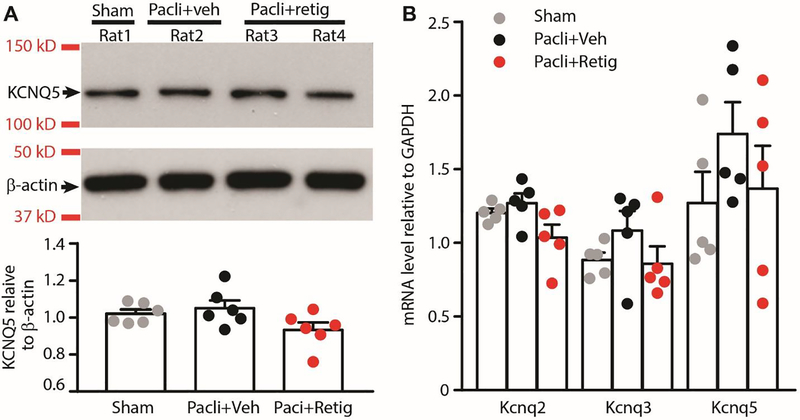
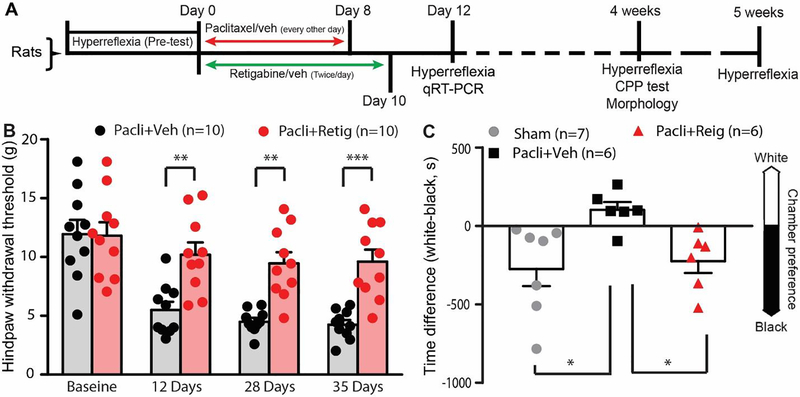
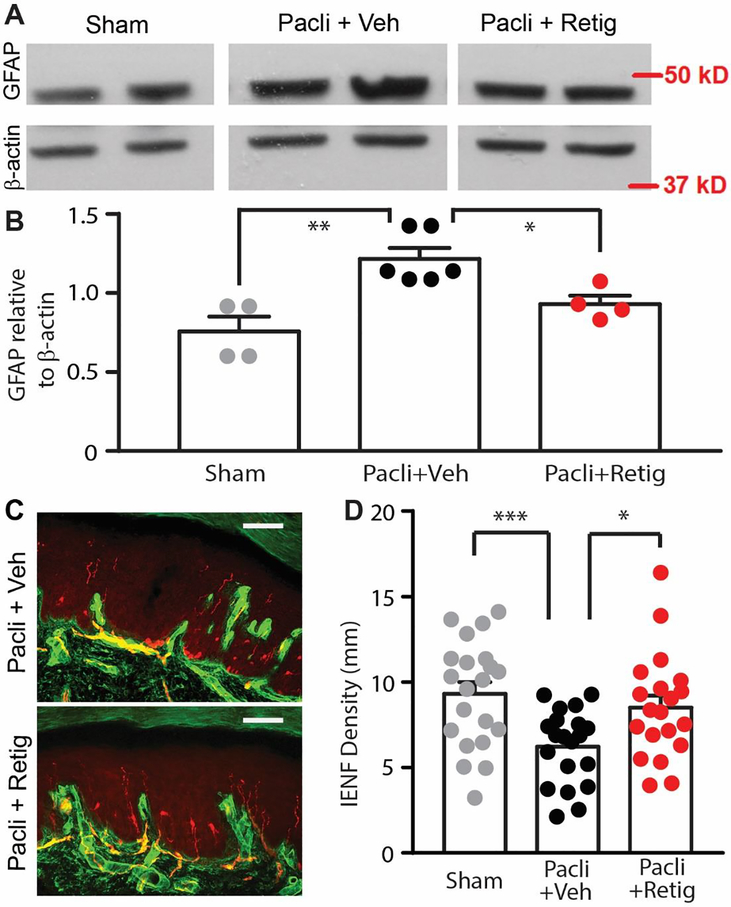
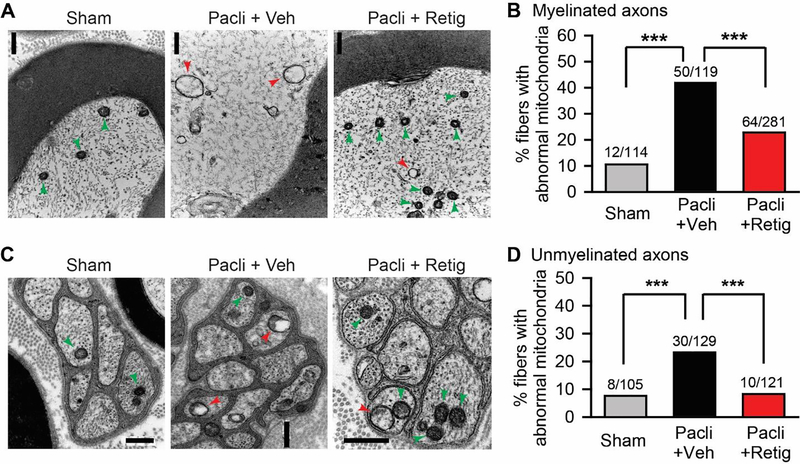
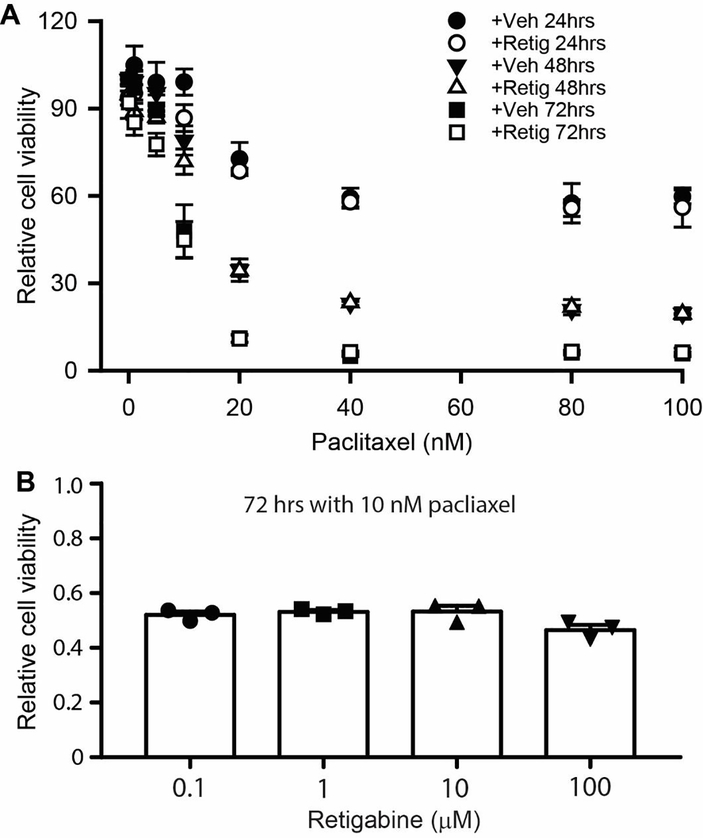
Paclitaxel-induced peripheral neuropathy (PIPN) and associated neuropathic pain are the most common and serious adverse effects experienced by cancer patients receiving paclitaxel treatment. These effects adversely impact daily activities and consequently the quality of life, sometimes forcing the suspension of treatment and negatively influencing survival. Patients are usually at high risk of developing PIPN if paclitaxel induces acute pain, which strongly suggests that an acute increase in the excitability of nociceptors underlies the chronic alterations of PIPN. KCNQ/Kv7 channels are widely expressed in the primary sensory neurons to modulate their excitability. In the present study, we show that targeting KCNQ/Kv7 channels at an early stage is an effective strategy to attenuate the development of PIPN. We found that paclitaxel did not decrease the expression level of KCNQ/Kv7 channels in the primary sensory neurons as detected by quantitative reverse-transcription polymerase chain reaction (qRT-PCR) and Western blotting. However, retigabine, which is a specific KCNQ/Kv7 channel opener, attenuated significantly the development of PIPN, as shown by both morphologic and behavioral evidence. We also observed that retigabine had no obvious effect on the chemosensitivity of breast cancer cells to paclitaxel. Although retigabine has been approved by the FDA as an anticonvulsant, our study suggests that this drug can be repurposed to attenuate the development of PIPN. PERSPECTIVE: Paclitaxel-induced peripheral neuropathy and associated neuropathic pain are severe and resistant to intervention. The results of our study demonstrated that retigabine (a clinically available medicine) can be used to attenuate the development of paclitaxel-induced peripheral neuropathy.
Keywords: K(+) channels; hyperexcitability; neuropathy; paclitaxel; pain; prevention; retigabine.
Published by Elsevier Inc.
Conflict of interest statement
Disclosure: The project was supported by grants from the American Pain Society (Q. Y.), Department of Defense USAMRAA (Q.Y.), Craig H. Neilsen Foundation (Q.Y.), and NIH grants (CA208765 to Q.Y. and CA172129 to J.A.F.). The authors declare no competing financial interests.
Figures
References
-
- Abram SE, Yi J, Fuchs A, Hogan QH. Permeability of injured and intact peripheral nerves and dorsal root ganglia. Anesthesiology. 105:146–153, 2006 - PubMed
-
- Aizawa N, Wakamatsu D, Kida J, Otsuki T, Saito Y, Matsuya H, Homma Y, Igawa Y. Inhibitory effects of retigabine, a Kv7 channel activator, on mechanosensitive primary bladder afferent activities and nociceptive behaviors in rats. Neurourol Urodyn. 36:280–285, 2017 - PubMed
-
- Barriere DA, Rieusset J, Chanteranne D, Busserolles J, Chauvin MA, Chapuis L, Salles J, Dubray C, Morio B. Paclitaxel therapy potentiates cold hyperalgesia in streptozotocin-induced diabetic rats through enhanced mitochondrial reactive oxygen species production and TRPA1 sensitization. Pain. 153:553–561, 2012 - PubMed
-
- Blackburn-Munro G, Jensen BS. The anticonvulsant retigabine attenuates nociceptive behaviours in rat models of persistent and neuropathic pain. Eur J Pharmacol. 460:109–116, 2003 - PubMed
Publication types
MeSH terms
Substances
Grants and funding
LinkOut - more resources
Full Text Sources
Medical
