


Understanding the full burden of drowning: a retrospective, cross-sectional analysis of fatal and non-fatal drowning in Australia
- PMID: 30473541
- PMCID: PMC6254411
- DOI: 10.1136/bmjopen-2018-024868
Understanding the full burden of drowning: a retrospective, cross-sectional analysis of fatal and non-fatal drowning in Australia
Abstract
Objectives: The epidemiology of fatal drowning is increasingly understood. By contrast, there is relatively little population-level research on non-fatal drowning. This study compares data on fatal and non-fatal drowning in Australia, identifying differences in outcomes to guide identification of the best practice in minimising the lethality of exposure to drowning.
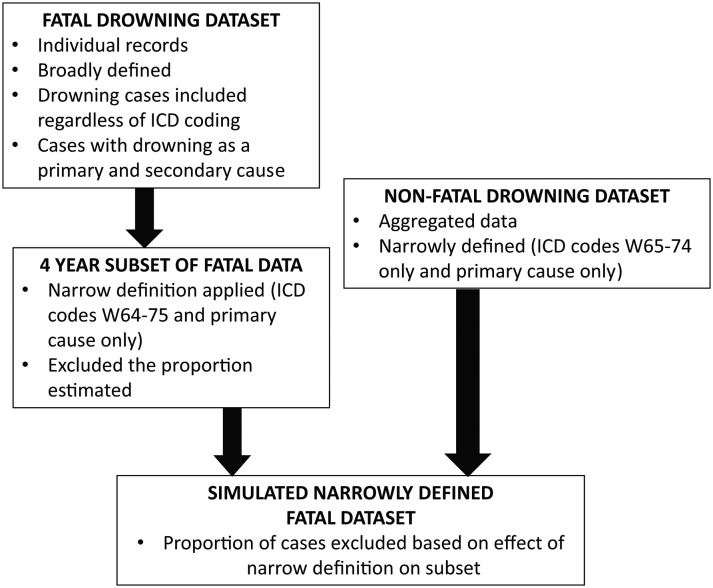
Design: A subset of data on fatal unintentional drowning from the Royal Life Saving National Fatal Drowning Database was compared on a like-for-like basis to data on hospital separations sourced from the Australian Institute of Health and Welfare's National Hospital Morbidity Database for the 13-year period 1 July 2002 to 30 June 2015. A restrictive definition was applied to the fatal drowning data to estimate the effect of the more narrow inclusion criteria for the non-fatal data (International Classification of Diseases (ICD) codes W65-74 and first reported cause only). Incidence and ratios of fatal to non-fatal drowning with univariate and Χ2 analysis are reported and used to calculate case-fatality rates.
Setting: Australia, 1 July 2002 to 30 June 2015.
Participants: Unintentional fatal drowning cases and cases of non-fatal drowning resulting in hospital separation.
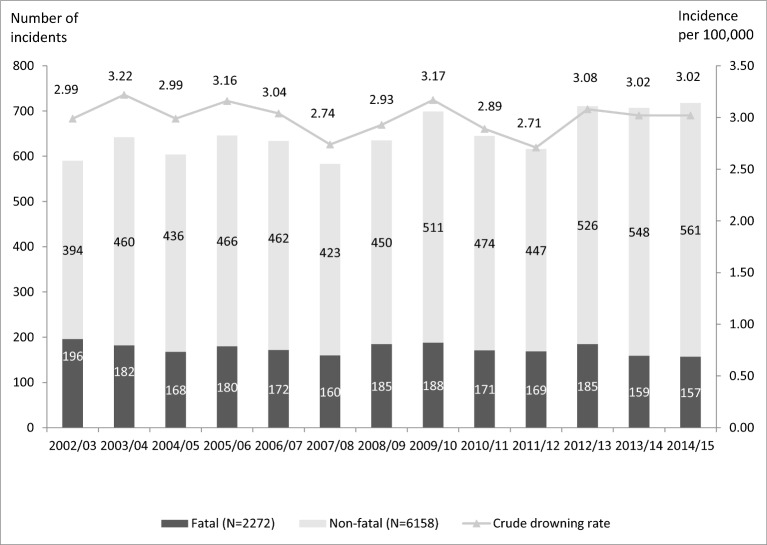
Results: 2272 fatalities and 6158 hospital separations occurred during the study period, a ratio of 1:2.71. Children 0-4 years (1:7.63) and swimming pools (1:4.35) recorded high fatal to non-fatal ratios, whereas drownings among people aged 65-74 years (1:0.92), 75+ years (1:0.87) and incidents in natural waterways (1:0.94) were more likely to be fatal.
Conclusions: This study highlights the extent of the drowning burden when non-fatal incidents are considered, although coding limitations remain. Documenting the full burden of drowning is vital to ensuring that the issue is fully understood and its prevention adequately resourced. Further research examining the severity of non-fatal drowning cases requiring hospitalisation and tracking outcomes of those discharged will provide a more complete picture.
Keywords: drowning; epidemiology; non-fatal drowning; public health; risk factors.
© Author(s) (or their employer(s)) 2018. Re-use permitted under CC BY-NC. No commercial re-use. See rights and permissions. Published by BMJ.
Conflict of interest statement
Competing interests: AEP and AJM were responsible for collating data in the database from the Australian National Coronial Information System.
Figures
References
-
- van Beeck EF, Branche CM, Szpilman D, et al. A new definition of drowning: towards documentation and prevention of a global public health problem. Bull World Health Organ 2005;83:853–6. doi:/S0042-96862005001100015 - PMC - PubMed
-
- World Health Organization. Global report on drowning: preventing a leading killer. Geneva: World Health Organisation, 2014.
-
- Franklin RC, Scarr JP, Pearn JH. Reducing drowning deaths: the continued challenge of immersion fatalities in Australia. Med J Aust 2010;192:123–6. - PubMed
Publication types
MeSH terms
LinkOut - more resources
Full Text Sources
Medical
