


Essential Surgical Technique for Arthroscopic Capsular Release in the Treatment of Shoulder Stiffness
- PMID: 30473922
- PMCID: PMC6221416
- DOI: 10.2106/JBJS.ST.N.00102
Essential Surgical Technique for Arthroscopic Capsular Release in the Treatment of Shoulder Stiffness
Abstract
Introduction: Among many treatments for shoulder stiffness, which is a common debilitating condition, arthroscopic capsular release is an effective surgical method for patients who have not responded to conservative treatment, as it provides visual control of the capsular release with a lower risk of potential traumatic damage than manipulation under anesthesia.
Step 1 position the patient: Place the patient either in the lateral decubitus position or in the beach-chair position, depending on one's preference.
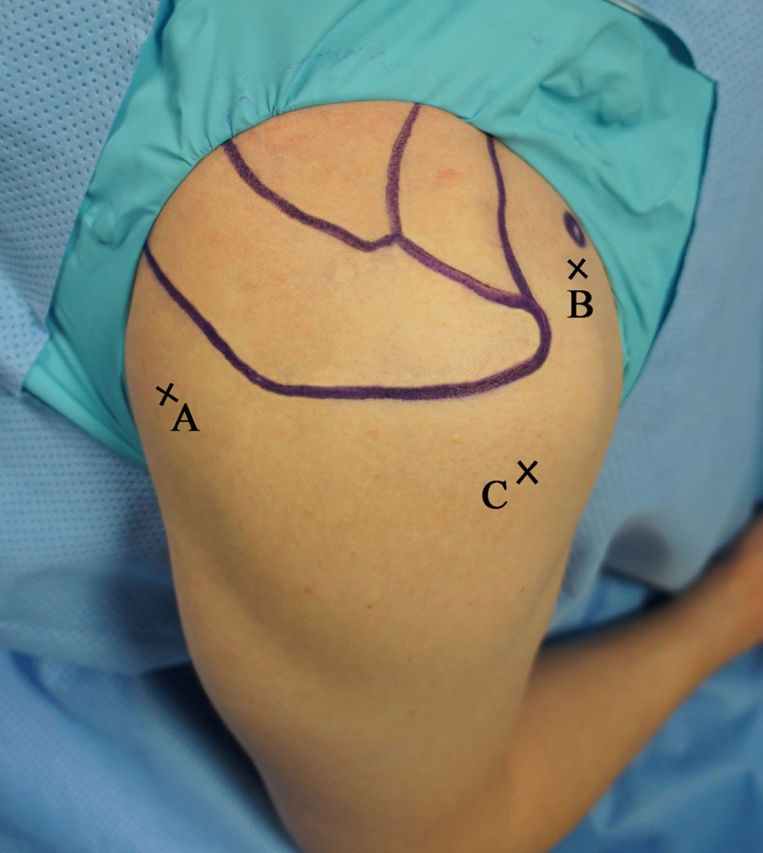
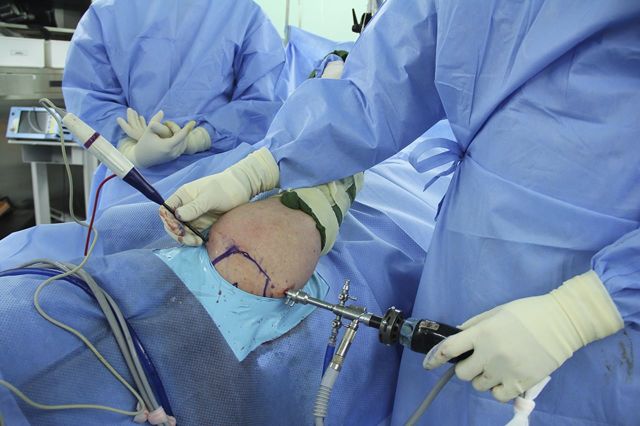
Step 2 portal placement: Create a standard posterior viewing portal, an anterior portal, and a lateral portal for approaching the glenohumeral joint and the subacromial space.
Step 3 remove rotator interval tissue: Begin the capsular release with the rotator interval and middle glenohumeral ligament using a 3.0-mm 90° electrocautery device through the anterior portal.
Step 4 release the anterior capsule: Begin the anterior capsular release below the long head of the biceps tendon origin and preserve the glenoid labrum.
Step 5 release the inferior capsule: As the electrocautery device may not reach the inferior portion of the inferior glenohumeral ligament, switch the working portal to the posterior portal for an easier approach to the inferior portion.
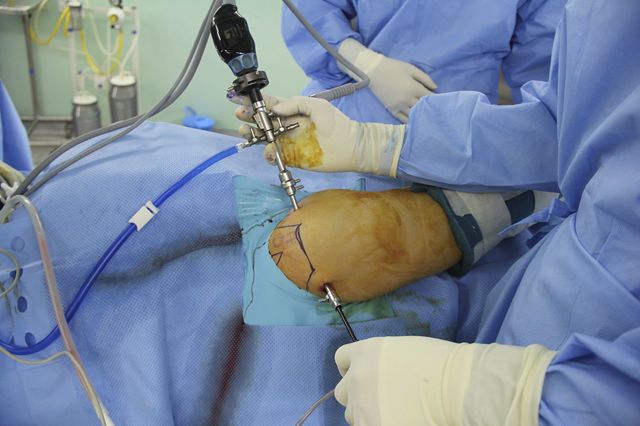
Step 6 release the coracohumeral ligament and the subscapularis: Begin this procedure with the camera in the lateral portal viewing the anterior portion of the subdeltoid space.
Step 7 postoperative rehabilitation: The goal for the patient is to achieve an immediate range of motion by performing active-assisted and passive range-of-motion exercises including pendulum circumduction or the pulley exercise.
Results: In our recently reported series of seventy-five patients who had a rotator cuff tear with simultaneous shoulder stiffness, treatment with an anterior and inferior capsular release showed favorable results.
What to watch for: IndicationsContraindicationsPitfalls & Challenges.
Figures
References
-
- Holloway GB, Schenk T, Williams GR, Ramsey ML, Iannotti JP. Arthroscopic capsular release for the treatment of refractory postoperative or post-fracture shoulder stiffness. J Bone Joint Surg Am. 2001. November;83(11):1682-7. - PubMed
-
- Pollock RG, Duralde XA, Flatow EL, Bigliani LU. The use of arthroscopy in the treatment of resistant frozen shoulder. Clin Orthop Relat Res. 1994. July;304:30-6. - PubMed
-
- Segmüller HE, Taylor DE, Hogan CS, Saies AD, Hayes MG. Arthroscopic treatment of adhesive capsulitis. J Shoulder Elbow Surg. 1995. Nov-Dec;4(6):403-8. - PubMed
-
- Harryman DT, 2nd, Matsen FA, 3rd, Sidles JA. Arthroscopic management of refractory shoulder stiffness. Arthroscopy. 1997. April;13(2):133-47. - PubMed
-
- Snow M, Boutros I, Funk L. Posterior arthroscopic capsular release in frozen shoulder. Arthroscopy. 2009. January;25(1):19-23. Epub 2008 Oct 10. - PubMed
LinkOut - more resources
Full Text Sources
Research Materials