


Vascular Plant One-Zinc-Finger (VOZ) Transcription Factors Are Positive Regulators of Salt Tolerance in Arabidopsis
- PMID: 30477148
- PMCID: PMC6321167
- DOI: 10.3390/ijms19123731
Vascular Plant One-Zinc-Finger (VOZ) Transcription Factors Are Positive Regulators of Salt Tolerance in Arabidopsis
Abstract
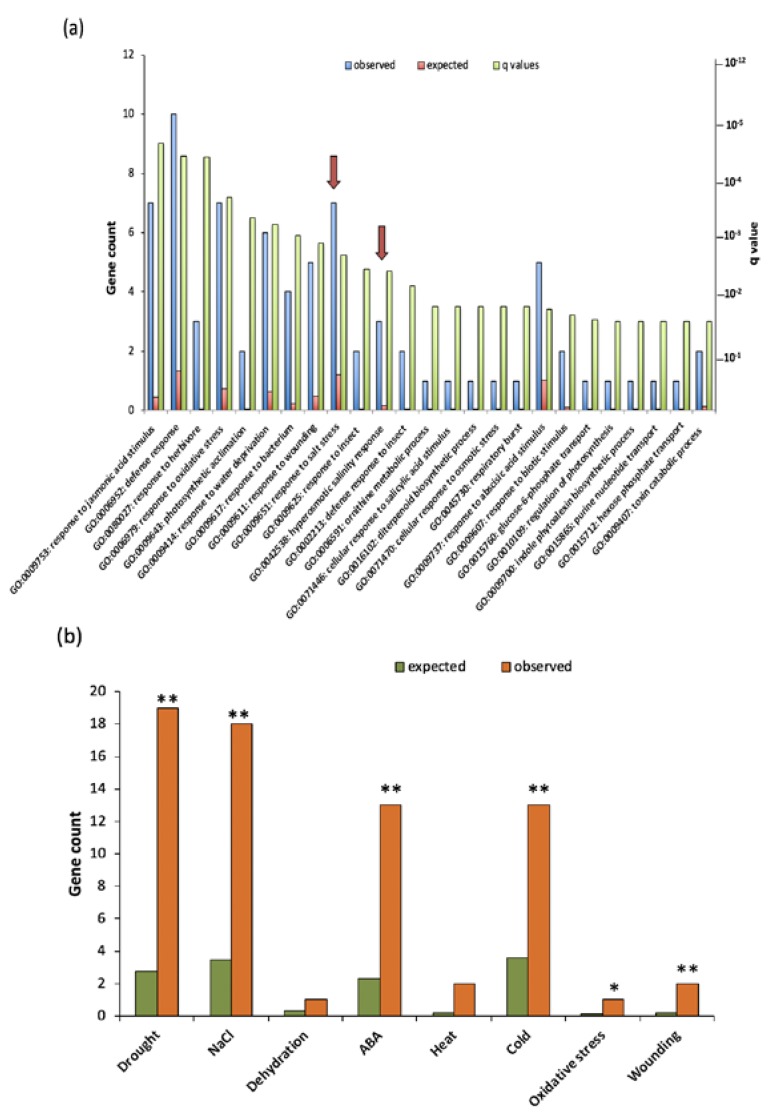
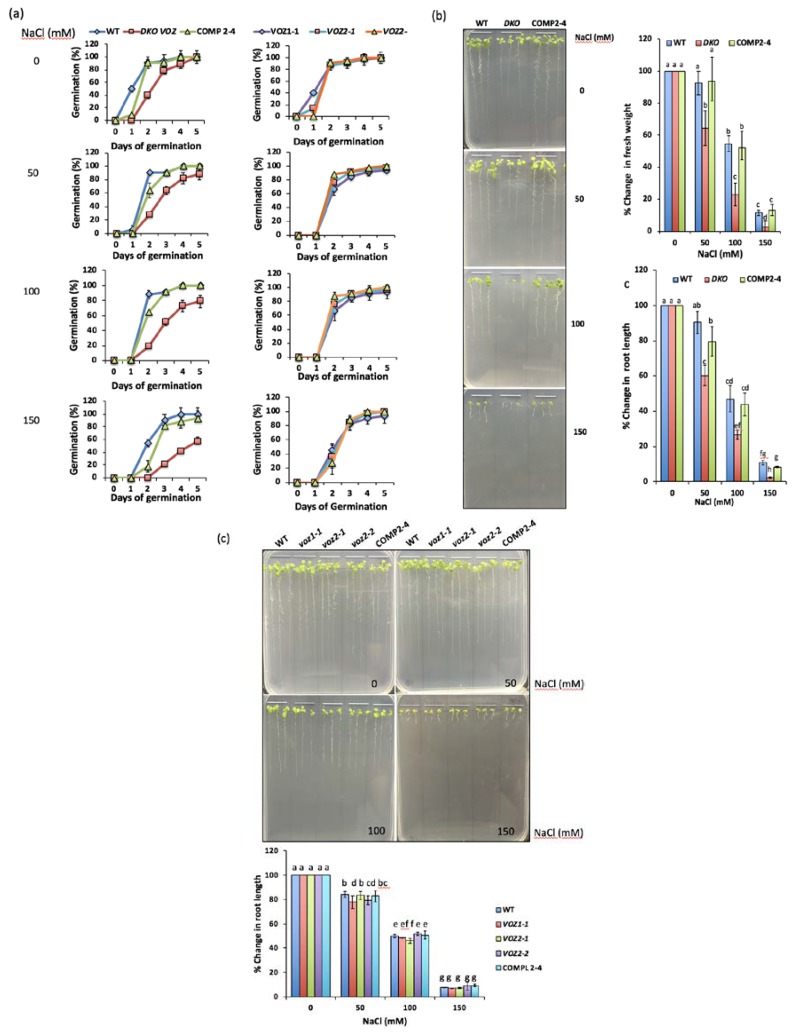
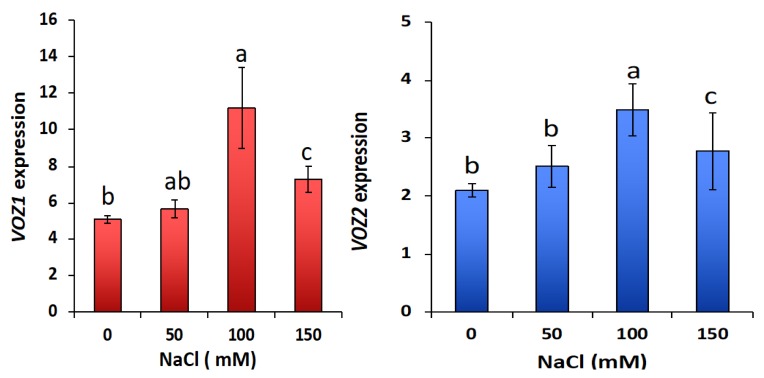
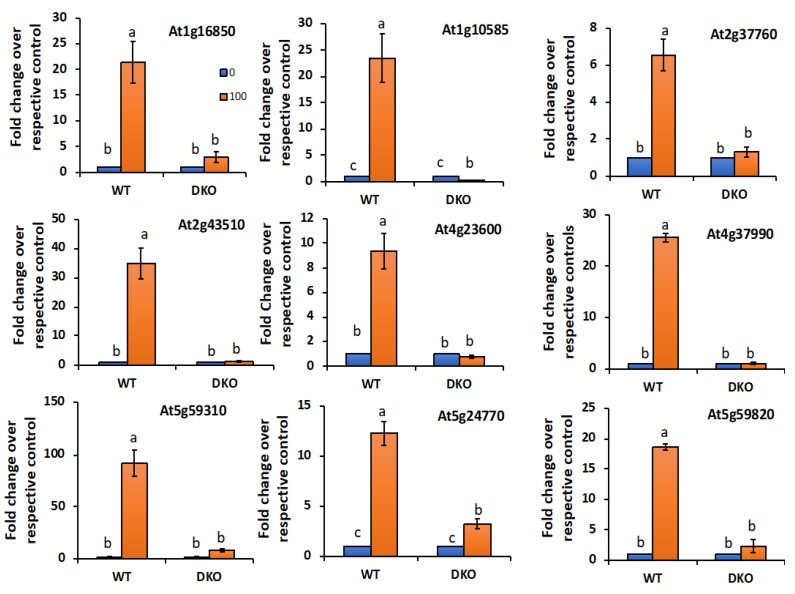
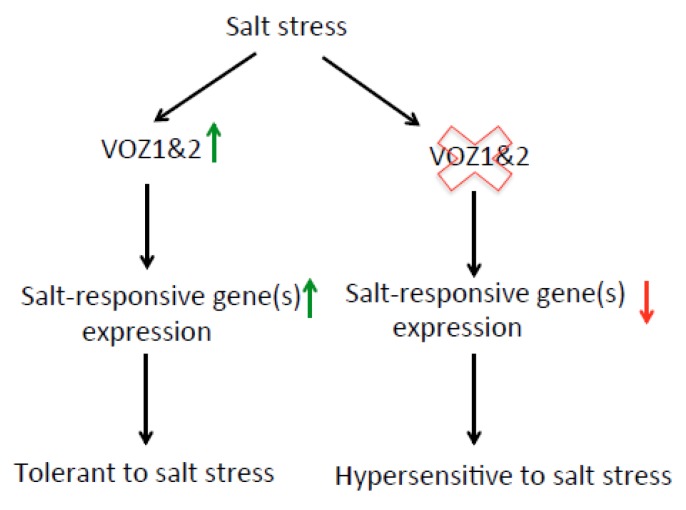
Soil salinity, a significant problem in agriculture, severely limits the productivity of crop plants. Plants respond to and cope with salt stress by reprogramming gene expression via multiple signaling pathways that converge on transcription factors. To develop strategies to generate salt-tolerant crops, it is necessary to identify transcription factors that modulate salt stress responses in plants. In this study, we investigated the role of VOZ (VASCULAR PLANT ONE-ZINC FINGER PROTEIN) transcription factors (VOZs) in salt stress response. Transcriptome analysis in WT (wild-type), voz1-1, voz2-1 double mutant and a VOZ2 complemented line revealed that many stress-responsive genes are regulated by VOZs. Enrichment analysis for gene ontology terms in misregulated genes in voz double mutant confirmed previously identified roles of VOZs and suggested a new role for them in salt stress. To confirm VOZs role in salt stress, we analyzed seed germination and seedling growth of WT, voz1, voz2-1, voz2-2 single mutants, voz1-1 voz2-1 double mutant and a complemented line under different concentrations of NaCl. Only the double mutant exhibited hypersensitivity to salt stress as compared to WT, single mutants, and a complemented line. Expression analysis showed that hypersensitivity of the double mutant was accompanied by reduced expression of salt-inducible genes. These results suggest that VOZ transcription factors act as positive regulators of several salt-responsive genes and that the two VOZs are functionally redundant in salt stress.
Keywords: Arabidopsis thaliana; VOZ; salt stress; transcription factor; transcriptional activator.
Conflict of interest statement
The authors declare no conflicts interests. The founding sponsors had no role in the design of the study, in the collection, analysis or interpretation of the data, in writing of the manuscript, and in the decision to publish the results.
Figures
References
-
- Kim Y.S., An C., Park S., Gilmour S.J., Wang L., Renna L., Brandizzi F., Grumet R., Thomashow M.F. CAMTA-Mediated Regulation of Salicylic Acid Immunity Pathway Genes in Arabidopsis Exposed to Low Temperature and Pathogen Infection. Plant Cell. 2017;29:2465–2477. doi: 10.1105/tpc.16.00865. - DOI - PMC - PubMed
MeSH terms
Substances
Grants and funding
LinkOut - more resources
Full Text Sources
Molecular Biology Databases
